











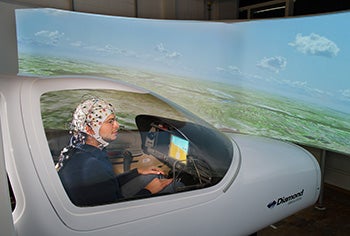


Using Your Thoughts To Fly an Airplane?

** Photo: TU München**
Gemini Sparkle

Key Takeaways:

  • Scientists from Technische Universität München and TU Berlin have successfully demonstrated the feasibility and surprising accuracy of brain-controlled flight.
  • The technology uses electroencephalography (EEG) electrodes to measure brain waves, which an algorithm then converts into precise control commands for an aircraft.
  • Tests in flight simulators showed subjects, including those without prior flight experience, could accurately control aircraft, maintain course, and even land, with accuracy potentially meeting pilot license requirements.
  • This advancement aims to make flying more accessible, reduce pilot workload, and ultimately enhance aviation safety.
See a mistake? Contact us.

With aviation technology advancing all the time, we’re always asking the question: what will they think of next? Well, how about using only your brain to control an aircraft?

Scientists at Technische Universität München and the TU Berlin have put the futuristic idea to the test and successfully demonstrated that brain-controlled flight is feasible — and can be done with surprising accuracy. And, they say, it doesn’t take superpowers to do so.


The way it works is through brain waves that are measured using electroencephalography (EEG) electrodes connected to a cap. With a myriad of cables attached to the white cap the pilot wears, it does look like something straight from a science fiction movie. However, researchers from Team PhyPA (Physiological Parameters for Adaptation) of the Technische Universität Berlin have come up with an algorithm that allows the program to convert electrical brain impulses into control commands. Researchers even say the accuracy demonstrated could, in part, fulfill the requirements of a pilot’s license.

Seven subjects with different levels of flight experience — including one who didn’t have any at all — were put through flight simulator tests. Simply by thinking their commands, they were able to stay on course and some even land in low visibility. According to Tim Fricke, an aerospace engineer who heads the project at TUM, one of the subjects was able to follow eight out of ten target headings with a deviation of only 10 degrees.

“A long-term vision of the project is to make flying accessible to more people,” said Fricke. “With brain control, flying, in itself, could become easier. This would reduce the workload of pilots and thereby increase safety. In addition, pilots would have more freedom of movement to manage other manual tasks in the cockpit.”

The possibility of such technology gives ‘Look, ma, no hands’ a whole new meaning.

See the no-hands, thoughts-only flight demonstrated in the video below.

Get exclusive online content like this delivered straight to your inbox by signing up for our free enewsletter.

We welcome your comments on flyingmag.com. In order to maintain a respectful environment, we ask that all comments be on-topic, respectful and spam-free. All comments made here are public and may be republished by Flying.

Ready to Sell Your Aircraft?

List your airplane on AircraftForSale.com and reach qualified buyers.

List Your Aircraft
AircraftForSale Logo | FLYING Logo
Pilot in aircraft
Sign-up for newsletters & special offers!

Get the latest stories & special offers delivered directly to your inbox.

SUBSCRIBE