Pentagon to Test Anti-Drone Laser at These 5 Sites

Locations will host demonstrations of ‘directed energy’ technology designed to counter UAV threats.

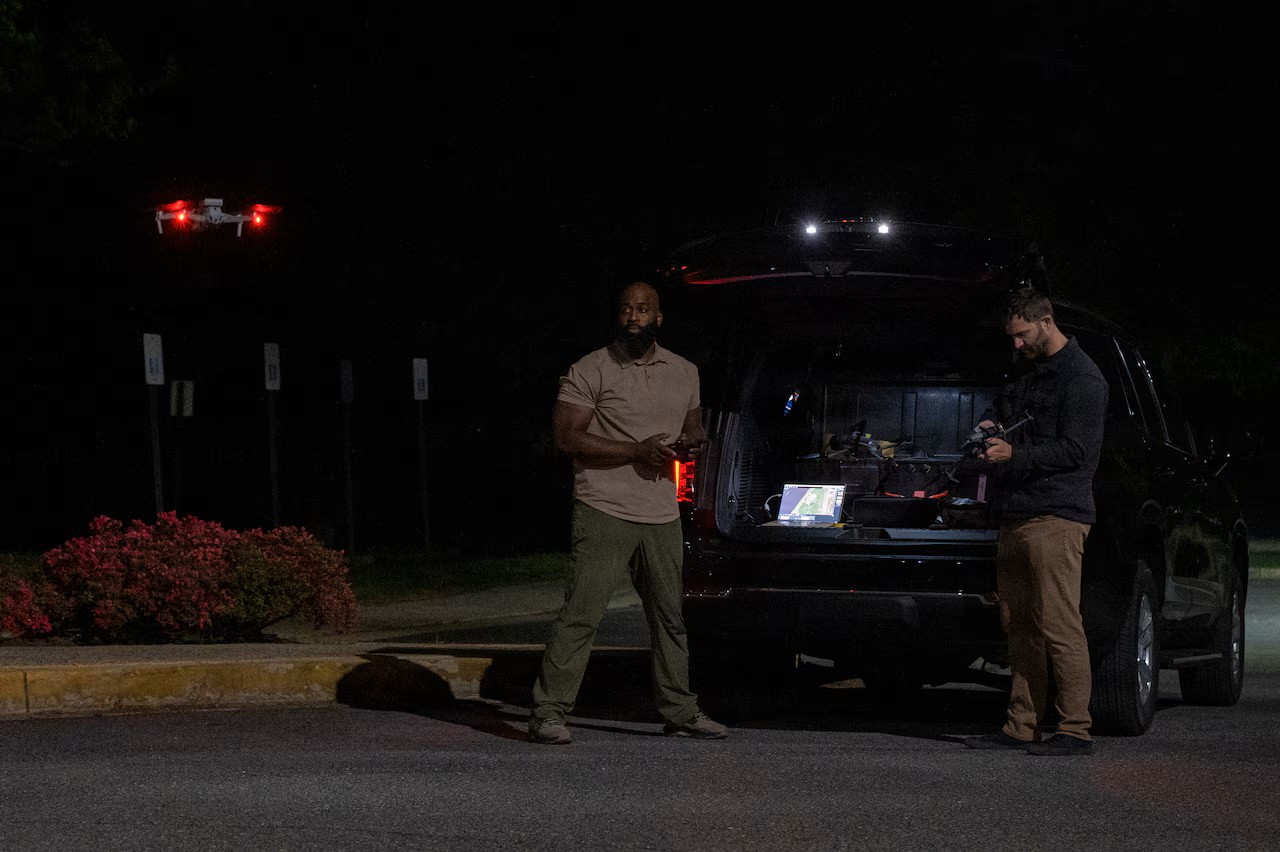
two Army drone operators conduct C-UAS testing in Washington
U.S. Army drone operators Anthony Kavanaugh (left) and Ari Snipes conduct testing with small uncrewed aircraft in Washington on April 23. [Credit: U.S. Air Force/Hayden Hallman]
Gemini Sparkle

Key Takeaways:

  • A federal counter-uncrewed aircraft systems (C-UAS) task force announced five locations to test "directed energy" systems (high-energy lasers and high-powered microwaves) designed to mitigate drone threats.
  • The Pentagon aims for operational deployment of this technology this year, following prior testing that validated its safety for passenger aircraft, though past tests have caused temporary airspace closures.
  • This pilot program is part of a broader federal effort to accelerate the fielding and evaluation of advanced directed energy capabilities to protect critical infrastructure, military installations, and homeland missions.
  • Significant federal funding has been allocated for these counter-drone efforts, with a focus on securing major upcoming events like the 2026 FIFA World Cup.
See a mistake? Contact us.

A federal counter-uncrewed aircraft systems (C-UAS) task force on Wednesday announced five locations that will test “high-energy lasers and high-powered microwave systems” designed to mitigate drone threats.

The Pentagon plans to conduct “rigorous testing and operational assessments” using the “directed energy” technology, which it aims to deploy operationally this year.

The FAA and Pentagon in March conducted testing of the system at White Sands Missile Range in New Mexico. They said in April that the testing validated it does not pose “undue risk” to passenger aircraft, approving it for future deployment.

“We showed that directed-energy systems can counter drone threats while preserving the safety of air travelers,” said Army Colonel Scott McLellan, deputy director of Joint Interagency Task Force 401 (JIATF-401), which selected the five locations. “This pilot program now allows us to translate that progress into evolving operational capability for the homeland.”

Expanding Counter-Drone Efforts

One of the five sites is Fort Bliss (KBIF) in Texas, where the military reportedly conducted testing of an anti-drone laser in February.

The deployments twice prompted airspace closures near El Paso International Airport (KELP) that caught local officials, airport personnel, and air traffic controllers by surprise. El Paso Mayor Renard Johnson said that medical evacuation flights were diverted to Las Cruces, New Mexico, and shipments of medical equipment were delayed while the restrictions were active. The FAA lifted them after a few hours.

It is unclear whether that anti-drone laser used the same technology that will be assessed in the upcoming directed energy tests.

In March, WPTV-TV in Palm Beach, Florida, reported that a directed energy laser was installed across the street from Palm Beach International Airport (KPBI) to protect President Donald Trump and his Mar-a-Lago estate from drone threats. It is unclear when that system was installed or whether it has been activated.

In addition to Fort Bliss, the C-UAS task force selected Fort Huachuca (KFHU) in Arizona, Naval Base Kitsap in Washington, Grand Forks Air Force Base (KRDR) in North Dakota, and Whiteman Air Force Base (KSZL) in Missouri as new test sites for the directed energy technology.

The demonstrations are part of what the Pentagon is calling the “directed-energy C-UAS pilot program.” Per the department, it aims to “accelerate the fielding and evaluation of advanced directed energy capabilities to protect critical infrastructure, military installations and homeland missions.” The program was developed in coordination with the FAA and U.S. Northern Command.

A line item in the fiscal year 2026 National Defense Authorization Act (NDAA) allocates about $92 million to the research, test, development, and evaluation of “directed energy technology.”

“There is no ‘silver bullet’ to address this challenge, and this pilot program integrates cutting-edge technology into the department’s broader counter-drone toolkit,” said Army Brigadier General Matt Ross, director of JIATF-401, adding that countering unlawful drone activity is a “homeland defense imperative.”

Federal officials view the upcoming 2026 FIFA World Cup, scheduled from June 11-July 19, as a prime target for unlawful drone activity.

The Federal Emergency Management Agency (FEMA) in December awarded $250 million to the 11 states hosting World Cup matches, as well as to the National Capital Region to secure America’s 250th anniversary celebrations. The federal C-UAS task force awarded a further $100 million to those states in April.

Among the technologies stadium security will receive are drone-catching nets and hand-held devices designed to wrest control of a drone from its operator.

Jack Daleo

Jack is a staff writer covering advanced air mobility, including everything from drones to unmanned aircraft systems to space travel—and a whole lot more. He spent close to two years reporting on drone delivery for FreightWaves, covering the biggest news and developments in the space and connecting with industry executives and experts. Jack is also a basketball aficionado, a frequent traveler and a lover of all things logistics.


Ready to Sell Your Aircraft?

List your airplane on AircraftForSale.com and reach qualified buyers.

List Your Aircraft
AircraftForSale Logo | FLYING Logo
Pilot in aircraft
Sign-up for newsletters & special offers!

Get the latest stories & special offers delivered directly to your inbox.

SUBSCRIBE