













Register

Party in the Pattern

Likely you either practice approaches to non-towered airports or fly into airfields with part-time control towers. Non-towered airports, hotbeds of GA activities, present our greatest risk of a midair collision; a risk mitigated by a disciplined adherence to procedures (proper entry into landing patterns, proper departure patterns) and proper use of the UNICOM frequency at uncontrolled airports. (FAA Aviation News, May/June 2001) Therefore, its important that instrument pilots play nice around the pattern. The updated AC 90-66 covering non-towered airports specifically identifies instrument pilots, maybe because of some past misbehavior.

Gemini Sparkle

Key Takeaways:

  • Non-towered airports pose the highest risk of mid-air collisions, necessitating strict adherence to standardized traffic pattern procedures and clear UNICOM communication to ensure safety.
  • Instrument pilots conducting approaches at non-towered airports do not have priority over VFR traffic and should adjust their operations (e.g., adding altitude for practice approaches, adhering to left-hand turns for circling) to integrate safely and avoid disrupting the pattern flow.
  • The article highlights discrepancies in official traffic pattern terminology and provides best practices for pilots, including using precise radio calls, avoiding descending into the pattern, and not relying on unofficial local procedures.
See a mistake? Contact us.

Likely you either practice approaches to non-towered airports or fly into airfields with part-time control towers. Non-towered airports, hotbeds of GA activities, present our greatest risk of a midair collision; a risk mitigated by a “disciplined adherence to procedures (proper entry into landing patterns, proper departure patterns) and proper use of the UNICOM frequency at uncontrolled airports.” (FAA Aviation News, May/June 2001) Therefore, it’s important that instrument pilots play nice around the pattern. The updated AC 90-66 covering non-towered airports specifically identifies instrument pilots, maybe because of some past misbehavior.

A Little Refresher

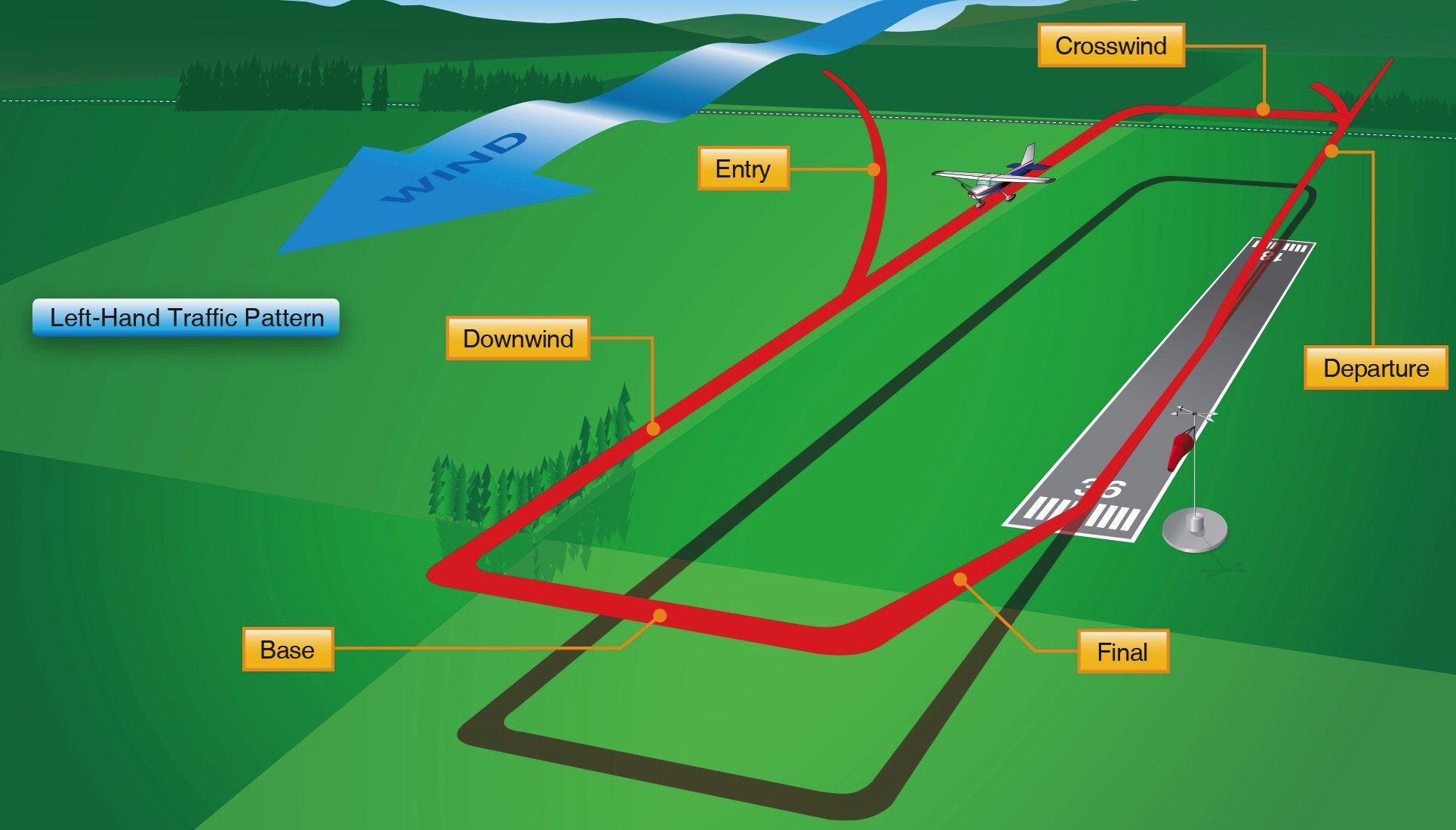
Default left turns, tiered altitude structure (500-foot helicopter, 1000-foot standard, and 1500-foot large aircraft pattern) and the basic box shape of a traffic pattern haven’t changed in decades. Yet there is a surprising amount of dispute on what the lines of a pattern are actually called. The AIM defines a departure leg as the “flight path which begins after takeoff and continues straight ahead along the extended runway centerline.” (4-3-2 c. 6.) This diverges from the explanation in the in the Pilot/Controller Glossary, which states the “components of a typical traffic pattern are upwind leg, crosswind leg, downwind leg, base leg, and final approach”—implying an upwind leg is synonymous with a departure leg. It isn’t.


Ready to Sell Your Aircraft?

List your airplane on AircraftForSale.com and reach qualified buyers.

List Your Aircraft
AircraftForSale Logo | FLYING Logo
Pilot in aircraft
Sign-up for newsletters & special offers!

Get the latest stories & special offers delivered directly to your inbox.

SUBSCRIBE