











When we think of GPS-based instrument approaches, we usually lump all the approach minima into a single “GPS approach” bucket. We tend to mentally order the types with WAAS as better than non-WAAS, and vertical guidance better than those without. After all, that’s how the magic box picks the type of service to provide.
Obstacle Clearance

Key Takeaways:
- GPS approach minima do not always follow a "better is lower" hierarchy; LNAV (non-precision) can sometimes have lower minimums than vertically guided LNAV/VNAV approaches, and non-WAAS LNAV/VNAV can be lower than WAAS LPV.
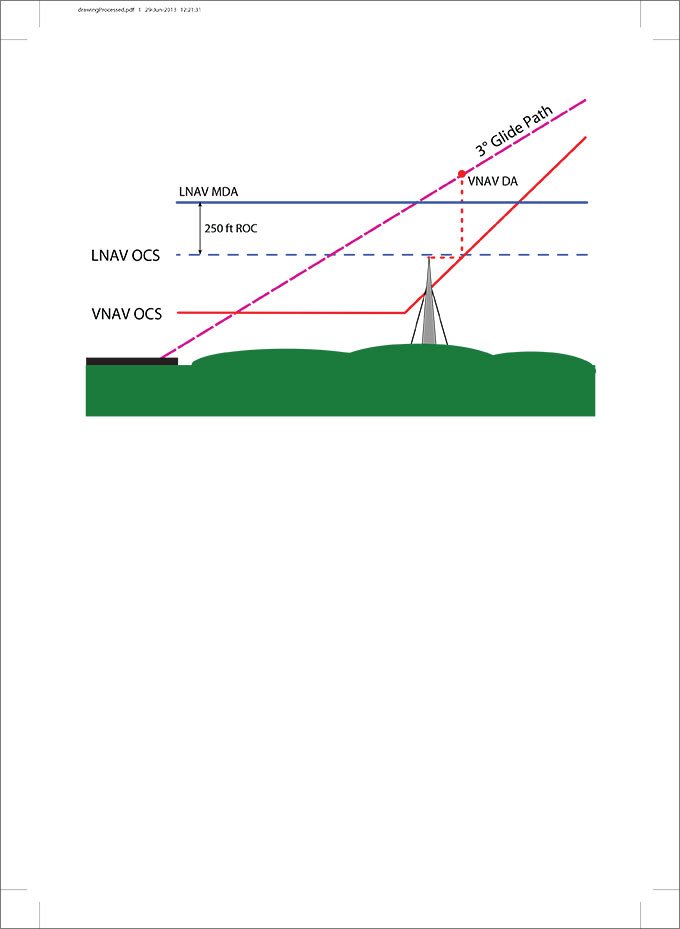
- These discrepancies arise because each GPS minima type is evaluated independently using different obstacle clearance standards (TERPS), resulting in distinct Obstacle Clearance Surfaces (OCS).
- The LNAV/VNAV's complex, partially sloping OCS, often influenced by its Baro-VNAV origins and associated temperature restrictions, can be penetrated by obstacles close to the runway that might not affect the flat LNAV OCS, leading to higher LNAV/VNAV minimums.
- While navigators automatically select vertically guided approaches, pilots can legally choose to fly to lower LNAV minimums, treating the glidepath as advisory, when such situations occur.
Key takeaways sponsored by Aviator Pro | Start Your Training ->
See a mistake? Contact us.

