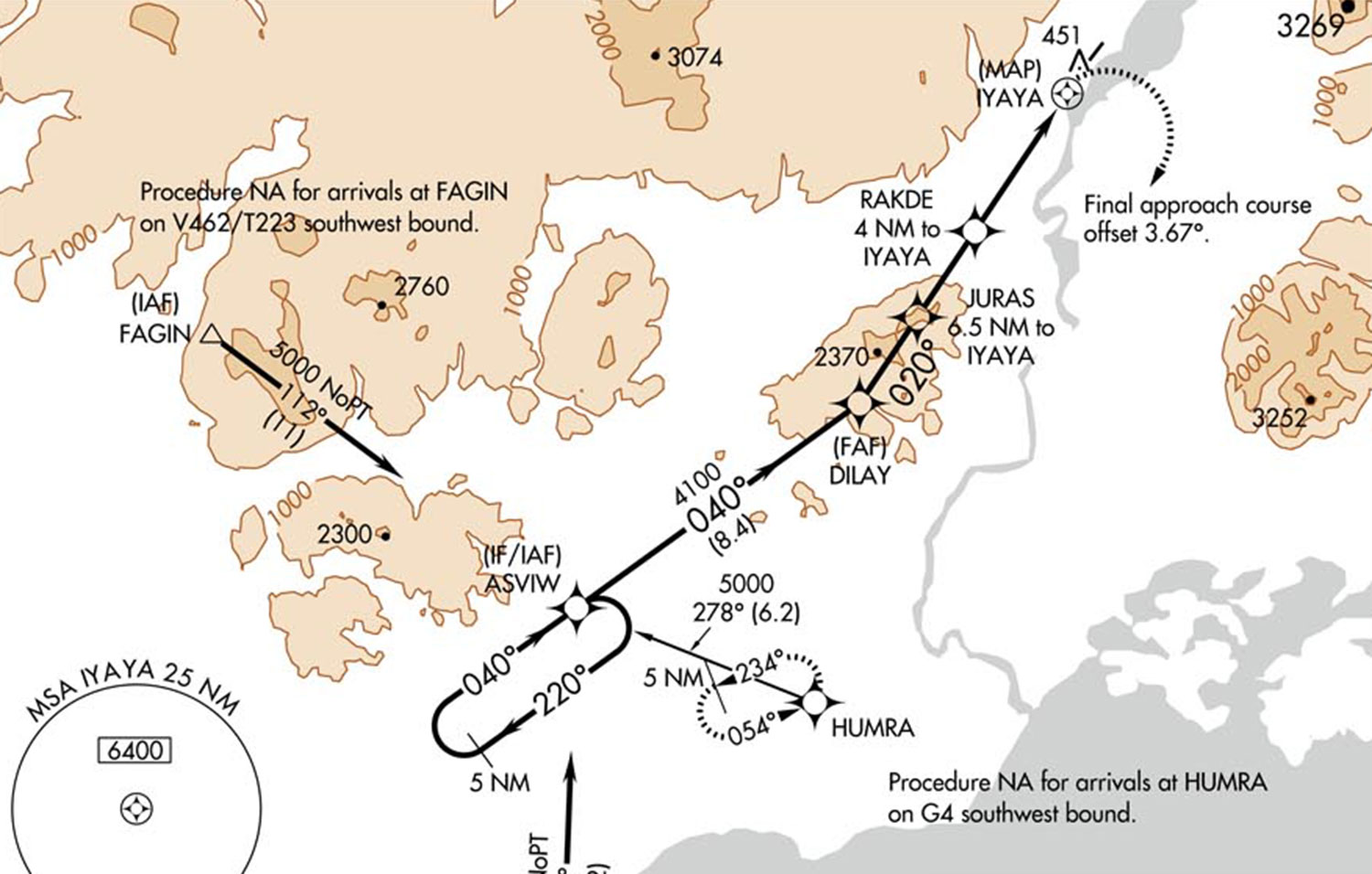
The article details two simulated IFR flights in Alaska, showcasing extreme navigation and approach challenges unique to the region.
Pilots must master both modern IFR GPS management (e.g., OBS mode, custom holds) and traditional navigation (ADF, VOR, LOC back course) to execute complex departure and approach procedures.
Flights contend with demanding environmental factors such as low visibility, strong winds, rapidly rising terrain, and specialized airport characteristics like gravel runways and extreme offset approaches.
These scenarios emphasize the importance of precise flying and are recommended for simulator practice to safely navigate challenging Alaskan IFR conditions, including "do-or-die" landings below minimums.
For this challenge you’ll take on two flights in Alaska, with IFR procedures like you’ve never seen before. Well, unless you’ve flown in Alaska. You’ll need an IFR GPS for the first flight and an ADF for the second. Any plane with modest performance will do the job. In fact, slow could be your friend on this one.
CREATE A FREE ACCOUNT
Sign up to keep reading
Create a free account to continue. Already a member? Sign in below.