Its a signature moment in the classic 80s beach-volleyball documentary Top Gun. Two Naval aviators swagger past a parked line of Grumman F-14 Tomcats. I feel the need, Tom Cruises Maverick character declares to his buddy Goose, who joins in the chorus. The need… for speed! Mav and Goose were bragging about the sound-barrier-busting velocity only a few pilots get to experience. Still, whether your winged rides top speed is Mach two or 100 knots, there is one universal truth: if youre firing up an airplane, youve probably got somewhere to go or a mission to accomplish.
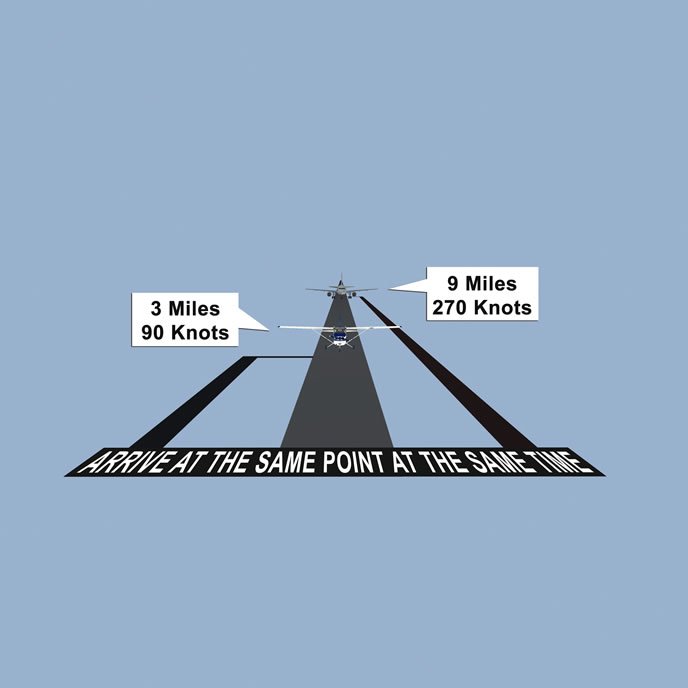
Air Traffic Control (ATC) uses speed control as a critical tool to ensure safety, maintain separation, and manage the flow of aircraft in busy airspace, especially during sequencing.
Controllers employ "miles per minute" calculations and adhere to FAA guidelines for assigning appropriate speeds, considering factors like aircraft type, altitude, and proximity to the airport.
While pilots must generally comply with ATC speed instructions, they have the right to declare "unable" if an assignment compromises safety or exceeds the aircraft's performance limits.
Speed restrictions are eventually lifted, either by specific ATC instruction, an approach clearance, or automatically within five miles of the runway/final approach fix to allow pilots to configure for landing.
It’s a signature moment in the classic 80’s beach-volleyball documentary Top Gun. Two Naval aviators swagger past a parked line of Grumman F-14 Tomcats. “I feel the need,” Tom Cruise’s Maverick character declares to his buddy Goose, who joins in the chorus. “The need… for speed!”
CREATE A FREE ACCOUNT
Sign up to keep reading
Create a free account to continue. Already a member? Sign in below.