





A new expedition will head to a remote Pacific island in November in what researchers call their most promising effort yet to solve one of aviation’s greatest mysteries—the disappearance of pilot Amelia Earhart and navigator Fred Noonan.
The Purdue Research Foundation and Archaeological Legacy Institute announced Wednesday it will investigate a “visual anomaly” spotted in satellite imagery of a lagoon at Nikumaroro, a tiny island between Hawaii and Australia. The object, dubbed the Taraia Object, matches the size and apparent composition of Earhart’s Lockheed 10-E Electra that vanished 88 years ago.
“What we have here is maybe the greatest opportunity ever to finally close the case,” said Richard Pettigrew, ALI’s executive director, in a news release. “With such a great amount of very strong evidence, we feel we have no choice but to move forward and hopefully return with proof. I look forward to collaborating with Purdue Research Foundation in writing the final chapter in Amelia Earhart’s remarkable life story.”
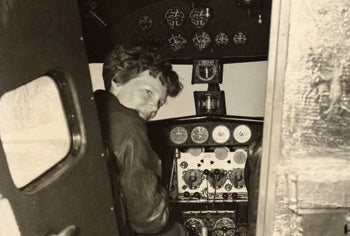
The team plans to depart from the Marshall Islands on November 5 for a five-day inspection of the potential aircraft remains. If confirmed, excavations would begin next year to recover the aircraft.
88 Years Ago
Earhart and Noonan disappeared on July 2, 1937, while attempting to circumnavigate the globe. Their last known position was over the Pacific Ocean, and despite an extensive international search at the time, no definitive evidence of their fate was found.
The satellite image gaining renewed attention was captured in 2015, just after a massive tropical storm shifted sand in the lagoon, potentially revealing part of the aircraft that had been hidden for decades. Subsequent photos show sand gradually covering the object again.
“It satisfies all the criteria,” Pettigrew told NBC News. “It’s just the right size. It appears to have the right composition. It appears to be metallic, shiny.”
The location is significant for several reasons, according to investigators:
- Nikumaroro sits very close to Earhart’s planned flight path.
- The spot aligns with the origin of four distress calls believed to be from Earhart.
- The island’s remoteness could explain why the plane wasn’t found during initial searches.
Additional evidence supporting the Nikumaroro hypothesis includes:
- A human skull and bones discovered in 1940 near an old campsite, thought to be female
- A woman’s shoe and a sextant navigation box found in the same area
- Glass bottles from the 1930s, a U.S.-made jackknife and zipper recovered by archaeological teams
- A medicine vial with partially legible letters “UCA Pharmacy” (Earhart lived in Toluca Lake, California)
“It’s like many pieces of evidence that by themselves are not conclusive,” Pettigrew said. “Taken together, they’re very convincing.”
However, not everyone agrees with the assessment. Rick Gillespie, who has searched for Earhart for decades, including on Nikumaroro, dismissed the satellite images.
“We’ve looked there in that spot, and there’s nothing there,” Gillespie said. “And the imagery shows a coconut tree complete with root ball.”
The expedition has special significance for Purdue University, where Earhart worked as a faculty member. The Purdue Research Foundation had provided funding to develop the airplane for her around-the-world attempt.
“We believe we owe it to Amelia and her legacy at Purdue to fulfill her wishes, if possible, to bring the Electra back to Purdue,” said Steven Schultz, senior vice president and general counsel of Purdue University.