














Register

NASA Engineers Tackle Aircraft Engine Noise

NASA researchers are using a supercomputer to develop software to model engine configurations.

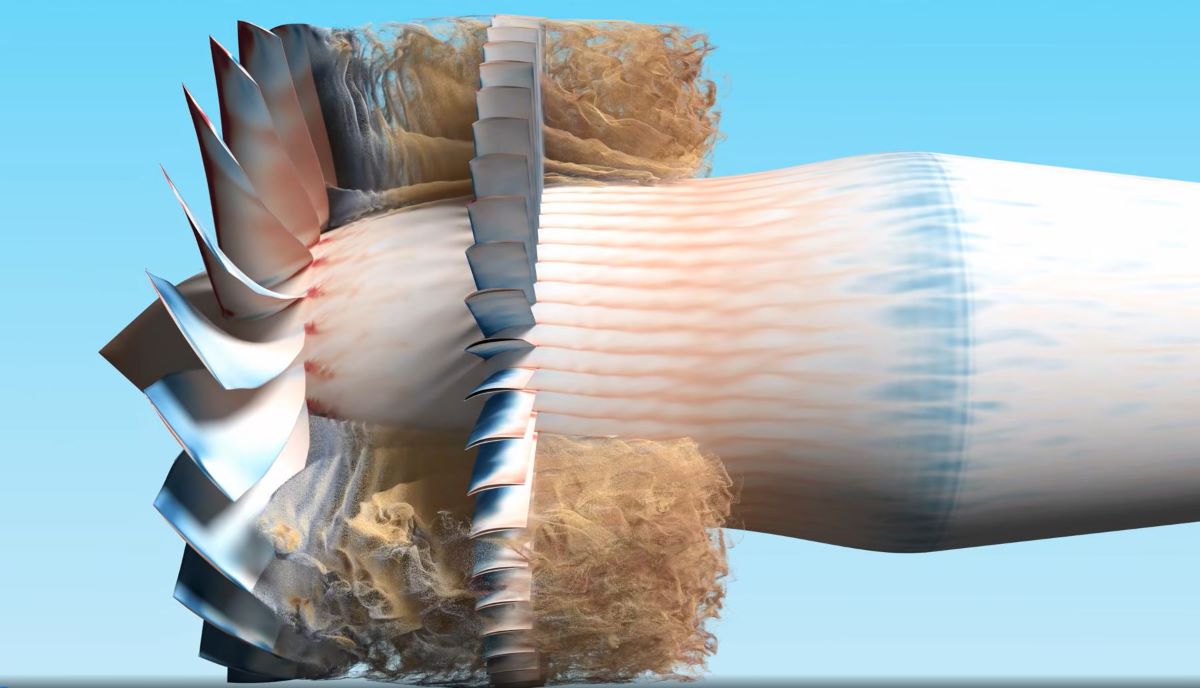
Engineers and researchers at NASA's Ames Research Center at Moffett Field (KNUQ) in California are modeling aerodynamic and acoustic fields around turbofan engines. [Screenshot, Courtesy: NASA]
Gemini Sparkle

Key Takeaways:

  • NASA researchers are using the powerful Pleiades supercomputer to model turbofan engine aerodynamics and acoustics to reduce aircraft noise.
  • The project focuses on developing faster and cheaper simulation software, employing a "sliding mesh technique," to efficiently capture complex turbulent data.
  • This research aims to facilitate easier testing and certification of new turbofan engine designs that are quieter, more fuel-efficient, and produce fewer emissions.
See a mistake? Contact us.

In the ongoing quest to make airplane engines quieter, a team of NASA researchers is turning to Pleiades, one of the world’s most powerful supercomputers.

Engineers and researchers at NASA’s Ames Research Center at Moffett Field (KNUQ) in California are modeling aerodynamic and acoustic fields around turbofan engines in order to develop software that can model engine configurations faster and cheaper. Project results will be compared to data collected at the Low Speed Anechoic Wind Tunnel at NASA’s Glenn Research Center in Cleveland to determine how the simulation techniques work with the software framework.


Ready to Sell Your Aircraft?

List your airplane on AircraftForSale.com and reach qualified buyers.

List Your Aircraft
AircraftForSale Logo | FLYING Logo
Pilot in aircraft
Sign-up for newsletters & special offers!

Get the latest stories & special offers delivered directly to your inbox.

SUBSCRIBE
