











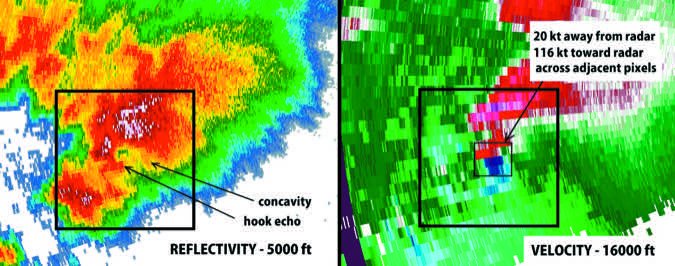


In our last issue, we talked about the building blocks of weather radar—how it was developed, the basics of radio waves, problems with radar sampling, and the important differences between composite and base reflectivity. If you haven’t read that, I highly recommend you do so to get a good grounding in radar fundamentals. In this issue we’ll take that knowledge and teach you a bit about interpretation.
My background is primarily in meteorology and I hold a certification on the NEXRAD radar, so with this grounding in weather radar I can teach you some tricks and techniques to help you make sense of what you’re seeing. I hope this article helps you think like a forecaster so you can adapt to the data available in the cockpit and make decisions that will assure a safe flight. You can also use the information just sitting at home as a storm rolls into your city.

