













Circadian rhythm is the daily alteration in a person’s behavior and physiology controlled by an internal biological clock in the brain. Body temperature, melatonin levels, cognitive performance, alertness levels, and sleep patterns are all subject to our circadian rhythm. A circadian challenge refers to the difficulty of operating in opposition to an individual’s normal circadian rhythms or internal biological clock. This occurs, for example, when the internal clock and the sleep/wake cycle don’t match the local time—like pulling an “all-nighter.”
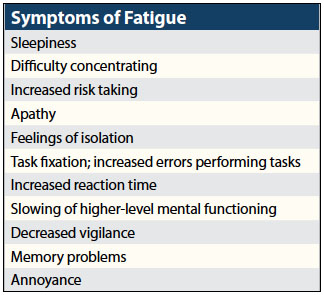
Fatigue refers to a physiological state in which there is a decreased capacity to perform cognitive tasks and increased variability in performance as a function of time on task. Fatigue is associated with tiredness, weakness, lack of energy, lethargy, depression, lack of motivation, and sleepiness. Accident statistics, reports from pilots, and operational flight studies show that fatigue is an evident concern within all aviation operations. (Advisory Circular No. 120-100, “Basics of Aviation Fatigue”)

