











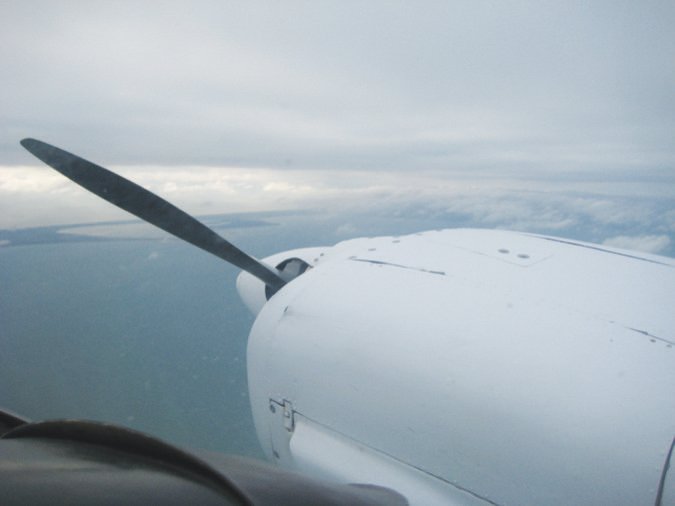


It was a warm, blustery late-spring day in Texas. Visibility was restricted by the haze, and the afternoon’s updrafts were in full bloom. The whole package made the air hot, bumpy and thick. I had a multi-engine checkride scheduled in a few days, so my instructor and I were aloft in the Piper Seneca I that I’d been using and were up to no good, trying to buff out the rough spots. This was for a commercial multi-engine checkride and emphasized instrument work.
Part of the training involves demonstrating what happens to directional control when decelerating through VMC, the minimum controllable single-engine speed, and then recovering. Our one-engine inoperative work while maneuvering involved setting power on the “failed” engine to estimate zero thrust. We shut one down and restarted it “for real,” but only in straight-and-level flight and with plenty of altitude

