Donald McPherson, a World War II Navy aviator believed to be the last surviving American fighter ace, has died. He was 103.
To be an ace, a pilot must have shot down at least five enemy aircraft.

McPherson died on August 14 in his hometown of Adams, Nebraska. Born in Adams on May 25, 1922, he grew up working on the family farm.
According to the Military Times, McPherson had aspirations to go to college and was working to raise the money when World War II started. His father cautioned him that he should enlist in the U.S. Navy to avoid being drafted as a foot soldier.
McPherson joined up on February 4, 1943, and qualified as a naval aviator, earning his wings of gold and ensign’s commission on August 12, 1944. Five days later, he married his high school sweetheart, Thelma Johnston.
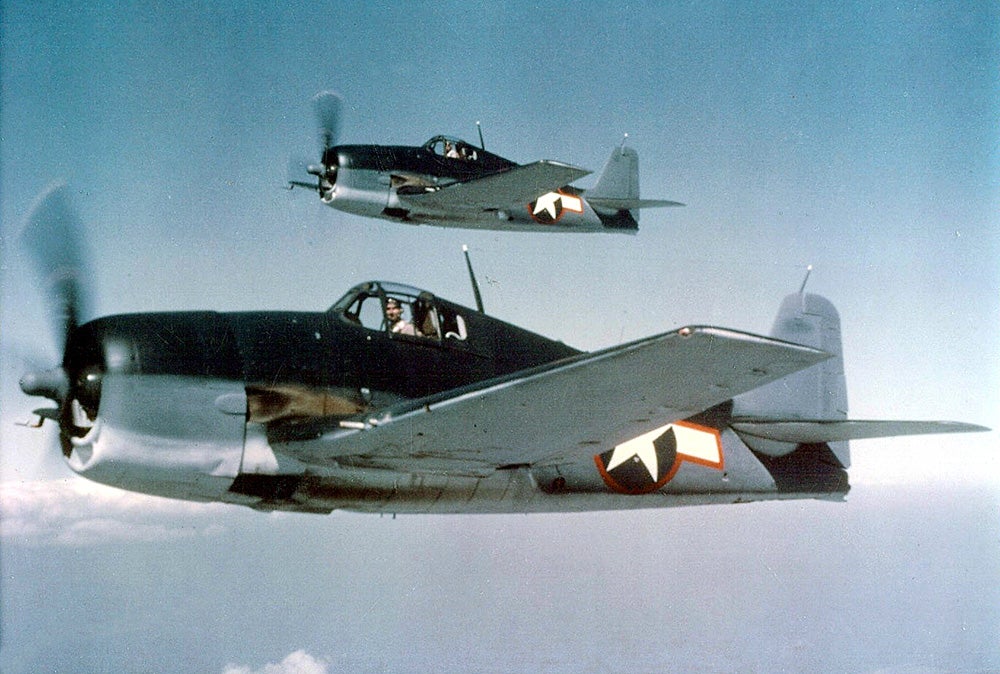
In February 1945 he was assigned to the aircraft carrier USS Essex (CV-9) in the Pacific Theater as part of the VF-83, a fighter squadron flying Grumman F6F-5 Hellcats. He flew combat patrol to protect the carriers and was part of the Okinawa campaign, where U.S. Navy and Marine pilots found themselves facing Japanese kamikaze pilots who turned their aircraft into manned bombs, intentionally crashing into American ships.
McPherson’s first kills came when his patrol was returning from an attack on the airfield at Kikai Shima, which was a staging base for kamikazes, when they spotted two Japanese aircraft approaching below them. According to McPherson, he was approximately 1,800 feet above the water and 800 feet above the Japanese aircraft. He still had ammunition left and dove down to strafe the enemy aircraft. The anti-aircraft guns on the airfield opened fire, and he said he did some fancy flying to escape.
McPherson was one of 11 aces from VF-83. VF-83 was credited with 137 victories and the loss of only six pilots. He was awarded the Distinguished Flying Cross, Air Medal, and three gold stars.
McPherson left active service on November 23, 1945, returning home to Nebraska, where he worked for the U.S. Postal Service and raised two daughters and a son. He became active in his children’s lives, coaching youth sports and becoming a Boy Scouts leader. He retired from the postal service in 1988 and became a farmer.
In January 2015 he was named to the Nebraska Aviation Hall of Fame and in May of that year he was one of 37 American aces awarded the Congressional Gold Medal in Washington, D.C.
According to McPherson’s daughter, Donna Mulder, during the war her father experienced multiple close calls—including returning to an aircraft carrier with bullet holes in his airplane. He felt shooting down the kamikaze aircraft, more so than the single fighters, was the most important contribution to the war effort.