














Register

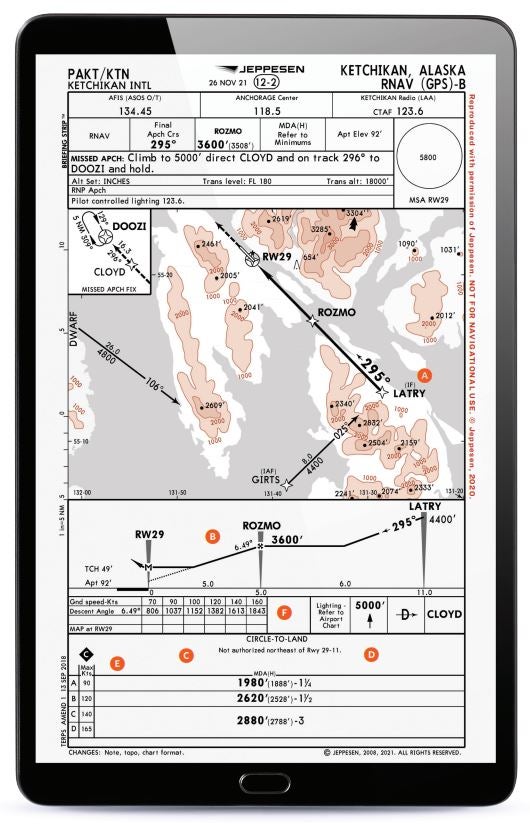
Ketchikan, Alaska RNAV (GPS)-B (PAKT)

Consider flying this approach even in VFR conditions.

PAKT RNAV (GPS)-B [Reproduced with permission of Jeppesen]
Gemini Sparkle

Key Takeaways:

  • Pilots flying the Ketchikan RNAV (GPS) approach must utilize feeder waypoints for obstacle clearance and be prepared for a significantly steeper descent angle (6.49 degrees) requiring high descent rates.
  • This approach provides only high circling minimums, making it unsuitable for low weather conditions and primarily serving to sequence aircraft from the en route environment.
  • Adhering to slower approach speeds (under 90 knots) is crucial for achieving the lowest minimums and ensuring terrain clearance, especially given the lengthy and complex missed approach procedure.
See a mistake? Contact us.

A bucket list trip for many pilots, flying an aircraft up to Alaska can involve some of the most scenic flying in a pilot’s lifetime. For many who are following the coastal route, Ketchikan becomes a first major stopping point for fuel when heading north from the continental U.S. Being next to the ocean, weather conditions may require a pilot to fly an RNAV (GPS) approach. As a potentially unfamiliar mountainous area, flying this approach might be a good idea even in VFR conditions to guarantee a clear shot to the airport

A. Use Feeder Waypoints

Jason Blair

Jason Blair is a flight instructor and an FAA designated pilot examiner, and an active author in the general aviation and flight training communities.

Ready to Sell Your Aircraft?

List your airplane on AircraftForSale.com and reach qualified buyers.

List Your Aircraft
AircraftForSale Logo | FLYING Logo
Pilot in aircraft
Sign-up for newsletters & special offers!

Get the latest stories & special offers delivered directly to your inbox.

SUBSCRIBE

