













It’s Time to Ride Post-Oshkosh Wave Once Again

EAA AirVenture never ceases to inspire and energize the aviation community.

EAA AirVenture
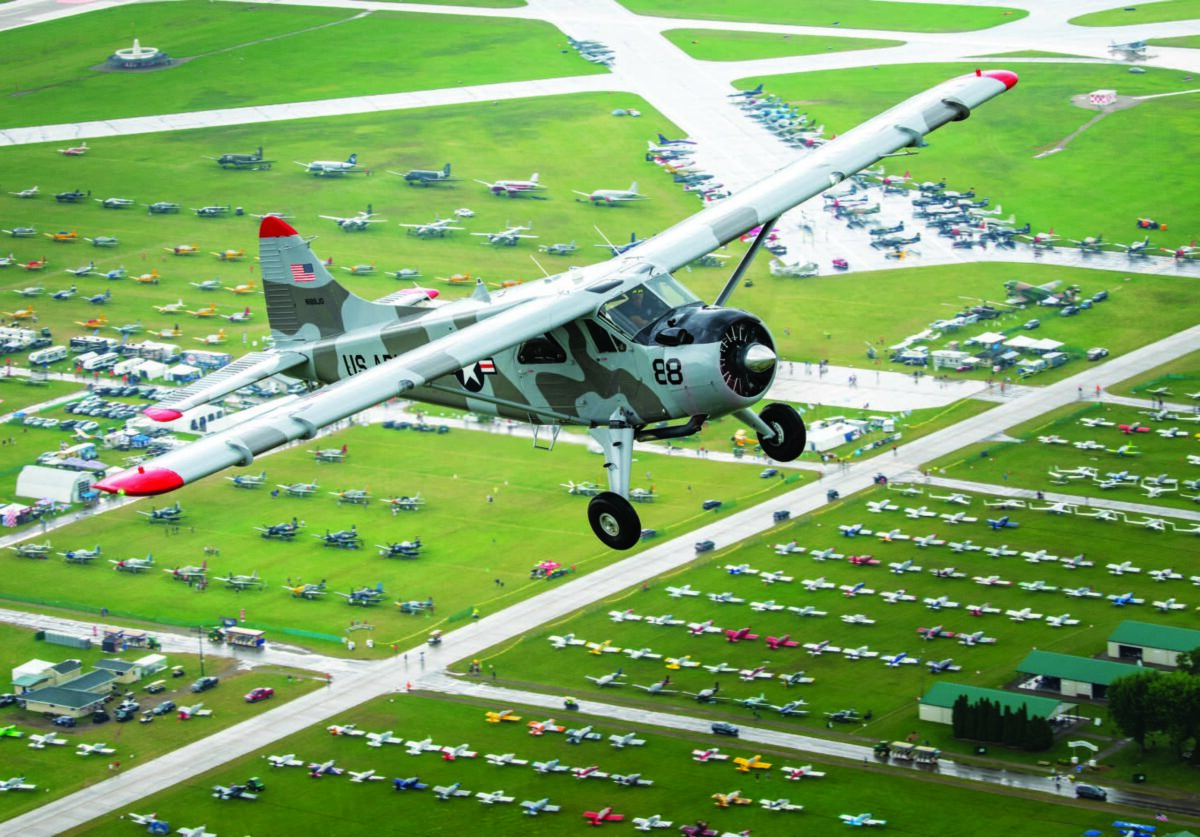
AirVenture in Oshkosh [Courtesy: Experimental Aircraft Association/Connor Madison]
Gemini Sparkle

Key Takeaways:

  • EAA AirVenture serves as an immersive and comprehensive annual event for aviation enthusiasts, showcasing a vast array of diverse aircraft (Warbirds, Homebuilt, Vintage) and deeply reenergizing passion for aviation.
  • A key announcement at AirVenture was the new MOSAIC (Modernization of Special Airworthiness Certification) rule, a significant regulatory change expanding sport pilot privileges and creating new opportunities for flight schools.
  • The event functions as a vital educational and career hub, offering numerous seminars on aviation topics, acting as a job fair, and providing hands-on skill development through the Pilot Proficiency Center for both pilots and non-pilots.
See a mistake? Contact us.

There is something about being surrounded by pilots and aviation enthusiasts that reenergizes your passion for aviation.

I am writing this on the airliner on the way home from a week at EAA AirVenture, the annual migration thousands make each year to Oshkosh, Wisconsin. For the unfamiliar, Oshkosh is so much more than a fly-in/airshow/trade show. It is a chance to be immersed in aviation and  learn what opportunities are out there.
There are so many interesting aircraft and people at AirVenture it is easy to get overloaded. It is a target-rich environment. There is almost too much to see.

This year the afternoon airshow, which grabs everyone’s attention, was a top-notch affair. But it did have some competition in the form of a pair of Goodyear blimps that flew circuits over the grounds. When they were featured as part of the show-center performance, it was enough to make everyone stop and watch. There is something about lighter-than-air craft that makes some of us wistful.

AirVenture is so large and diverse that you have to go in with a plan. As most of my time at the show is spent prowling the grounds looking for interesting airplanes and/or people that would make good feature stories for FLYING Magazine, I began in Warbirds, where there were rows of fighters and trainers and transports.

Once upon a time, these aircraft, in particular the fighters and bombers, filled the skies, but today they are down to just a handful of airworthy examples. Meanwhile, their modern counterparts were on display at the show center.  

Homebuilt (experimental aircraft) was rife with the rows and rows of Van’s Aircraft with their Mustang-esque tails, along with Carbon Cubs, Velocities, Glasairs, etc. When you look at these airplanes, remember you are seeing hours upon hours of attention and craftsmanship.

I spent a lot of time in Vintage, looking at the carefully restored and cared-for aircraft. As I was reminded by many owners, you do not own an aircraft, per se—you are its caretaker.

There was much discussion about the release of MOSAIC (Modernization of Special Airworthiness Certification). In a nutshell, it’s the biggest thing to hit the aviation landscape since 2004, when the sport pilot/light sport aircraft (LSA) rule was published. 

MOSAIC expands the type of aircraft that the holder of a sport pilot certificate will be eligible to fly and, with additional training, increases their privileges. To the guy at the airport who always asks me why his Cessna 140 wasn’t included as an LSA in 2004, I imagined you doing the happy dance when you heard the news.

Transportation Secretary Sean Duffy
Transportation Secretary Sean Duffy announces the new MOSAIC change on Tuesday at EAA AirVenture in Oshkosh, Wisconsin. [Credit: Ryan Ewing]

MOSAIC may be a new revenue stream for flight schools that have Cessna and Piper trainers that fit the new rule. More than once my flight school could not provide sport pilot training because we didn’t have an LSA in the fleet or because the customer was “too sturdy” to fit in one with a CFI.

Learning (and Teaching) Take Place

There are seminars on pretty much everything, from how to use specific products (thank you, Garmin), best practices for aircraft maintenance, best apps for flight planning, and the big kahuna, different aviation careers.

The FAA and National Transportation Safety Board (NTSB) were there to answer questions. For those who wanted to turn wrenches or have a career in the cockpit, there were airlines, colleges, and universities in attendance as well. 

Many aspiring aviators used AirVenture as a job fair, and many come back years later to share their knowledge and experience. Such is the case of a friend of mine, Heather “Ramp Rat” McNevin, a retired air traffic controller who was called upon to present a seminar on “all things ATC.”

The talk was comprehensive and, according to McNevin, delivered at the pace of ATC. She shared her knowledge, which included the “proper phraseology to use, the details of multiple frequencies and different landlines, how to get flight following, border crossing codes, etc.”

I have known “Rat” for the better part of 20 years—we met at the Women in Aviation Conference in 2000. She was a teenager and a student pilot, and I was working on my IFR and commercial tickets.

In 2003, three days after earning my CFI certificate, I provided Rat, who was then a commercial candidate, with ground instruction on the intricacies of the complex propeller as we huddled under the wing of a BT-13 during an Oshkosh rainstorm. Yes, it’s a low-wing aircraft, but it was the closest one when the sky opened up, so we dove for shelter.

Today she holds multiple certificates, and in a few weeks she starts a job as an assistant professor at Minnesota State University at Mankato. 

Vintage rows in the morning at EAA AirVenture 2025 [Credit: Meg Godlewski]

Pilot Proficiency Center Reaches Many

As in years past, many CFIs volunteered their time at the Pilot Proficiency Center (PPC), located adjacent to the EAA Aviation Museum. I was one of those CFIs.

The PPC uses Redbird advanced aviation training devices (AATDs) to put pilots through their paces. This year we had scripted scenarios that encouraged the client to test and build skills, in particular decision making. There were two basic script packages: IFR and VFR. There was also something called free flight, where the client came in and told us what they wanted to work on. 

I spent 12 hours in the PPC, working with as many clients. I taught everything from the prescripted specific IFR and VFR scenarios and approaches to the procedure for getting out of a spin.There were a few virtual carrier traps as well. I assure you learning took place. 

This year Jolie Lucas, aviation speaker and FLYING Magazine contributor, presented her “Right Seat Ready” seminar, which is geared toward helping the non-pilot in the right seat of an aircraft get a better understanding about the flying process. The participants were then offered a session in the Redbird to earn some hands-on experience with reading cockpit instruments and using control surfaces. Many of the people in the seminar are there just in case they need to help their pilot, who is often their significant other. 

If you are a pilot trying to persuade someone you care about to fly with you, I highly recommend this seminar and the accompanying Redbird session. For the CFIs, it is a different kind of teaching, as we have to walk a line between giving them the information they need while avoiding burying them in aviation jargon. And if we really do a good job, the right-seater may develop an interest that results in them pursuing a certificate.

A Debt Is Paid

There was one very special Redbird session where a debt of honor had to be paid. Months ago I promised a friend who lives in Texas that I would teach him how to fly a non-directional beacon (NDB) approach. As I am all the way in Seattle, the logistics dictated that we meet in Oshkosh.

There are those who argue that the NDB is antiquated technology—and it is. But if your aircraft, or the one you rent, is equipped with an automatic direction finder (ADF), the analog device used to navigate to the NDB, as some still are, it behooves you to know how to use it, or at least be able to explain its use to the DPE if it is in the aircraft you use for your check ride. 

According to the FAA, there are less than 150 NDB approaches still in use in the United States, so yes, they are rare. But please note that NDBs are often used at airports adjacent to outdoor recreation and beachside resort communities—you know, the ones that hire you for the summer season for a job that enables you to put many hours in your logbook and come home with a rocking tan.

I say this as I have had clients who needed to learn how to fly an NDB approach in preparation for a check ride with a potential employer that insisted the pilots know how to fly one without relying on a GPS overlay.

During the lesson I noticed there were people standing behind us watching the learning/teaching taking place. Perhaps it was like seeing a UFO land—you had to see it to believe it.

Meg Godlewski

Meg Godlewski has been an aviation journalist for more than 24 years and a CFI for more than 20 years. If she is not flying or teaching aviation, she is writing about it. Meg is a founding member of the Pilot Proficiency Center at EAA AirVenture and excels at the application of simulation technology to flatten the learning curve. Follow Meg on Twitter @2Lewski.

Ready to Sell Your Aircraft?

List your airplane on AircraftForSale.com and reach qualified buyers.

List Your Aircraft
AircraftForSale Logo | FLYING Logo
Pilot in aircraft
Sign-up for newsletters & special offers!

Get the latest stories & special offers delivered directly to your inbox.

SUBSCRIBE

