Register

Training & Sims

Tight On Fuel

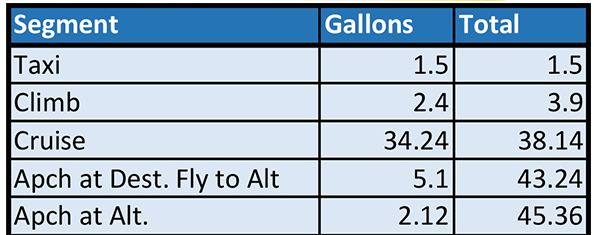
That typical one-hour fuel reserve most of us use for personal flying works great, mainly ’cause we rarely need it. In most cases, there’s four-plus hours of fuel for a two-hour flight that includes an alternate just down the road. Use a (conservative) default fuel burn to estimate it, and you’re all set. But when […]

Read More »

Go Speed Racer

Today’s sim challenge is a race from Riverside, CA (KRAL) to Santa Monica, CA (KSMO), with stops along the way at Hawthorne (KHHR) and Fullerton (KFUL). It’s a quick trip—and you’re going to make it even shorter. The goal is to fly it as fast as possible, without getting a call from the virtual FAA […]

Read More »

RTC In Florida

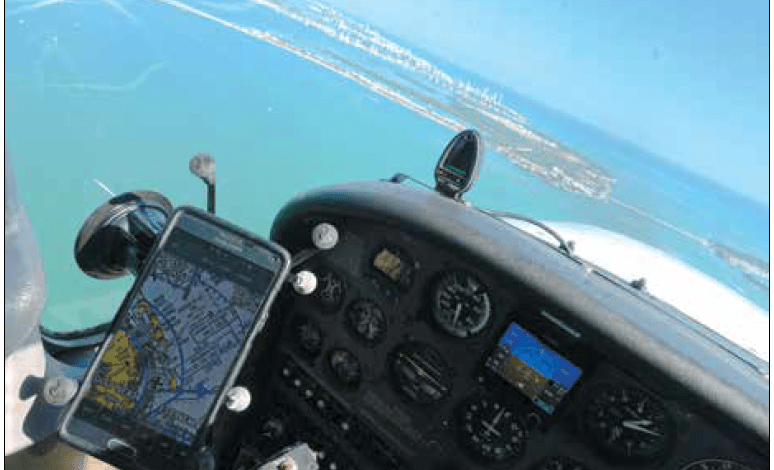
Since I’ve turned more pages in my personal calendar, my insurance required recurrent training increased from once in two years to every year. As much as I hate to admit it, the performance I demonstrated this year—although I was legally current and felt somewhat proficient—suggests that is a reasonable demand. This year, I chose Recurrent […]

Read More »

Tem-Work In Tampa

The Lear 35 medical-transport flight on which I was the captain had just departed Tampa International (KTPA) for Portland, ME (KPWM) carrying an elderly patient and his wife. It was a busy departure as we were already looking for deviations around the typical Florida summertime thunderstorms. The “pop”—accompanied by the sound of rushing air—came just […]

Read More »

Roll the Trucks

Some time ago, I wrote about what happens during an emergency in the tower. But wait. There’s more. Of course, few pilots have declared an emergency, and even fewer have actually had an incident or accident. Crashing an airplane is on nobody’s bucket list (I hope), however the probability of surviving a plane crash varies […]

Read More »

ADS-B TO REPLACE RADAR

Capstone, the first large-scale ADSB prototype, was deployed in Alaska in 1999 because Alaska had (and still has) the highest of any state’s aviation accident rate. Despite this challenging environment, by 2006, Capstoneequipped aircraft demonstrated a 47 per cent decline in accident rate compared to non-equipped aircraft in southwest Alaska. That same year, the FAA […]

Read More »

Code of Conduct

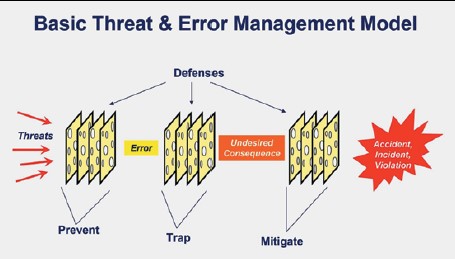
The word “Model” is in the title because it articulates ways to achieve flying excellence without a canned set of rules. Tailor the code to help you become the best, safest aviator possible. Prerequisites The first prerequisite is a clear understanding of the fundamentals of flight. The code is not specific, but those four fundamentals […]

Read More »

ATC Versus Pilot Regs

You might have heard the old adage, “The flight cannot be cleared for departure until the gross weight of the paperwork exceeds that of the aircraft.” While cynical, this reference to all the required processes, rules, and regulations makes a good point. Regulations and procedures for pilots largely mirror those of ATC, but these might […]

Read More »

Legal? Or Safe?

Recently, a subscriber sent me a note to ask about the legality of departures into bad weather. At first, this seemed like a rather simplistic question, but as I dug, the back story made it a reasonable discussion. That pilot had a career in the military. As with most large bureaucracies, its operations were rather […]

Read More »

Safety Management

Kemper Aviation, a now-defunct flight school in Lantana, FL, was once clogged with over 100 young students. Some showed a lack of selfcontrol extending from their youthfully turbulent private lives on the ground upward to the skies of South Florida. Youngsters may think they are invulnerable. Most had yet to learn that invulnerability is a […]

Read More »
Pilot in aircraft
Sign-up for newsletters & special offers!

Get the latest stories & special offers delivered directly to your inbox.

SUBSCRIBE