Register

Training & Sims

Gettin’ Down

Having departed from Pompano Beach, Florida, we’re going to Greensboro, North Carolina, to visit family. The winds at Greensboro’s Piedmont-Triad International (KGSO) are northerly and the ATIS says we should expect the ILS 5R approach. All else being equal, we prefer GPS and LPV to localizer and glideslope. We ask for the RNAV approach to […]

Read More »

Night Fright

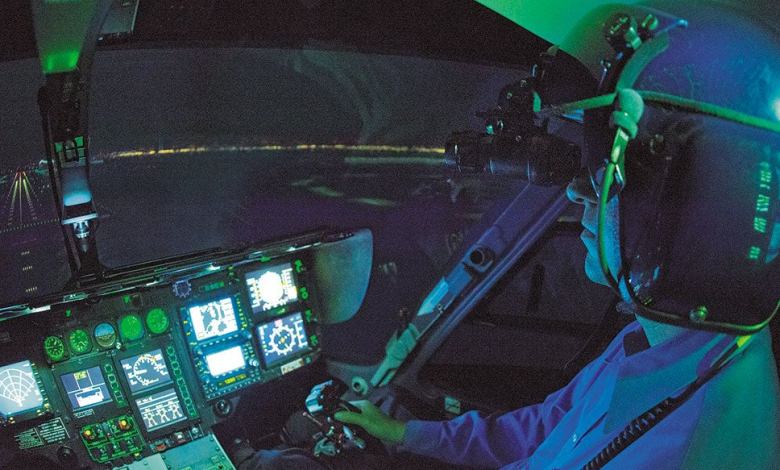
Today’s Sim Challenge is just an out-and-back. You’ll start on the ramp at Santa Maria, California, (KSMX) and hop over the hills a scant 76 NM to Bakersfield Muni (L45). Leg Two is just the reverse. Simple … except you’ll set the outside visuals to deep nighttime with ceilings of 1000 feet at KSMX and […]

Read More »

Instrument Currency

Instrument pilots know that IMC is challenging and far less forgiving than flying visually. Proficient flying by instruments is a must for us lest we enter the NTSB annals. When the ink on our instrument tickets was still wet, our skills were ultra-sharp. But as time passed, without continued practice those instrument skills slowly atrophied. […]

Read More »

FAA Says Hand Fly More

Autopilots are great. First and foremost, they’re safety-enhancing devices. They free us from the mundane, but often consuming, task of simply keeping the airplane where it should be. This allows us to better manage the myriad other things we have to do. Plus, of course, it reduces fatigue. What could be better? Indeed, that’s all […]

Read More »

Staying Engaged

Recently I attended a Rusty Pilot session and learned (or re-learned as the case may be) several aspects of our aviating world that laid dormant in my little gray cells for far too long. Although I have been an active presenter of this constructive AOPA educational series for three years, it has been on hold […]

Read More »

Creative Climb

Low IMC approaches are often the highest-workload procedure for single-pilot, single-engine flights. But departures can be a handful, especially when the weather is between VMC and IMC. Counterintuitive, yes. That’s because there’s more than one option in addition to flying an IFR published procedure. Visual departures followed by IFR routing, obstacle departure procedures (ODPs) that […]

Read More »

What’s the Vis?

Just one day is all it took for the weather at Dalton, Georgia, KDNN, to go from sunny skies to cloudy and grey. But with higher freezing levels still allowing for cross-countries of modest length, you decided to stick with your plan to fly 211 miles from Louisville, Kentucky, to Dalton. There, you’ll visit a […]

Read More »

Zooming to Zero-Zero

The weather tanked. Fuel is low. Your right arm even aches in homage to Jimmy Stewart’s plight from Strategic Air Command. The 1955 Hollywood controller stares into the scope and reports the field is 100-¼. He offers a hold at the marker, but you say, “I can’t hold. I’m committed. I don’t have enough fuel […]

Read More »

Return of Skew-T

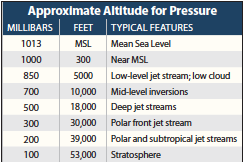
Two years have passed since we discussed the Skew-T diagram, and it’s time to re-acquaint ourselves with this tool. This is no easy subject, but we’ll avoid the overly technical talk and focus on the important stuff. Perhaps you resist the Skew-T due to its complexity, figuring you could just grab the upper-level winds and […]

Read More »

High-altitude Training

Last year I got my multi-engine rating as I consider transitioning to a pressured twin. One of my instructors reminded me that I’d need a high-altitude endorsement to fly something capable of topping 25,000 feet. I probably read that somewhere, but it didn’t register. It’s true—I need the endorsement so I went about getting it. […]

Read More »
Pilot in aircraft
Sign-up for newsletters & special offers!

Get the latest stories & special offers delivered directly to your inbox.

SUBSCRIBE