Register

Technique

Stupid Pilot Tricks

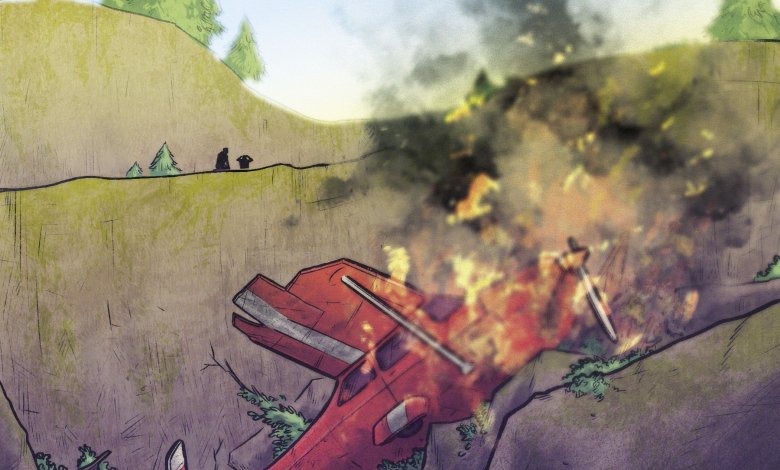
Sure as the BRS Save-O-The-Month calendar flips to a new year, we here at the Department of Self-Righteous Finger Pointing, present the best of the dumbest ways pilots have contributed to keeping the skies safe by rendering as many aircraft as possible unairworthy. Today, we review the year 2016, which reflected a modest improvement in not crashing but still logged 1627 accident/incidents worthy of NTSB note. Thats 4.46 events per day or roughly one prang every 5.3 hours. As with past Stupid Pilot Tricks, we use NTSB probable cause results and dont report on fatal accidents.
Read More »

TERPS 201

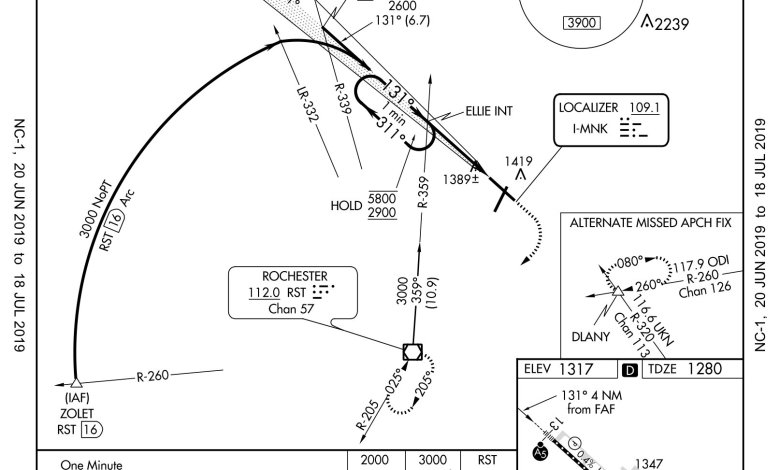
Last month, we gave you a survey course on what happens behind the scenes of approach procedures (TERPS 101). Thats a prerequisite for this course, since were going to build on what was covered in that article to examine the nuts and bolts of other types of procedures. In case you didnt complete the prerequisite, lets quickly go over what you need to know.

Read More »

DESIGN YOUR OWN SIM

There are many considerations to work through before your first purchase. Indeed, for the most economically efficient path to the best simulator for your purposes, you should work through all those considerations before making any purchases.

Read More »

Diary of a Descent

Few things are more annoying to me than when something simple turns complicated. For instance, our local grocery store is only a five-minute drive from our home. Some days, though, unexpected traffic, an unfortunate accident, or construction transforms a five-minute jaunt into a 20 minute slog-usually when Im in a hurry, too.

Read More »

TAKE YOUR PICK

When planning an approach to minimums there are many items to check, like the missed approach point. But sometimes, there can be more than one MAP … if youve briefed accordingly.

Read More »

Clearing Flags

Its certainly legal to fly through the AIRMET. These are advisories covering large areas. But it behooves you to determine that your flight plan wont enter known or forecast light or moderate icing conditions as prohibited in 91.527. Here goes. Theres a stationary front just west of the route, bringing in cloud layers and scattered showers. Freezing levels will hit between 7000 and 12,000 feet. So, at 8000 feet, you do risk picking up ice. One lone pilot report from a single-engine turbine over Iowa shows negative ice in climb from 3000 to the tops at 11,000. This isnt all that useful since youre flying lower and slower, but you are willing to climb as high as 12,000 feet to be on top. Your Plan B, while not at all mission-friendly, is to turn back to warmer air and land in Iowa, or even return to Bowling Green if thats best.

Read More »

Bigger Class B?

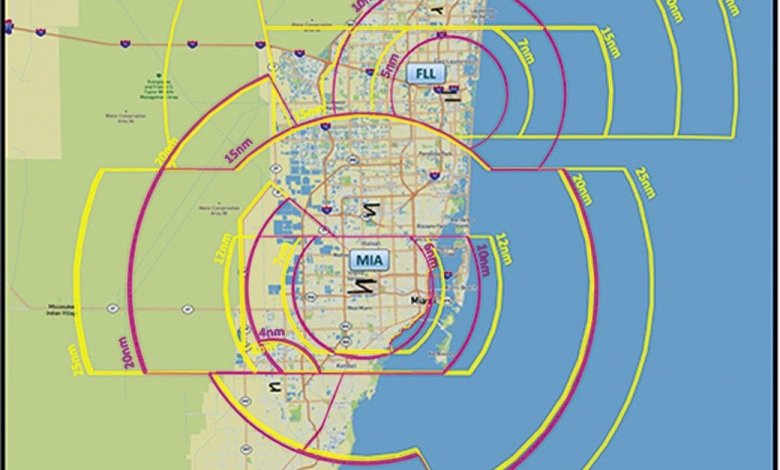
I used to fly out of an airport on the coast just south of the San Francisco Class B. While controllers tried to permit transit, there was no guarantee. If they also have a 91.131(a)(2) problem, that Miami solution would seem attractive to San Francisco. The result for VFR traffic on a trip headed north might be to add up to 100 miles or more to bypass the Class B to the east, or a deviation far out over the Pacific Ocean, neither of which is an attractive alternative.

Read More »

When Things Go Wrong

It should be obvious that we never say the words, Declare, Emergency, Mayday, or Pan-Pan unless we indeed have a dire situation. These words have the potential to flip a controllers airspace upside down faster than a Vmc roll, so they should be used with discretion. Even saying Declare by itself could lead us to believe that assistance is needed, as well as Pan-Pan (Urgent condition). Because Pan-Pan is considered an urgent condition (maybe not a full-blown emergency), it has the potential to turn into Mayday (Distress) so we mostly treat it as such.

Read More »

Spotting Traffic

TCAS II is the most comprehensive form of TCAS, but its range depends on what it is asked to do. Overall pulse detection range is 30 NM for Mode S transponders and 14 NM for Mode A/C units. Surveillance must be reliable within 14 NM, but TCAS II will only assess threats within 12 NM as possible RAs. TCAS II guarantees system reliability within at least 4.5 NM. Two TCAS II systems can coordinate RAs to maximize vertical separation, typically 300-700 feet. There is even a reverse RA if one aircraft fails to respond correctly in the latest version 7.1 software.

Read More »

A Visual in IMC

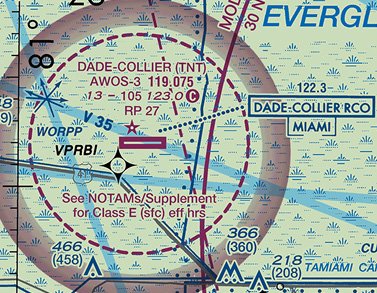
Let’s consider a situation. We are flying over the Florida Everglades in low IMC. Our alternator just died, which clearly counts as an emergency in IMC. So, we must land. Now! Wind is blowing from the west at 25 knots and we are close to Dade-Collier Transition and Training Airport (KTNT). Although it used to have three approaches to Runway 9-an ILS, an NDB and an RNAV-the only one now available is the RNAV (GPS) RWY 9 approach. With that wind, we certainly will not be landing on Runway 9, even though the runway is 10,500-feet long.

Read More »
Pilot in aircraft
Sign-up for newsletters & special offers!

Get the latest stories & special offers delivered directly to your inbox.

SUBSCRIBE