IFR Magazine

Download The Full August 2019 Issue PDF

The FAA considers the weather requirement met if the pilot gets a standard briefing within two hours of departure, then an abbreviated briefing thirty minutes before departure if the weather is questionable. Gaining a good idea of the big picture, a feel for trends, and all supporting weather reports is enough to make the go/no-go decision.

Read More »

Deadstick: The Movie

Get ready to star in this adventure by positioning your aircraft on Runway 24 at Muskegon County (KMKG) in Michigan. Pick whatever aircraft best resembles an aircraft you fly. If you have the option for retractable gear, you might want to use it as that adds a variable to this exercise and makes it more, um, fun. But the choice of the airplane is really up to you. If you fly a twin, slum it for this sim challenge and go back to the high-performance single you probably traded in for your first twin.

Read More »

How the Wind Blows

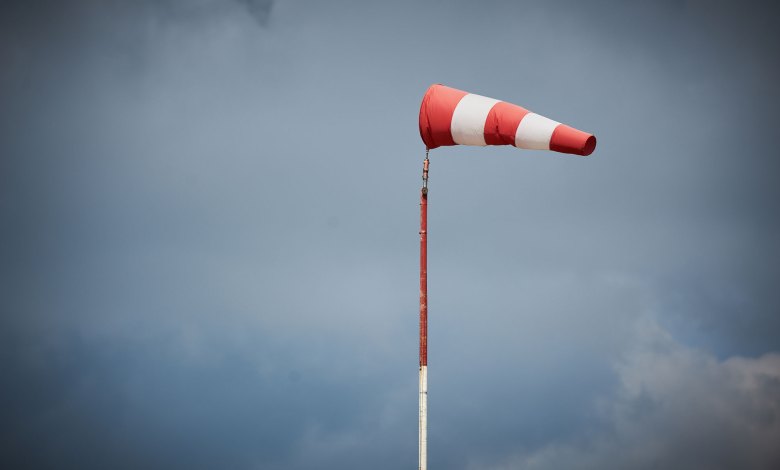
The root cause of wind is the unequal heating of the earth. We usually take it for granted that tropical areas are hot while polar areas are cold. But whether youre in Greenland or Venezuela, the sunlight is the same. Its the angle at which the suns rays hit the ground that makes the difference. Near the equator, the summer sun is at very high angles. But, in Greenland the summer sun never gets higher than about 30-40 degrees above the horizon, spreading the energy over a larger area, reducing heating of the ground and air.

Read More »

On The Air: August 2019

I called Center back and noted that BEADS was a voluntary reporting point and asked why they were requesting the report. The controller-I think I heard him laughing-said that their shift was ending at 2300 hours and they had a bet as to whether I would reach it before they left for the night.

Read More »

Briefing: August 2019

Allied Pilots Association President Daniel Carey vigorously defended the Ethiopian Airlines pilots who died when their Boeing 737 MAX overpowered their determined but ultimately futile attempts to keep the airplane from diving into the ground. Carey and several others testified at a hearing held by the Houses Subcommittee on Aviation as a stakeholder in the aftermath of the lengthy grounding of the new aircraft. Carey said public comments that cast doubt on the skills and professionalism of the Ethiopian crew are baseless and offensive. I am very familiar with Ethiopian Airs pilot training program and facilities, and I can tell you that they are world-class, he told committee members. To make the claim that these accidents would not happen to U.S.-trained pilots is presumptuous and not supported by fact. He also called for changes to the FAA certification process and warned of training shortcomings for pilots returning to the MAX with its new software.

Read More »

Reading the Fine Print

Recently, we heard from a reader with a question about an approach into Carlisle, Pennsylvania (N94). The RNAV (GPS)-A approach has a final approach course thats offset from the runway by around 12 degrees and a standard three-degree descent angle. Approaches are usually published with only circling minimums when the final approach course alignment relative to the runway exceeds 30 degrees (for most procedure types) or the descent angle is greater than 3.77 degrees (for Category C and below). Since neither of these reasons apply to this approach, why doesnt it have straight-in minimums?

Read More »

Going Around Weather

We all have a different way to go about our flight planning, but most of it is along the lines of where to go, how high, how much fuel, weight and balance, etc. You factor it all into the plan, but at some point youll add that X for some bad weather and a re-route. Maybe the weather is fine where you are departing but not good where you are going, or vice versa. Depending on the mission, what are your options? It all comes down to a go/no-go on what youre comfortable doing and not doing. This is the typical process regardless of whether youre filing VFR or IFR.

Read More »

Readback: August 2019

In the Report Leaving article in February, the approach clearance with a vector to FALIX did not include a descent. Many years ago, I was taught to stay at the last assigned altitude until established on a published route. In this case, I guesstimate that you would have only a couple of miles, at best, to lose 1300 feet after intercepting the localizer.

Read More »

Living is Risky

Anyway, once we accept that GA flying is dangerous, we can focus on making it less so. Look at maintenance. Tony Saxton of TAS Aviation, a Twin-Cessna specialist, reports that the total number of annuals they can do in a year has decreased by a whopping 28 percent simply because theres more to inspect (from ADs, service bulletins, or just from experience) and more discrepancies to fix; their comprehensive annual merely takes longer.

Read More »

Download The Full July 2019 Issue PDF

A prominent Alaskan airline and tour company voluntarily ceased operations in late May after two fatal crashes involving its floatplanes in a week. A total of six people, most of them cruise ship passengers, died May 13 when two Taquan aircraft collided while taking the passengers on a flightseeing trip. On May 21, a pilot and passenger died when a Taquan commuter flight from Ketchikan to Metlakatla Harbor cartwheeled on landing and came to rest inverted with the cabin submerged. On May 22, the airline issued a statement saying it had stopped flying indefinitely and that the tragedies left the company and staff reeling.

Read More »
Pilot in aircraft
Sign-up for newsletters & special offers!

Get the latest stories & special offers delivered directly to your inbox.

SUBSCRIBE