IFR Magazine

Briefing: July 2019

A prominent Alaskan airline and tour company voluntarily ceased operations in late May after two fatal crashes involving its floatplanes in a week. A total of six people, most of them cruise ship passengers, died May 13 when two Taquan aircraft collided while taking the passengers on a flightseeing trip. On May 21, a pilot and passenger died when a Taquan commuter flight from Ketchikan to Metlakatla Harbor cartwheeled on landing and came to rest inverted with the cabin submerged. On May 22, the airline issued a statement saying it had stopped flying indefinitely and that the tragedies left the company and staff reeling.

Read More »

Route Planning

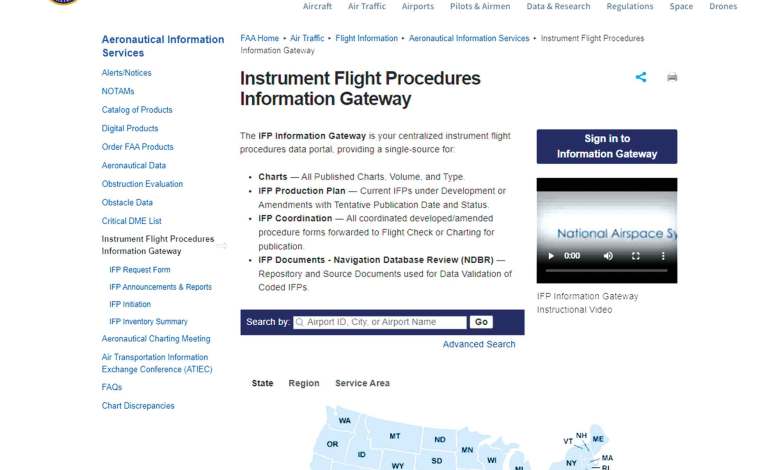
This is a long flight, so you want to minimize distance and go as direct as possible. You scan the route from TAFOY to KFSM on the chart, and it doesnt pass through any special use airspace (SUA), so you could go direct. But, you want to comply with the AIM guidance (see below) and pick a fix or two in each centers airspace. You zoom in on the chart to see TAFOY clearly, then just scroll the chart to the east along your route, looking for fixes on your route that you could add.

Read More »

Making Do

There are a few things in flying life we might take for granted. In fact, some of us are downright spoiled. For instance, flatlanders (like me) get 99.9 percent radar coverage in our mountain-free region, all taken for granted. Southerners take for granted their three seasons of comfortable flying. Those who fly to larger cities all the time definitely take for granted the big runways, ATC help, and all the information they need at their fingertips.

Read More »

Summer Hazards

Without those tools its important to get on the ground or find a route out of the activity if buildups start growing around you, because air mass storms often grow as clusters and the open spaces will quickly close in. If you dont think air mass storms are a problem, check out our August 2018 issue that details two seemingly benign air mass storms: one that downed a Piper PA-23, and another that downed a Boeing 727.

Read More »

On The Air: July 2019

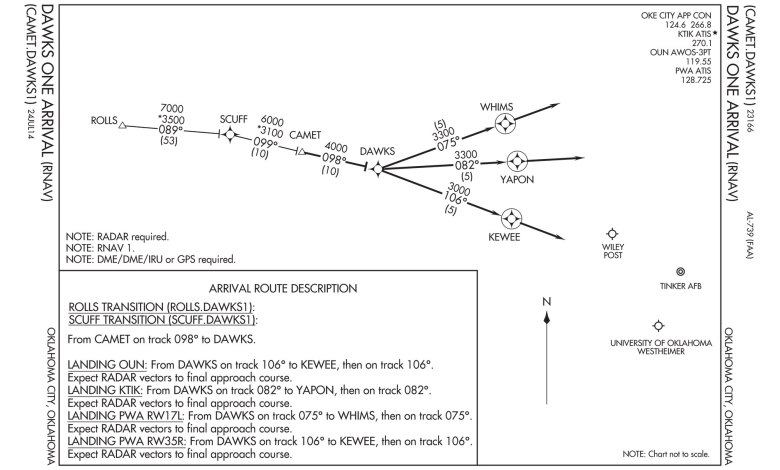
Nearing PORTL on the TMBRS TWO ARRIVAL for Portland International, Oregon (KPDX) we wonder what we need to make beer at the MYCRO BBREWery? Simple: the FLOWR of the HHOPZ plant! Of course, FFULL SSAIL beer from up the river about 70 miles, is popular at any PUBBB in the area.

Read More »

Readback: July 2019

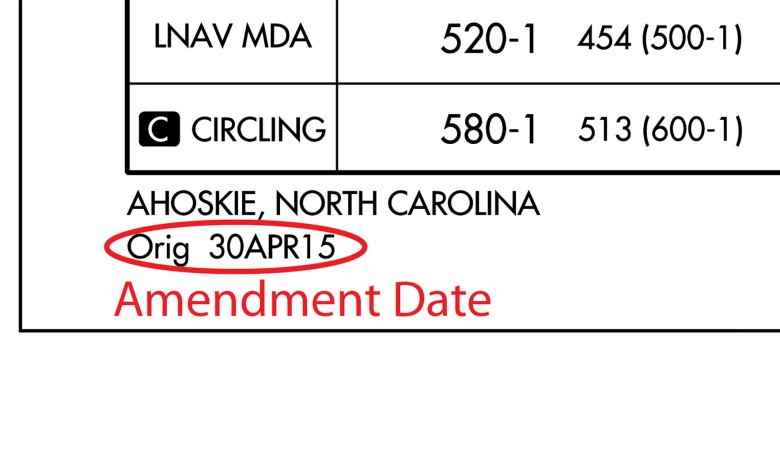
We got a quick response from Garmin. Its actually a bug in the underlying approach data, but that apparently ongoing bug is now handled by the navigators operating software. The reported issue doesnt have anything to do with database capacity. The issue began when some IAPs with LP lines of minima were coded with a Vertical Descent Angle (VDA) of 0 degrees. Software did not expect this as the IAPs are not supposed to be coded with VDA=0. If the IAP has no VDA (noted as Decent Angle NA on the chart), then the navigator can fly the approach as an LNAV-only without vertical guidance. If the IAP is coded with a VDA of zero, Garmin makes the approach unavailable from the database. Later software corrects this anomaly and restores the IAPs with VDA=0. Note that there was a Service Advisory Garmin sent out in 2013 when the issue was identified and they started to filter the affected IAPs from the Navigation database.

Read More »

Sneak in the Side Door

Before you get a contact approach, some more boxes need to be checked, starting with weather minimums on par with Special VFR and Class G airspace. AIM 5-4-25 kicks off with them: Pilots operating in accordance with an IFR flight plan, provided they are clear of clouds and have at least one mile flight visibility and can reasonably expect to continue to the destination airport in those conditions, may request ATC authorization for a contact approach.

Read More »

Finding Non-Precision

As we move forward in time with the proliferation of LPV approaches, the phaseout of non-precision approaches using ground-based navaids such as VOR, NDB, and LOC-only will result in fewer and fewer non-precision approaches. Furthermore, some WAAS navigators often provide an advisory glideslope to non-precision RNAV approaches: LNAV+V and LP+V. The +V refers to the advisory glideslope. An LP (localizer performance) approach is a non-precision RNAV approach that requires WAAS. Bottom line: there is almost always an electronic glideslope lurking in the shadows.

Read More »

High Too Tech

Step two: Set the clock that held no resemblance to the actual time of day. I fiddled with it for a few minutes and gave up after finding myself seemingly 50 layers deep in menus. I assigned the task to my wife, also an engineer and a pilot. She even got out the manual-a separate one for the man-machine interface but after a frustratingly long time, she was also defeated.

Read More »

Download The Full June 2019 Issue PDF

Clearly, this was a humbling experience. Im left wondering how many of us who are more than a few decades and a few thousand hours past flying trainers at 60 knots would do better. Your takeaway from this self-deprecating story is that no matter what you fly, youve got to play well with all the others, be they fast or slow, pro or student. Im glad I relearned that lesson with no worse than some personal embarrassment. And, the students probably learned to watch out for fast twins with inattentive pilots.

Read More »
Pilot in aircraft
Sign-up for newsletters & special offers!

Get the latest stories & special offers delivered directly to your inbox.

SUBSCRIBE