IFR Magazine

Readback: March 2017

Jeff Van West is one of my favorite modern-day aviation writers. His article, Seeing Double in the November issue is a fine example of Jeff taking us by the hand through important, but oft overlooked and esoteric aspects of our IFR life. But his use of the word declination instead of the correct word, variation, is a fingernail on the blackboard kind of irritant, if you remember blackboards. I have these old yellowed books that I studied in the 50s: AF Manual 51-40, Air Navigation Vol 1, by the Department of the Air Force (1959), page viii, and The American Flight Navigator by John Dohm (1958) page 324.

Read More »

Too Little Too late

As suggested by recent decisions and actions, FAA leadership might actually be agreeing with that last bit. Over a year ago they announced a different regulatory climate called compliance philosophy, which is supposed to engender a more cooperative relationship between the regulator and the regulated. The FAA also began relaxing some certification requirements in favor of common sense safety improvements like seat belts and shoulder harnesses, angle-of-attack indicators, and more recently non-certified EFIS in certified aircraft. Now, theyve responded to the legislative mandate to do away with the third-class medical for many of us.

Read More »

Hold Vs. HILPT

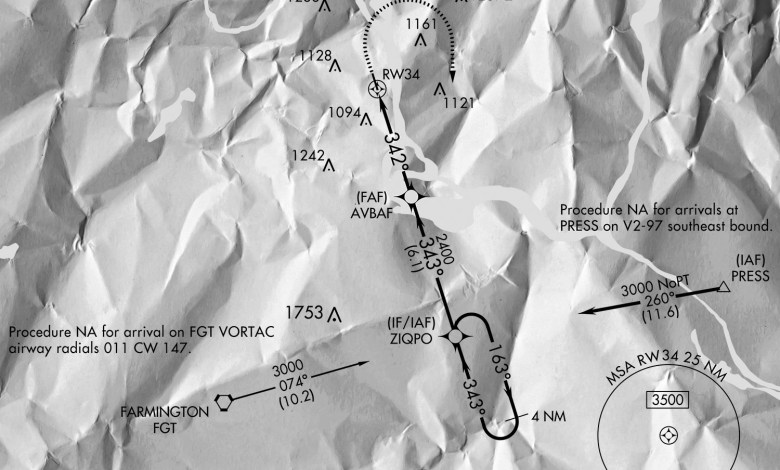
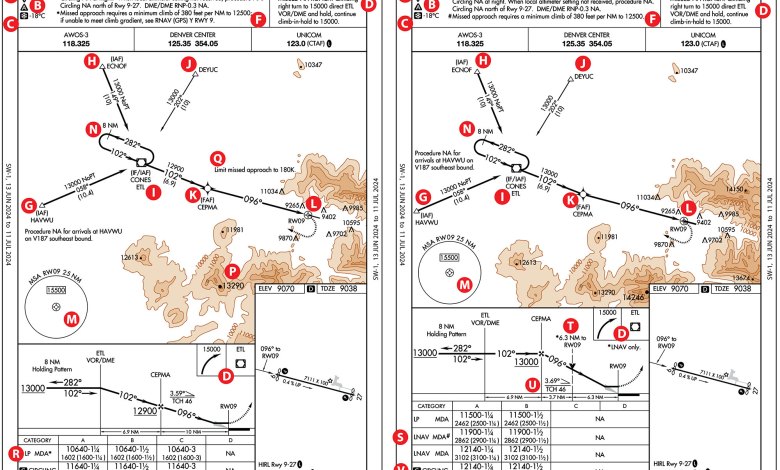
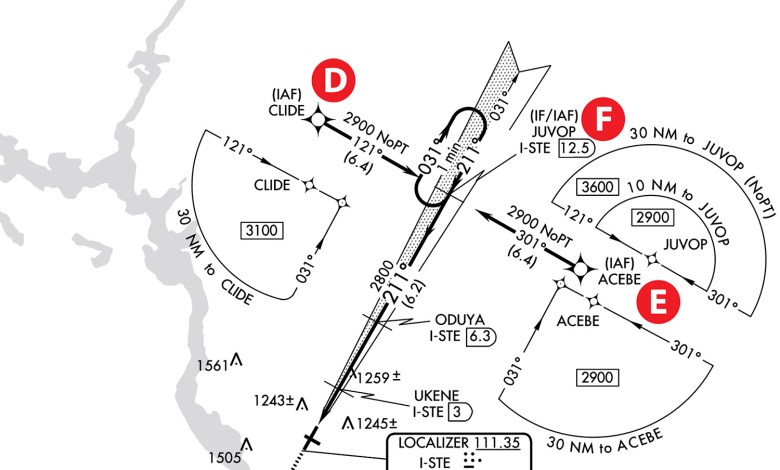
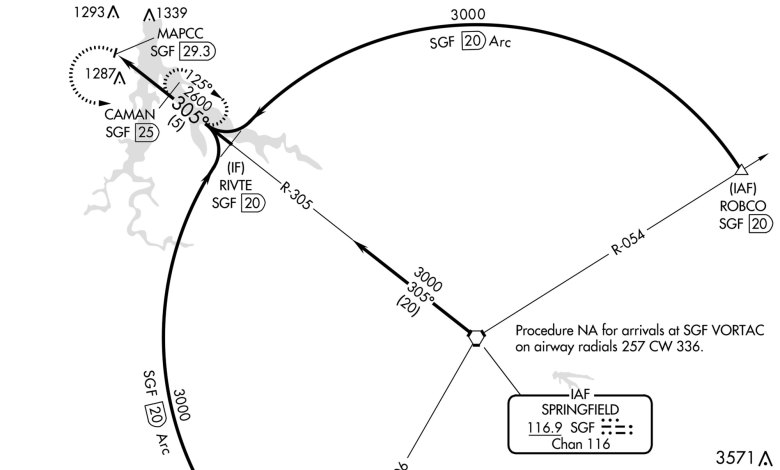
A reader, a helo pilot from the U.S. Coast Guard, wrote to ask some interesting questions. It seems theyd just had an FMS upgrade that enables them to fly RNAV (GPS) approaches. All the approach holds that are course reversals (hold in lieu of procedure turn, HILPT) are shown with four-nautical-mile legs. He asked if it is required to fly the entire leg length. The e-mail discussion evolved to ask if a charted hold, such as a missed approach hold, also had mandatory leg lengths. These probing questions prompted some interesting virtual discussions at IFR.

Read More »

The March to PBN

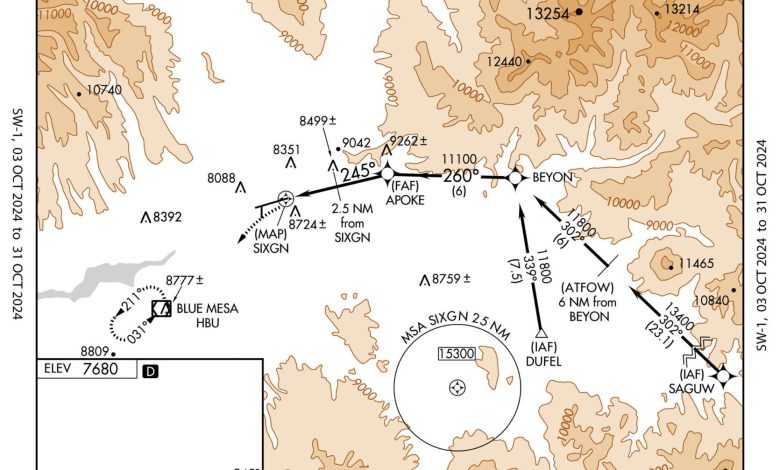
Many of us routinely use GPS as sole-source navigation throughout our flights. Congratulations; youre leveraging the benefits of Performance Based Navigation. Thats good. We have thousands of RNAV (GPS) approaches, many with vertical guidance, and theyre far safer, more reliable and more accurate than ground-based approaches. We often fly direct or nearly so. All these advances are reshaping the National Airspace System (NAS) and the way we fly IFR, but PBN is still young.

Read More »

No More Medicals?

The FAA has released the medical requirements for the Pilots Bill of Rights 2 (PBOR2) and quite frankly, I think it is a home run for general aviation, pilots, and the AOPA who fostered it through Congress. The new program is called BasicMed that is technically the FAAs implementation of medical requirements in the PBOR2 portion of the FAA Extension, Safety, and Security Act of 2016 known (of course) as FESSA. The final rule from the FAA, released January 10, 2017, and effective May 1, 2017, can be found on the FAA web site, FAA.gov.

Read More »

Download the Full February 2017 Issue PDF

At this writing, its impossible to know what ongoing investigations will determine, and whether either the flight crew or the controller will face consequences. This and other incidents, however, highlight a longstanding problem: air traffic control is designed by and comprised of humans, and its therefore imperfect. Controllers make mistakes just like the rest of us, pilots included. The challenge is to recognize those mistakes when they happen and take action appropriate to resolve the issue. A recent encounter I had at a towered airport reinforces the old, bad joke that the controller likely will feel really bad after an accident. The pilot likely wont feel a thing.

Read More »

IFR Briefing: February 2017

With flashing lights, smoke, and fanfare, Cirrus Aircraft rolled out their first Vision Jet for customer delivery, in late December. The FAA in December finalized new aircraft certification rules for general aviation that are expected to help the industry bring new designs and technology to market more quickly and cheaply. A chartered RJ85 crashed in Cerro Gordo, Colombia, while flying a holding pattern near its destination airport, on November 28. It might have made sense to the company, but nonetheless many aviators found it shocking to see Cessna dispose of its unsold Skycatcher stock, crushing the brand-new airplanes complete with their zero-time Continental engines.

Read More »

DIY SOP Considerations

Good single-pilot resource management calls for three basic elements: Knowledge of ones aircraft systems and characteristics, proficiency in their use under various conditions, and well-crafted, consistent routines. Those well-crafted, consistent routines-standard operating procedures, SOPs-encompass flows, checklists and callouts, but go well beyond the basics. Weve started down the path toward personal SOPs in Using an SOP in GA in the September 2016 issue.

Read More »

Download the Full February 2017 Issue PDF

A 20-knot headwind or tailwind for a gliding 747 makes for a rounding error, but for an engine-out single it can mean the difference between an on-airport landing and an off-airport tragedy. Glider pilots have charts and techniques for speed and loading to maximize their performance, including adjustments for wind. They call it Speed to Fly; for X headwind increase the indicated glide speed to Y for a new rate of descent of Z.

Read More »

On the Air: February 2017

Your recent OTA reminded me of a flight several years ago with my cousins daughter and her husband in the back seat during a scenic flight around the Dallas area. After the flight I asked her if she enjoyed it. Her reply was that the flight was nice and lots of fun, but she was concerned that I had to read the instructions on my kneeboard as I went through checklists during the flight.

Read More »
Pilot in aircraft
Sign-up for newsletters & special offers!

Get the latest stories & special offers delivered directly to your inbox.

SUBSCRIBE