IFR Magazine

In The Hot Seat

Aviation widely relies on the transfer of institutional knowledge. The flight instructor teaching you to fly didnt acquire all his/her skills alone. Someone taught them the basics, who in turn was taught by another individual, and so on. Lessons from past experience (a.k.a. mistakes) enlighten future generations.

Read More »

Briefing: April 2017

The general-aviation airport in Santa Monica, California, which has been in place since the 1920s, has long been in contention, as the surrounding area has become densely populated at the same time as the airports importance as a GA hub has intensified. In January, the FAA said it had agreed to end decades of legal wrangling over the airport and close it in 2028, citing safety and environmental concerns. The airport has about 270 resident aircraft and 450 landings and takeoffs a day. NBAA, AOPA, and EAA said they may challenge the agreement. The city plans to turn the 227 acres into a park.

Read More »

Download the Full April 2017 Issue PDF

Aviation widely relies on the transfer of institutional knowledge. The flight instructor teaching you to fly didnt acquire all his/her skills alone. Someone taught them the basics, who in turn was taught by another individual, and so on. Lessons from past experience (a.k.a. mistakes) enlighten future generations. ATC is no different. Regardless of background, when a controller walks in the door of an ATC facility, they need to learn how to work that particular facilitys airspace. Achieving certification depends on the experience and guidance of the other controllers and staffers.

Read More »

Do You Need EFIS?

Most instrument pilots flying today probably learned with conventional six-pack flight instrumentation. But, thats changing. Rare is a new aircraft available without EFIS and popular shops are installing glass retrofits nearly as fast as theyre installing ADS-B systems. Do you need EFIS? Should you consider upgrading your six-pack panel to a fancy electronic package?

Read More »

Capital Line Items

Just like Albany in New York and Sacramento in California, you wont find Maines capital buildings anywhere in the states thriving metropolis. Of course, thats because Maine doesnt really have a thriving metropolis. (Our biggest city, Portland only has 67,000 people and has issues, being dubbed the other Portland.) However, we do have a capital in our eleventh-largest town of Augusta, population 18,000. Im told 17,993 of them are lawyers. Of the remaining seven, perhaps youre visiting the guy who paints watercolors of the lovely view overlooking the Kennebec River.

Read More »

On the Air: March 2017

Flying our Cessna Caravans into Chicago OHare daily, frequently provides some interesting situations. Our redline is 175 knots and most of our planes can only do 150 knots in level flight. The controllers there are absolutely amazing and do what they can to make use of the fact that we are small and nimble. Here are a couple examples.

Read More »

Runway Incursions

With all the distractions in the cockpit-whether its loading the navigator, copying a clearance or simply dropping the only pen you brought along-its no surprise that close calls on the ground are still common. Perhaps not surprising, but not acceptable either. After all, we have a lot of tools to help us remain safe on the ground. Weve had ground-safety procedures drilled into our heads in recent years. GPS is common now for taxiing, along with lots of signs and lights to guide us. So runway incursions and related incidents ought to be on the decline. As it turns out, though, things havent improved.

Read More »

Fronts

Fronts in TAFs and weather briefings often mean a day of delays and canceled plans. Considering the impact that they have on flight operations, we should understand fronts. Lets study them so you can make a good guess about the resulting weather. Our modern knowledge of fronts began around 1910 in the Bergen School of Meteorology in Norway. Their early work laid out the mathematics of forecasting and described fronts, showing that they are defined by a change in air mass density. Changes in wind speed, humidity, or pressure are all secondary.

Read More »

Briefing: March 2017

After years of lobbying by general-aviation advocates, the FAA issued new rules in January that aim to make it easier for many pilots to maintain their medical certification. SpaceX successfully launched a rocket in January that deployed 10 IridiumNext satellites, the first of 66 that will expand real-time global coverage for tracking airplanes in flight by mid-2018. The avionics industry will rise to the challenge of equipping the U.S. aircraft fleet with ADS-B Out by the Jan. 1, 2020, deadline, according to industry leader Ric Peri. The NTSB issued a rare urgent safety recommendation in January, warning pilots that Piper PA-31T-series aircraft may have unsafe wiring that could lead to arcing and fires.

Read More »

Download the Full March 2017 Issue PDF

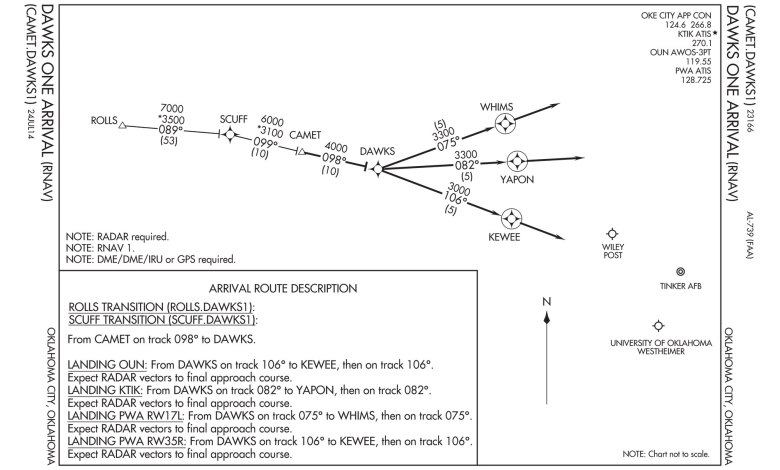
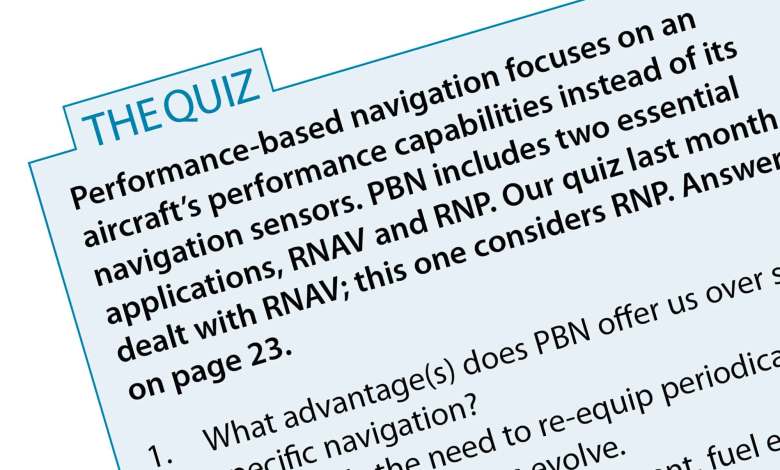
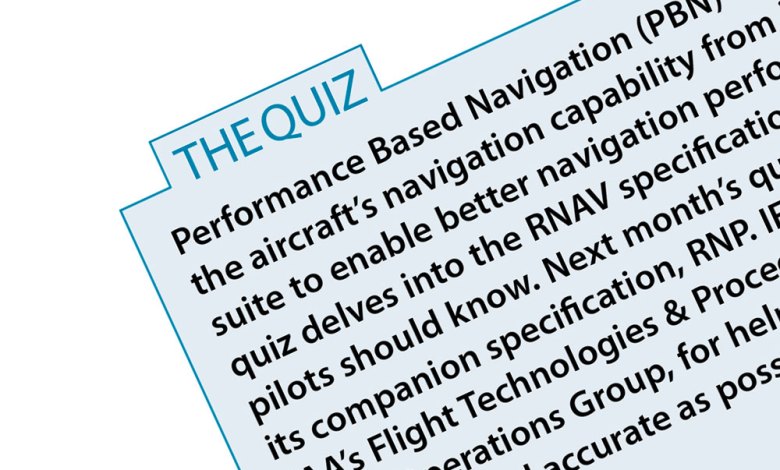
The FAA is focusing on increasing the use of PBN procedures, particularly RNAV STARs. Increased use of PBN procedures will reduce ATC complexity and simplify traffic sequencing. PBN begins to really shine as new, more efficient traffic management and avionics capabilities enter the NAS. Pilots will find ATC more predictable and discover more opportunities to fly efficiently. At about 3300 smaller airports, safer PBN approaches with LPV and LNAV/VNAV minimums will be commissioned to every qualified runway. Most, but not all, airports will have an IAP to at least one runway end.

Read More »
Pilot in aircraft
Sign-up for newsletters & special offers!

Get the latest stories & special offers delivered directly to your inbox.

SUBSCRIBE