IFR Magazine

ATC History

Which came first: the chicken or the Federal Egg Administration? Impossible to say. Physics teaches us that when Bernoulli found lift, his nemesis, Newton, said there must be an opposing reaction. So, when the Wright brothers flew, government pondered how to keep them from impacting all those other aeronauts. Little happened because of Newtons Law of Administrative Inertia: An agency at rest remains at rest until acted upon by an un-ignorable force. …

Read More »

Which Way to Turn?

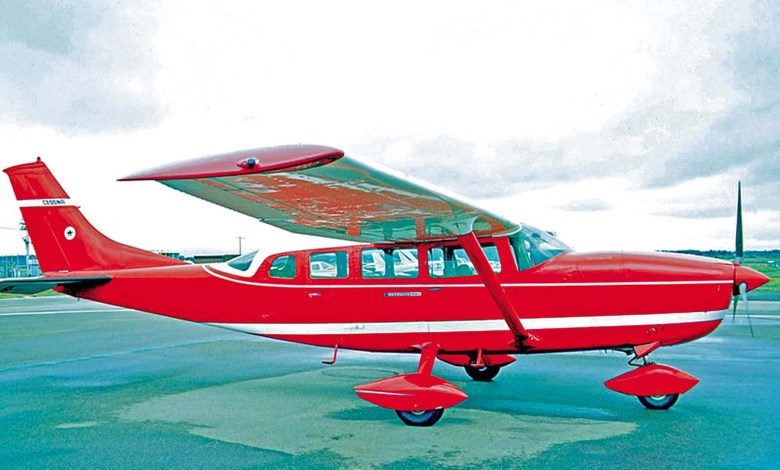
You are flying the VOR-A approach into Salem Memorial (K33) in your Cessna 182. The airport has no tower, with Class E airspace starting at 700 feet AGL. The winds favor Runway 17. You dive n drive after the DME stepdown and break out at 680 feet AGL with the runway in sight two miles ahead. Do you (a) cross midfield and make left downwind to 17, or (b) turn right to the upwind leg for Runway 17 and make left traffic from there, or (c) turn left before reaching the airport and make right traffic for 17.

Read More »

Briefing: August 2017

The Paris Air Show opened in June with the usual displays of military hardware and the latest passenger jets, but new and emerging technologies also attracted a lot of attention. Volocopter, a German company that has been developing a two-seat electric VTOL, announced it will work with the government of Dubai to test fly semi-autonomous air taxis by the end of this year. Boom unveiled the final design for a subscale prototype of its supersonic airliner, and said it will fly next year, with three GE engines. Airbus said its working on a new helicopter with a box-wing design that will cruise at 215 knots while maximizing efficiency. The Racer demonstrator will fly in 2020, Airbus said.

Read More »

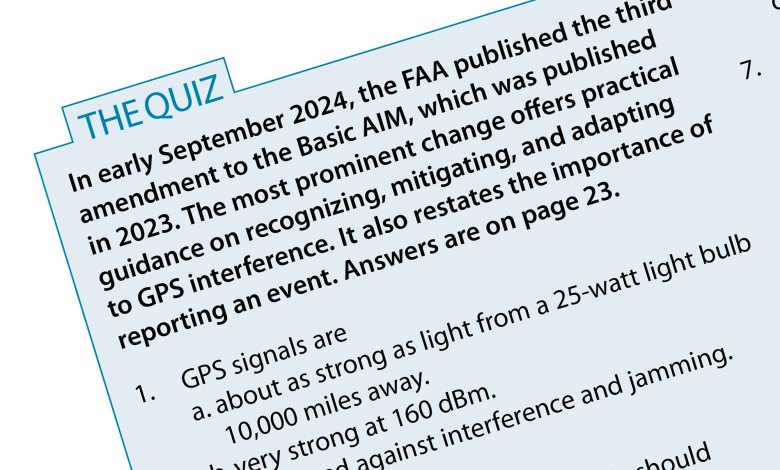
GPS: Safety of Flight

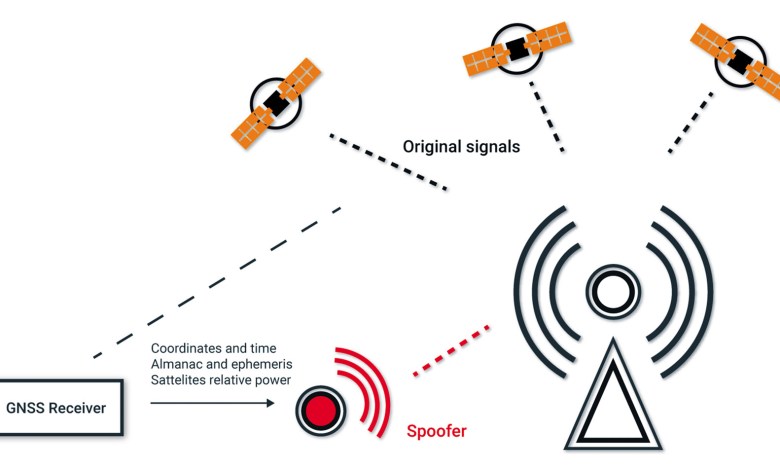
If you live west of the Mississippi, out where most of the military airspace and where most of the testing is done, youre well familiar with those pesky NOTAMs announcing interference testing of GPS or outright loss of the GPS signals. Most of us ignore them.

Read More »

Readback: August 2017

In April Killer Quiz, The Prof and the Pilot, I dont think that the answer to the last question is correct. With tailwind, one should reduce the airspeed below best glide speed, which in turn reduces the sink rate. Gliders pilots are very familiar with these concepts.Unfortunately, Cessna doesnt publish sink rates at various speeds to compute that accurately, so we are left to back-of-the-envelope calculations. We know that at best-glide speed (65 knots.

Read More »

Download the Full July 2017 Issue PDF

First, its important to distinguish between fees an airport may levy and those of the FBO use of its facilities. Airports often levy their own fees but depend on the FBO to collect them. To pilots, this can be a distinction without a difference, and the FBO can come off as the bad guy. Meanwhile, pilots need to know before they land how much they should expect to pay for the privilege of using the airports and FBOs facilities, especially if its a single-FBO monopoly. They also should have the option of paying a minimal fee for minimal service. So, two things should happen, in my view.

Read More »

Briefing: July 2017

The FAAs BasicMed rule took effect on May 1, creating a new option for pilots who want to fly without an FAA medical certificate. Under the BasicMed rule, pilots can fly under certain circumstances without a medical certificate, but they must pass an online course about aviation medical issues, complete a medical exam and checklist, and meet certain other criteria. The FAAs Advisory Circular (AC 68-1) on Alternative Medical Qualifications describes in detail how pilots can comply with the new policy.

Read More »

A Date With AIRAC

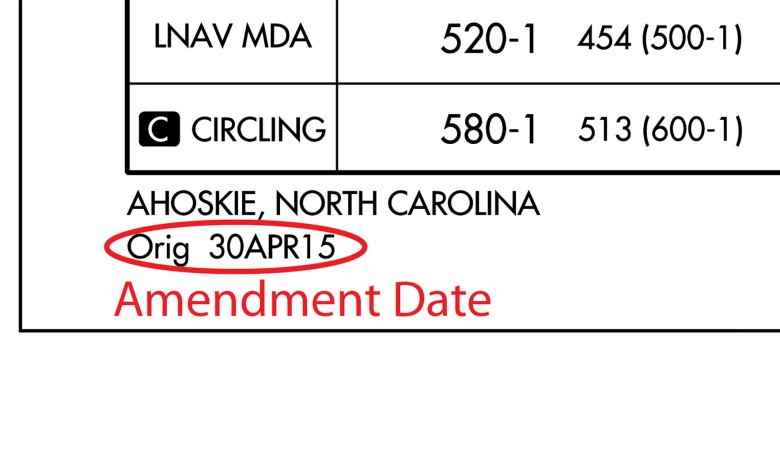
Maybe were too busy focusing on the forest and the trees that the dirt making up the foundation of the arbors is ignored. Or perhaps its the elephant in the room no one discusses. Instructors dont teach it because they dont understand the opaque system themselves-cant teach something you dont know. Whatever the cause, many pilots have a poor understanding of how aeronautical information travels through the system and how charts are updated.

Read More »

Across the Pond

On occasion I have a flight across the pond. No, its not an ocean crossing, although it sometimes feels like it. These flights cross Lake Michigan, and require a bit more planning than flights over land. When you fly around the Great Lakes, its taken for granted that if youre in a single-engine piston aircraft, you have to carefully examine the risks and mitigations. Dont want to cross the lake at all? Fly around it and spend that extra time to stay over land. Not good weather for a crossing? Same deal.

Read More »
Pilot in aircraft
Sign-up for newsletters & special offers!

Get the latest stories & special offers delivered directly to your inbox.

SUBSCRIBE