On the Air

GPS: Safety of Flight

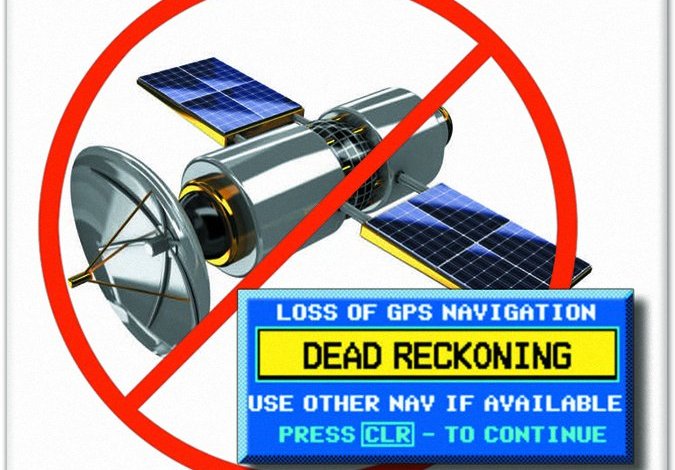
If you live west of the Mississippi, out where most of the military airspace and where most of the testing is done, youre well familiar with those pesky NOTAMs announcing interference testing of GPS or outright loss of the GPS signals. Most of us ignore them.

Read More »

Briefing: August 2017

The Paris Air Show opened in June with the usual displays of military hardware and the latest passenger jets, but new and emerging technologies also attracted a lot of attention. Volocopter, a German company that has been developing a two-seat electric VTOL, announced it will work with the government of Dubai to test fly semi-autonomous air taxis by the end of this year. Boom unveiled the final design for a subscale prototype of its supersonic airliner, and said it will fly next year, with three GE engines. Airbus said its working on a new helicopter with a box-wing design that will cruise at 215 knots while maximizing efficiency. The Racer demonstrator will fly in 2020, Airbus said.

Read More »

Readback: August 2017

In April Killer Quiz, The Prof and the Pilot, I dont think that the answer to the last question is correct. With tailwind, one should reduce the airspeed below best glide speed, which in turn reduces the sink rate. Gliders pilots are very familiar with these concepts.Unfortunately, Cessna doesnt publish sink rates at various speeds to compute that accurately, so we are left to back-of-the-envelope calculations. We know that at best-glide speed (65 knots.

Read More »

On The Air: July 2017

Two Texas Highway Patrol Officers were conducting speeding enforcement on Highway 77, just south of Kingsville, TX. One of the officers was using a hand-held radar to check speeding vehicles approaching the town. The officers were suddenly surprised when the radar gun began reading 300 miles per hour and climbing. The radar gun would not reset and then it suddenly turned off.

Read More »

On The Air: June 2017

The other day the Washington, DC area was getting hammered with a series of strong, fast-moving thunderstorms. Reagan National (DCA) had just shut down when I heard the following on the ground frequency at Dulles:

Read More »

Flight Data Controller

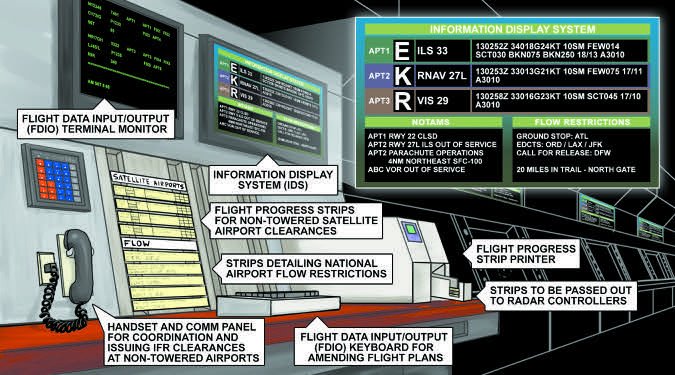
A radar controllers primary concern is the safe sequencing of airplanes. Accomplishing this requires more than just good judgment, clear communication, effective working speed, and knowledge of aircraft and airspace. It depends also on up-to-date information and the ability to stay focused on his airplanes. The controller needs access to a variety of data, such as weather, NOTAMs, nationwide flow restrictions, PIREPs. SIGMETs, etc. This (often critical) information changes frequently, comes from a variety of different sources, and affects aircraft in a many ways.


Read More »

Put It Together: DIY SOP

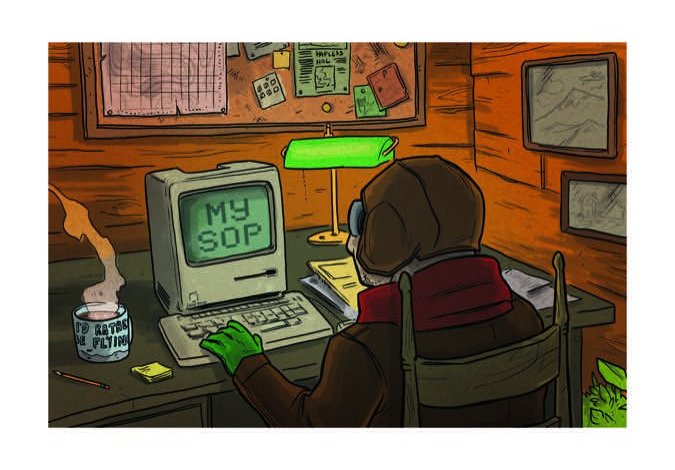
Weve discussed the benefits of personal standard operating procedures (SOP) for our own flying. Weve taken the main elements (Using an SOP in GA, September 2016) and began creating our own (DIY SOP Considerations, February 2017). Meanwhile, we tried to wean you from your do-list in favor of a flow and check (Change Your Checklist, October 2016 and DIY Flow and Check, January 2017). In this final article, we assemble a personal SOP for a light GA single.

Read More »

On The Air: May 217

Every spring, eastern South Dakota skies are filled with geese as they return home to Canada for summer nesting. On any given day during March more than a million geese, (Snows, Brants, Canadians, and lesser Canadians) can be found roaming stretches of eastern South Dakota. It can get crowded.

Read More »

On the Air: April 2017

One Saturday morning, I was flying a Piper Lance to Cuyahoga County airport in the Cleveland area to attend the Cleveland National Airshow, which was being held at Clevelands Burke Lakefront airport. There was very little radio traffic on Cleveland Approach and so I decided to have some fun.

Read More »

On the Air: March 2017

Flying our Cessna Caravans into Chicago OHare daily, frequently provides some interesting situations. Our redline is 175 knots and most of our planes can only do 150 knots in level flight. The controllers there are absolutely amazing and do what they can to make use of the fact that we are small and nimble. Here are a couple examples.

Read More »
Pilot in aircraft
Sign-up for newsletters & special offers!

Get the latest stories & special offers delivered directly to your inbox.

SUBSCRIBE