













Register

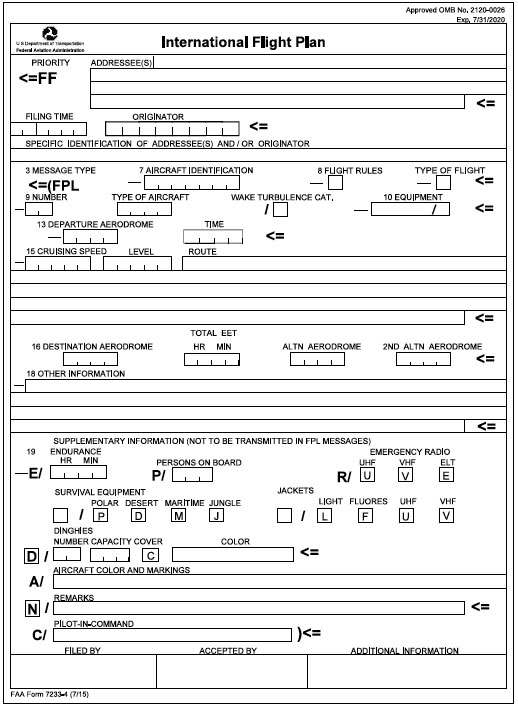
ICAO Flight Plan, Again

Before standardizing on the ICAO form, the FAA still used its domestic form. This led to the confusion of calling the ICAO form “International,” suggesting it was only for international flights, when today it is all we use for any flight.
Gemini Sparkle

Key Takeaways:

  • The 2019 transition to ICAO flight plans created confusion, particularly for Item 10 (Equipment) and Item 18 (Other Information), requiring pilots to shift from listing installed equipment to specifying avionics capabilities.
  • Item 10 codes detail transponder type (Mode C, S, S-ES), ADS-B Out method (Extended Squitter or UAT), and basic avionics (e.g., GPS, VOR), while Item 18 specifies complex Performance Based Navigation (PBN) capabilities (RNAV/RNP) critical for IFR flight.
  • ATC utilizes these codes, especially PBN for IFR, to determine an aircraft's eligibility for specific airspace and procedures, underscoring the importance of accurate reporting; pilots are advised to store all applicable codes and consult POH avionics supplements.
See a mistake? Contact us.

August 2019, marked the end of the FAA Domestic Flight Plan. The ICAO Flight Plan form is required in the U.S. for all VFR and IFR flights. Yet, there are two areas that still create confusion: Item 10. Equipment, and Item 18, Other Information.

Many pilots struggle with these codes and ask: 1.) Does ATC care about the codes? 2.) Are some codes redundant and/or superfluous? 3.) Is there “nesting” (something that is included in a bigger part)? 4.) Who are the customers of the ICAO flight plan?


Ready to Sell Your Aircraft?

List your airplane on AircraftForSale.com and reach qualified buyers.

List Your Aircraft
AircraftForSale Logo | FLYING Logo
Pilot in aircraft
Sign-up for newsletters & special offers!

Get the latest stories & special offers delivered directly to your inbox.

SUBSCRIBE