











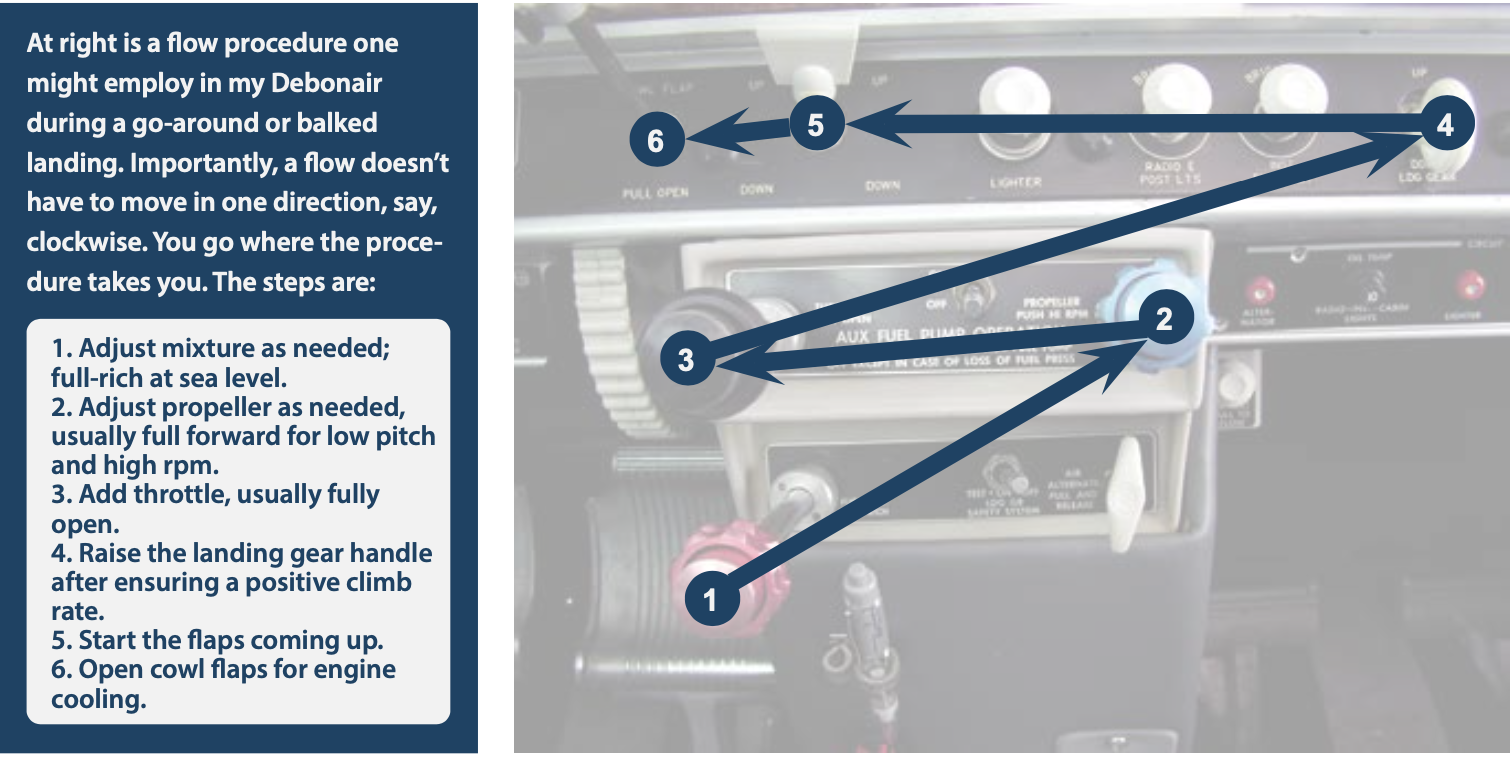


When I began my ab initio training, it seemed to take forever to get off the ground. Working through the preflight, before-start, run-up checklists, step-by-step in the order provided seemed to take up a lot of time I wanted to spend airborne. Of course, with practice comes efficiency. Eventually I would complete the steps in the checklist by memory, and then verify they were complete using the checklist. Cut to my first job flying and there was a name for this method of checklist usage: flows.
WHAT ARE FLOWS?
Different companies and flight schools have different terms for types of checklists, but for the sake of this discussion I will keep it to two types: challenge-response and do-verify. Challenge-response involves doing the checklist line by line, similar to how I used to complete checklists during my initial training. There is a time and place for this method. A good example is preflight, where distractions can be mitigated and minimal time pressure exists. Do-verify involves completing the steps in a certain order and subsequently confirming everything is complete with the checklist. For the context of this article, the first step of the do-verify is the flow. The FAA does not define flows or publish generic guidance on them, but essentially they are a memory technique for completing checklist items or ensuring that the aircraft is configured appropriately for a given situation.

