













Register

Glass-Panel Scans

I had the pleasure of lunch several years ago with one of the designers of the Boeing 777 cockpit. She said something that has stuck with me for years: Good design obviates the need for training. Held up to this standard, our efforts for GA glass cockpits are a dismal failure. (Perhaps the 777 cockpit is as well; I dont know.)

Gemini Sparkle

Key Takeaways:

  • Pilots transitioning to glass cockpits need to adapt their scan techniques, focusing on specific visual cues (e.g., triangles for pitch/bank, using bugs for altitude/heading) to maintain stable flight.
  • Effective use of glass panels involves prioritizing the "track" over heading for precise course keeping and strategically organizing multi-function display information for faster retrieval.
  • The article emphasizes maintaining scanning proficiency even with autopilot use and developing a disciplined, focused scan on critical flight elements, especially during high-workload phases like the final approach.
See a mistake? Contact us.

I had the pleasure of lunch several years ago with one of the designers of the Boeing 777 cockpit. She said something that has stuck with me for years: “Good design obviates the need for training.” Held up to this standard, our efforts for GA glass cockpits are a dismal failure. (Perhaps the 777 cockpit is as well; I don’t know.)

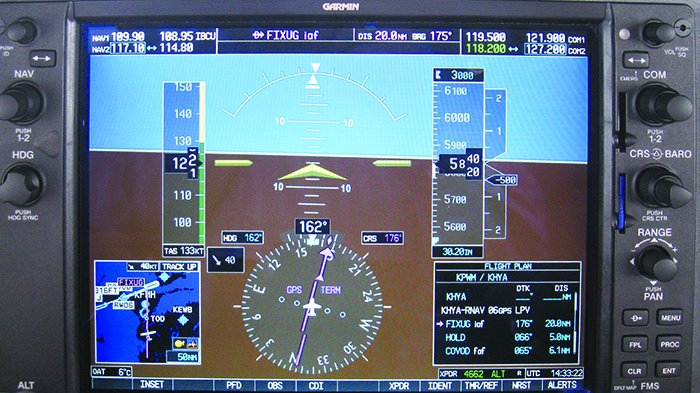
Looking just at the Primary Flight Display (PFD) portion of a system like the Avidyne Entegra or the Garmin G1000, things fare a bit better. Pilots competent on traditional flight instruments can find most of what they need in a few minutes. Some things take some explaining—”Where’s my rate of turn on this infernal thing?”—but keeping the plane upright is never in doubt.


Ready to Sell Your Aircraft?

List your airplane on AircraftForSale.com and reach qualified buyers.

List Your Aircraft
AircraftForSale Logo | FLYING Logo
Pilot in aircraft
Sign-up for newsletters & special offers!

Get the latest stories & special offers delivered directly to your inbox.

SUBSCRIBE