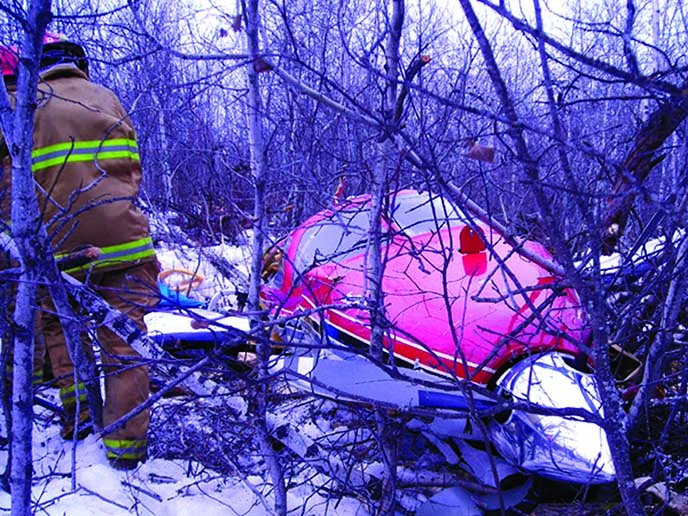
Getting Caught Down Low

Most thunderstorm-related accidents happen when departing or approaching the airport. Flying near the convective cloud bases exposes you to the most dangerous aspects of a thunderstorm. Reduced visibility, low ceilings, hail, strong straight-line winds and lightning are all possibilities, but more imperceptible hazards lurk.

Gemini Sparkle

Key Takeaways:

  • Thunderstorm-related accidents frequently occur during airport departure or approach, exposing aircraft near cloud bases to dangers such as reduced visibility, hail, and strong winds.
  • All thunderstorms generate difficult-to-see outflow boundaries, or gust fronts, which are cold air spreading from downdrafts and can be extremely hazardous.
  • Convective downbursts and microbursts, capable of producing hurricane-force winds, can unexpectedly descend from benign-looking cells, particularly high-based thunderstorms in dry environments.
See a mistake? Contact us.

Most thunderstorm-related accidents happen when departing or approaching the airport. Flying near the convective cloud bases exposes you to the most dangerous aspects of a thunderstorm. Reduced visibility, low ceilings, hail, strong straight-line winds and lightning are all possibilities, but more imperceptible hazards lurk.

All thunderstorms produce some kind of outflow boundary during their life cycle. According to thunderstorm expert Dr. Charles Doswell, III, “Cold, stable air is the ‘exhaust’ of deep, moist convection descending in downdrafts and then spreading outward like pancake batter poured on a griddle.” After spreading outward, the leading edge of the outflow boundary is essentially a gust front. Some of these outflow boundaries are benign and some are extremely hazardous. Neither type is easy to see.

There is also the chance of a convective downburst or microburst. Staying clear of the biggest cells won’t protect you. Microbursts frequently drop from benign-looking cells. High-based thunderstorms with an extremely dry environment below the bases may actually look inviting to a pilot running under a cloud deck, but this is a perfect environment for a microburst. As rain falls into the dryer air below the bases, it begins to evaporate and cool the air. Such cooling makes the air denser and negatively buoyant, which can unleash an intense downburst. Winds can exceed hurricane force over a distance the size of a long runway. —S.D.

Ready to Sell Your Aircraft?

List your airplane on AircraftForSale.com and reach qualified buyers.

List Your Aircraft
AircraftForSale Logo | FLYING Logo
Pilot in aircraft
Sign-up for newsletters & special offers!

Get the latest stories & special offers delivered directly to your inbox.

SUBSCRIBE