












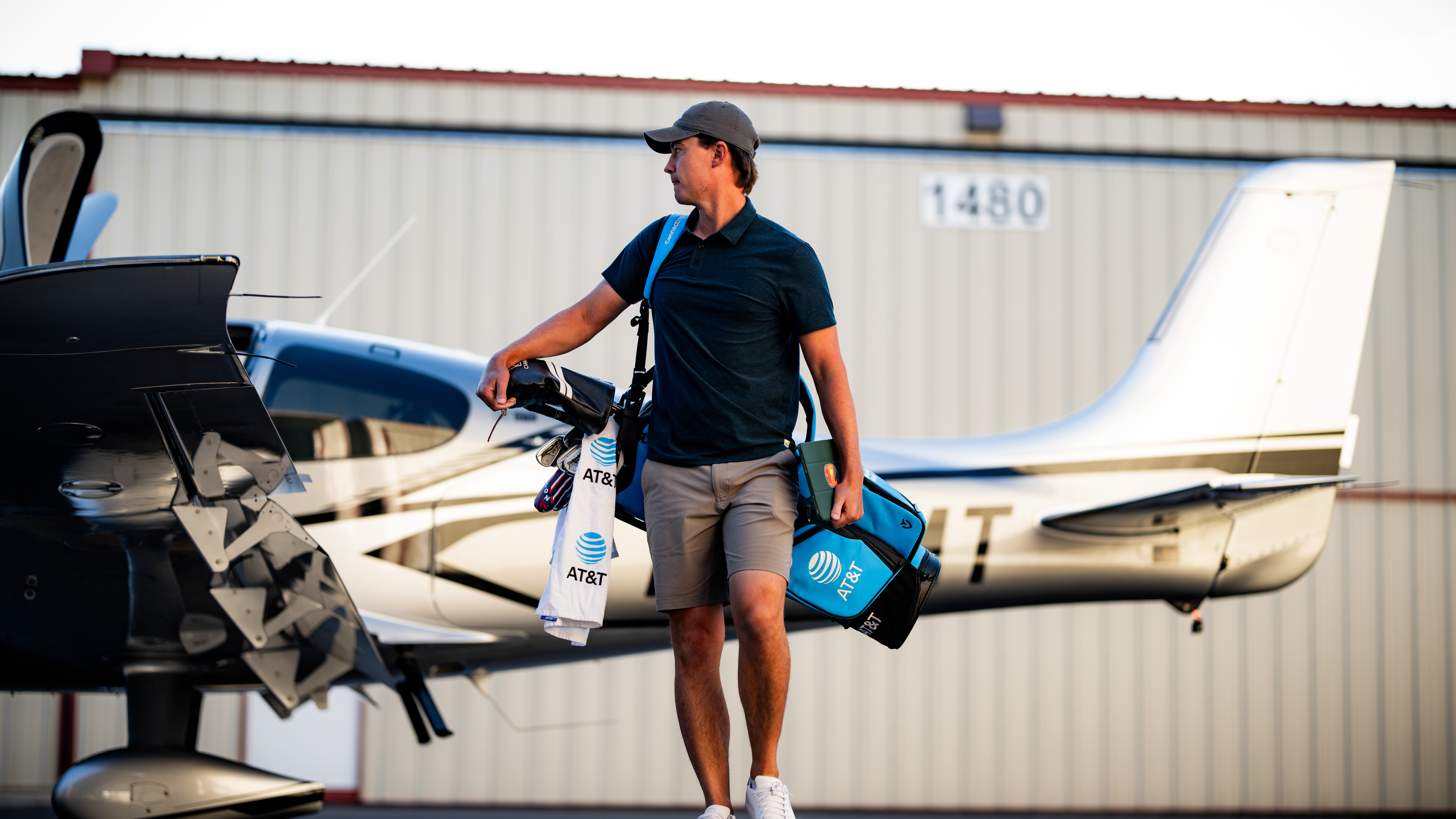



Most professional athletes measure success in trophies and rankings. Maverick McNealy measures it differently. Ask him what he wants people to remember, and the PGA Tour pro doesn’t mention a leaderboard.
“I think what I’m going to care about is whose lives I made better along the way, and the connections I made,” McNealy said in a recent sit-down interview with Cirrus.
McNealy, a Stanford University product now in his seventh season on tour, has structured his life around the people in it, including his wife, Maya, their infant daughter, his three younger brothers, and his parents. That’s why, a few years into his professional golf career, he decided to learn to fly.
McNealy grew up in a golf family before he was a golf pro. He and his three brothers shared a single room as kids, four beds in a row, and the family’s shared obsession was golf.
“Golf was where we spent most of our time together as a family,” McNealy said. “We’d play six of us in the same group and play really fast. We had a ton of fun and lots of great memories there.”
He didn’t set out to turn that pastime into a career, even after walking onto Stanford’s golf team.
“I never thought I’d be good enough [to play professional golf],” McNealy said.
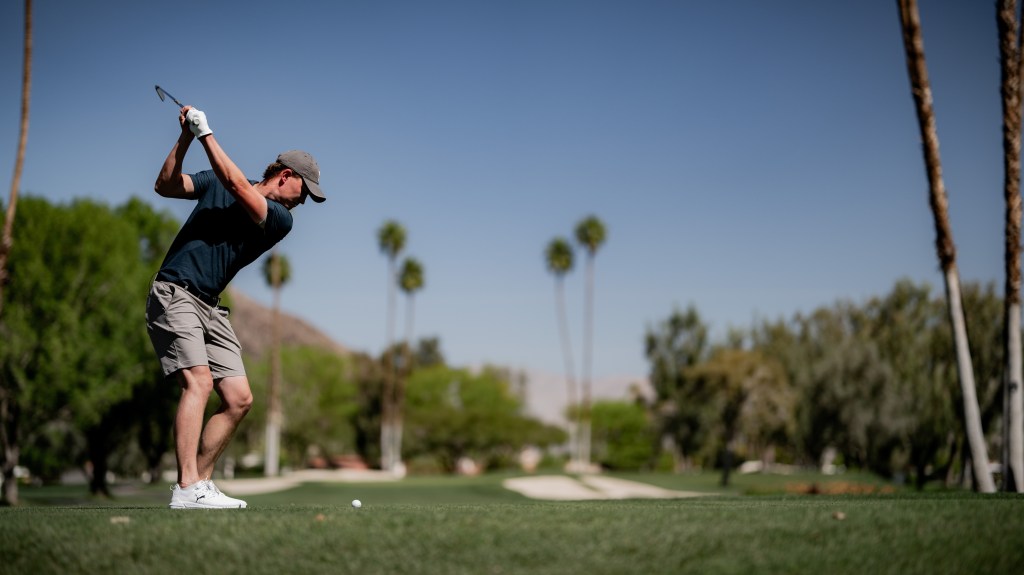
That changed during his college years, and by his senior year the decision had crystallized into something closer to a debate with his father, who laid out every reason McNealy shouldn’t turn pro.
“I came back and thought about all those reasons and gave him a list of reasons why I did,” McNealy said.
He turned pro, made it through PGA Tour Q-School, and has spent his career chasing the same thing that drew him to the game as a kid.
“Every day I just want to get the best out of myself,” McNealy said. “I want to improve. I want to get better. And I just want to see how good I can get.”
McNealy said that much of his identity depends on the people around him rather than what score he shoots on a given day. He credits his parents for introducing him to golf, his youngest brother Scout for caddying for him, and his wife for running the household that makes his travel schedule possible.
“She is the quarterback of the most important things in my life, which is my family and our daughter,” McNealy said. “And I wouldn’t be able to do both without her.”
The arrival of his daughter reset his priorities in a way he didn’t fully anticipate. Golf, which had occupied the No. 2 spot in his life behind family for as long as he could remember, suddenly had company.
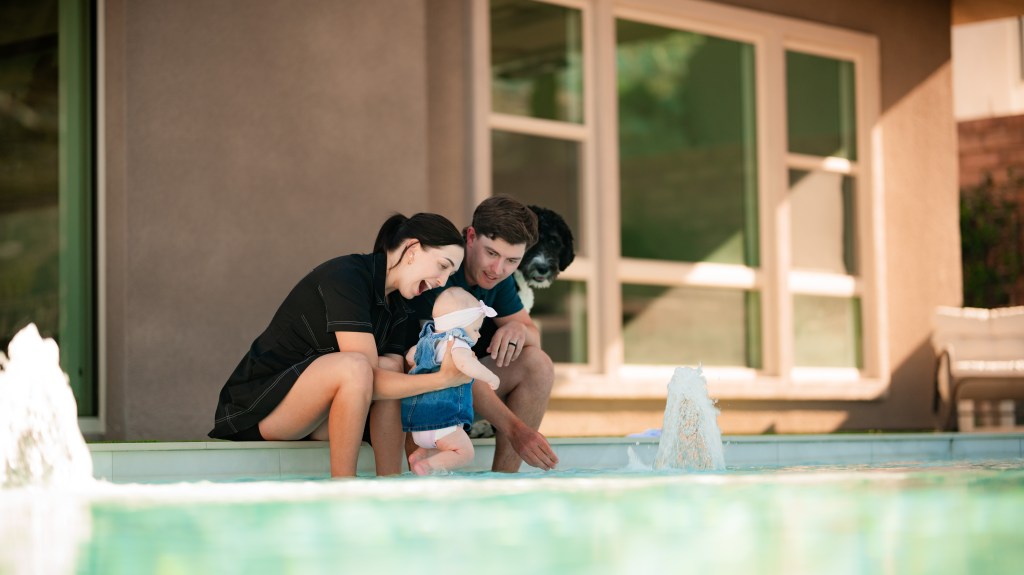
“It was a little bit scary to think that something I poured my entire life’s work into was now going to be second to something else,” McNealy said. “But I will say that every parenting cliché I’ve ever heard has never rung more true. It’s fun walking off the green whether I played well or whether I played poorly. My daughter really doesn’t care what I shot that day, and that really grounds me.”
McNealy carried an interest in aviation since childhood but pushed it aside for years as he pursued sports and his education.
Then, during the 3M Open in Minnesota in 2021, that interest suddenly resurfaced when a single-engine piston flew over McNealy’s car on the way to the golf course.
“I thought that looked pretty cool. That looks like a lot of fun,” he said.
He happened to be paired that day with a tour player who had flown himself to events for two decades, and the questions he asked during a rain delay stuck with him.
“It was that day that I decided that I was going to sign up for my discovery flight when I got home,” McNealy said.
What kept him in the airplane after that first flight was less the novelty and more the process, something he recognized immediately from golf.
“I see so many similarities between the process of preparing to compete in golf and preparing to fly,” McNealy said. “I felt like flying was something that I could get good at.”
The practical case for flying arrived early. A trip that once cost McNealy the better part of a day in the car became something else entirely once he had a set of wings.
“The first time I flew down to Thermal [California] and turned a four-and-a-half-hour drive into a one-hour flight, I knew this was different,” he said.
Choosing Cirrus
McNealy arrived at Cirrus on a recommendation he had no reason to question and never second-guessed afterward.
“One of my dad’s friends flies a Vision Jet, and when my dad heard that I was going to take flying lessons, he said, ‘Call Earl,’” McNealy said. “He said, ‘You have to fly out of All In Aviation [in Las Vegas], and you have to fly a Cirrus.’ I blindly followed his directions, and it was the best advice I’ve ever gotten in my aviation career.”
The airplane’s role in his life has since become less about the machine and more about what it buys him back.
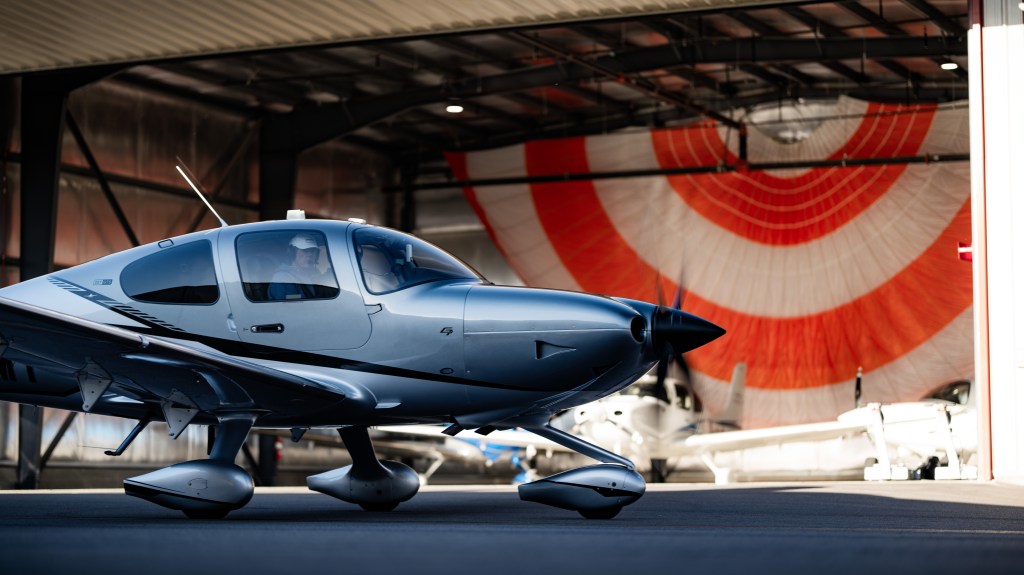
“This airplane is the most important tool, bar none, of my aviation career,” he said. “What this airplane does for me is it buys me time to be with my family, in addition to all of my other obligations and training and tournaments and outings.”
McNealy plans his days off based on what his Cirrus can do for him. A round of golf with his father, once an all-day proposition by car, now fits into an afternoon.
“I would never make a day trip in a car down to Palm Springs. It’s too far,” McNealy said. “But I’ve made a ton of trips—day trips—in my airplane. I can leave after breakfast, play a round of golf, and be home by dinnertime.”
Asked to describe his ideal day, McNealy reaches for a schedule only a personal aircraft makes possible.
“If I were to draw my perfect day, it would be to wake up with my family, fly with people that are important to me, play golf, fly home… and be home by dinner with my family,” he said.
Safety and the Parachute
Some people are hesitant before flying, but McNealy points them to statistics as much as his own comfort level in the aircraft.
“Flying is safer than driving. It’s statistically and anecdotally true,” McNealy said. “My airplane can land itself in the case of an emergency, which is really, really nice in single-pilot operations. And the more I’ve flown, the more I’ve gotten to appreciate having the Cirrus Airframe Parachute System backup for those few seconds that you may not have another option in the air.”
That layered redundancy, he said, is what separates flying a Cirrus from flying in general.
“I really appreciate how Cirrus has redundant safety systems to help me out in many different situations, some that are within or out of my control,” McNealy said. “That lets me rest easy at night.”
The Real Payoff
The return on flying isn’t measured in hours logged or airports visited, McNealy said. It’s measured in evenings at home with his wife and daughter, which otherwise wouldn’t exist.
“Every time I fly, I come home more energized than when I left out the door in the morning,” he said. “Knowing that I can continue to get the best out of myself by competing and preparing for my job, do something that I absolutely love, and still be the present father and husband and family member that I want to be—that ticks every box that I could ever want in my life.”
It’s also the part of his story he hopes his daughter remembers, even after the golf scores fade.
“I think when she looks back on how I am as a father, she’ll know the lengths at which Maya and I have gone to spend that quality time with her,” McNealy said. “Because at the end of the day, the real currency is the amount of time we get to spend with her.”

