













Register

Flying High and Visual

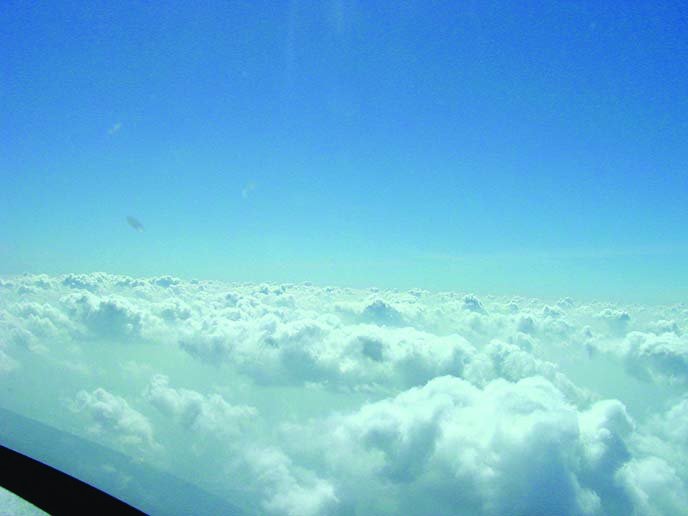
The forecast said that deep, moist convection was likely for your afternoon flight. On your drive to the airport, you second-guess the 10,000-foot altitude you filed. Should you have filed for the low to mid teens? Perhaps you should have filed a much lower altitude to try and stay below the clouds?

Gemini Sparkle

Key Takeaways:

  • Prioritize staying visual (VMC) when flying near convection to avoid dangerous in-cloud turbulence.
  • Generally, fly at higher altitudes for improved visibility above haze, smoother air, obstacle clearance, and more time to plan deviations around storms.
  • Be aware that high-altitude flight in convective weather carries risks like structural icing, requires adequate oxygen, and necessitates larger fuel reserves.
  • For maximum flexibility in avoiding weather while remaining visual, consider VFR with flight following instead of IFR, especially for aircraft not suited for very high altitudes.
See a mistake? Contact us.

The forecast said that deep, moist convection was likely for your afternoon flight. On your drive to the airport, you second-guess the 10,000-foot altitude you filed. Should you have filed for the low to mid teens? Perhaps you should have filed a much lower altitude to try and stay below the clouds?

The prime directive in convective flying is simple: Strive to stay visual at all times unless you have the equipment, training and experience to do otherwise. Staying in VMC goes a long way to keeping you out of the nastiest part of the thunderstorm, the in-cloud turbulence.


Ready to Sell Your Aircraft?

List your airplane on AircraftForSale.com and reach qualified buyers.

List Your Aircraft
AircraftForSale Logo | FLYING Logo
Pilot in aircraft
Sign-up for newsletters & special offers!

Get the latest stories & special offers delivered directly to your inbox.

SUBSCRIBE