

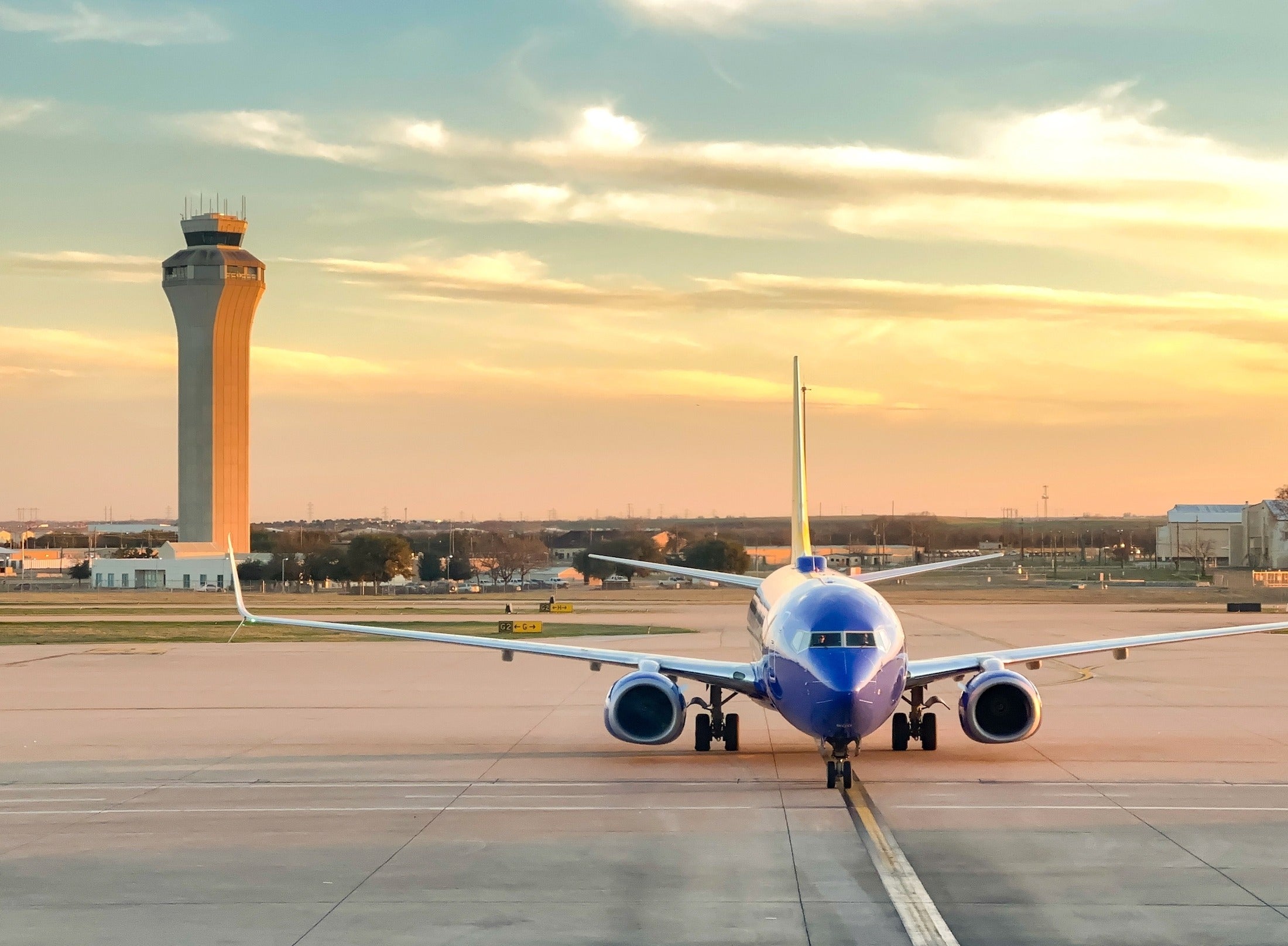


The FAA has reportedly turned down a request to upgrade the airspace over Austin, Texas, to the same category as many of the nation’s busiest airports.
According to documents secured by public radio station KUT in Austin through the Freedom of Information Act, the FAA’s air traffic manager in Austin and some regional agency staff support elevating Austin from Class C airspace to Class B, which would trigger tighter regulation and automatically raise pay for air traffic controllers (ATCs) there by 15 percent.
The staff argued that Austin’s ATCs need the added powers available in Class B airspace to manage their growing workload and keep flights operating safely.
Austin-Bergstrom International Airport (KAUS) falls short of some required Class B standards. A Class B airport, for instance, must have at least 300,000 takeoffs and landings per year, and KAUS recorded around 260,000 in 2024, according to FAA data.
But supporters of the upgrade note that Austin’s main airport actually exceeds Class B standards in other areas, like total passenger traffic, and will only grow busier as more international flights come online.
Austin-Bergstrom also plans to expand its main Barbara Jordan Terminal and add a new concourse, tentatively dubbed Concourse B, with at least 20 new gates. Those improvements are expected to be completed in the 2030s.
Despite the push from local FAA personnel, a Texas congressman recently disclosed that the FAA has decided to keep Austin’s Class C designation.
“The FAA denied Class B status for Austin in June,” U.S. Representative Lloyd Doggett, a supporter of the upgrade, told KUT. “They’ve been unresponsive to inquiries about that.”
Officially, the FAA maintains that Austin’s proposed airspace upgrade is under review.
Making the Case
According to a KUT analysis of FAA data, some Class B airports actually see fewer takeoffs and landings per year than Austin-Bergstrom, including Tampa, Florida; Memphis, Tennessee; St. Louis, Pittsburgh, and Kansas City, Missouri. These airports were busier than Austin at one time but lost traffic as airline hubs shut down and operations consolidated. Still, their Class B status was not revoked.
Austin is also facing a shortage of ATCs, which could potentially be improved if a future Class B designation increased certified controllers’ minimum salary from $123,305 to $141,804 per year.
Austin’s ATC tower is operating with fewer than half the 60 controllers recommended by FAA and union targets. This shortage has resulted in mandatory overtime and ATCs handling more responsibilities.
According to KUT, the FAA team in Austin may change tactics and seek an expansion of the city’s Class C airspace boundaries. This designation, nicknamed “Super Charlie,” wouldn’t greatly increase regulation or bump up pay for ATCs, but it would give controllers some additional airspace authority.
Even this change, however, could take some time.
“[KAUS tower staff] are told that this will take at least two years after approval,” Doggett said. “So this is bureaucratic delay on top of delay at a time that we really could use a better margin of safety there, given the severe shortage of air traffic controllers.”