













Register

FAA Highlights Runway Collision Risks

According to the SAFO, the following paragraph will be added to the ATC Order: Crossing of active runway(s) by aircraft/vehicle(s): 1. During departure operations, ensure that aircraft/vehicles intending to cross a runway do not cross the runway holding position markings until the controller visually observes the departure aircraft in a turn, or the departure aircraft has passed the point where the crossing aircraft/vehicle is located, regardless of altitude, unless authorized in FAA Order JO 7110.65, 3-10-10, Altitude Restricted Low Approach.

Gemini Sparkle

Key Takeaways:

  • The FAA issued a Safety Alert (SAFO 17012) highlighting a high collision risk during runway crossings, particularly in the first two-thirds of the runway, and provided new ATC guidance and detailed pilot recommendations to prevent incursions.
  • An NTSB investigation found a drone-helicopter midair collision was caused by the drone pilot operating beyond visual line of sight and lacking knowledge of regulations and safe operating practices.
  • The FAA published a Special Airworthiness Information Bulletin (SAIB CE-18-07) concerning failures of v-band couplings in turbocharged aircraft exhaust systems, which can lead to in-flight fires and necessitate more thorough inspections.
  • Another FAA SAIB (HQ-18-08R1) warned of jet fuel contamination with diesel exhaust fluid (DEF) at Eppley Air Field, advising affected aircraft operators to consult engine manufacturers for remedial actions.
See a mistake? Contact us.

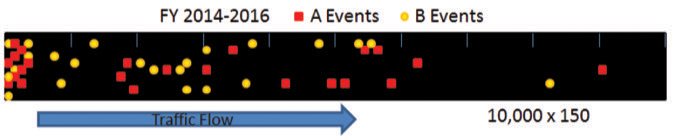
In a new Safety Alert for Operators (SAFO 17012,High Collision Risk During Runway Crossing), the FAA in November warned pilots of the risks associated with runway incursions and that their risk is highest in the first two-thirds of the runway. Additionally, the SAFO highlighted new guidance to be added to FAA Order JO 7110.65,Air Traffic Control, the primary reference for air traffic controllers. The FAA’s SAFO also made numerous recommendations to pilots, controllers and vehicle operators. The sidebar below describes the two type of runway incursions with which the FAA is primarily concerned and the results of a three-year study of data gleaned from the Airport Surveillance Detection Equipment Model X (ASDE-X) in operation at numerous large airports in the U.S.

According to the SAFO, the following paragraph will be added to the ATC Order: “Crossing of active runway(s) by aircraft/vehicle(s): 1. During departure operations, ensure that aircraft/vehicles intending to cross a runway do not cross the runway holding position markings until the controller visually observes the departure aircraft in a turn, or the departure aircraft has passed the point where the crossing aircraft/vehicle is located, regardless of altitude, unless authorized in FAA Order JO 7110.65, 3-10-10, Altitude Restricted Low Approach.”


Ready to Sell Your Aircraft?

List your airplane on AircraftForSale.com and reach qualified buyers.

List Your Aircraft
AircraftForSale Logo | FLYING Logo
Pilot in aircraft
Sign-up for newsletters & special offers!

Get the latest stories & special offers delivered directly to your inbox.

SUBSCRIBE