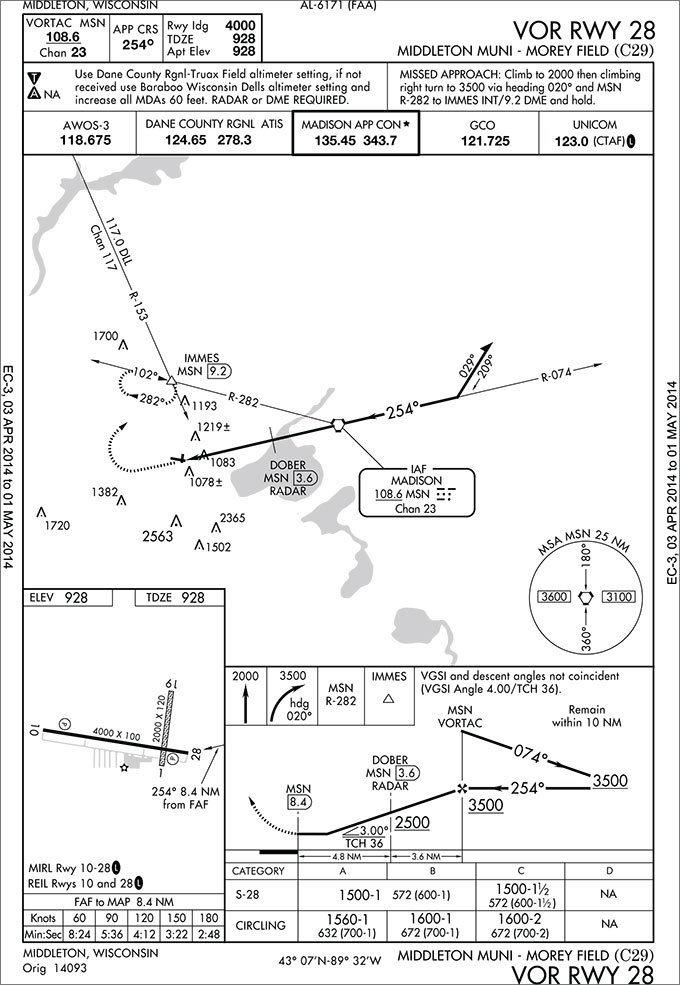
We learned 14 CFR 91.171-the VOR Check rule-during instrument ground school. In this era of satellites and GNSS, this rule is often overlooked as VORs become just named fixes instead of navigation beacons. Even with the latest navigation equipment, however, 91.171 can rear its head from time to time.
Despite the prevalence of GPS, 14 CFR 91.171 (the VOR check rule) remains critical for flight safety, as VOR navigation can still be necessary.
Even a legally compliant VOR receiver (within 5-degree error) can lead to significant lateral course deviations on long approaches, potentially placing the aircraft dangerously close to protected airspace limits and obstacles.
Cumulative VOR errors or inaccurate FAF identification based on a miscalibrated VOR can cause premature descents, risking terrain or obstacle collision due to being lower than intended on the approach.
Pilots should not just accept errors permitted by 91.171; instead, they should strive for greater accuracy and consider repairs for VORs that, while legal, show significant deviation, prioritizing safety over mere compliance.
We learned 14 CFR 91.171—the “VOR Check” rule—during instrument ground school. In this era of satellites and GNSS, this rule is often overlooked as VORs become just named fixes instead of navigation beacons. Even with the latest navigation equipment, however, 91.171 can rear its head from time to time.
CREATE A FREE ACCOUNT
Sign up to keep reading
Create a free account to continue. Already a member? Sign in below.