













Register

Crosswinds On Rails

Dont stop to think, just answer the question: When flying a crosswind approach to landing, which compensation technique do you use, a sideslip all the way to the runway, touching down first on the upwind main wheel? Or do you crab into the crosswind, kicking it out at the last second to align the airplane with the runway as it touches down?

Gemini Sparkle

Key Takeaways:

  • Pilots primarily use two techniques for crosswind landings: the "sideslip" (wing-low, opposite rudder) and the "crab" (nose into wind, align at flare), each with distinct advantages and challenges.
  • A pure application of either technique is rare; pilots often combine or transition between sideslip and crab during an approach to adapt to changing wind conditions.
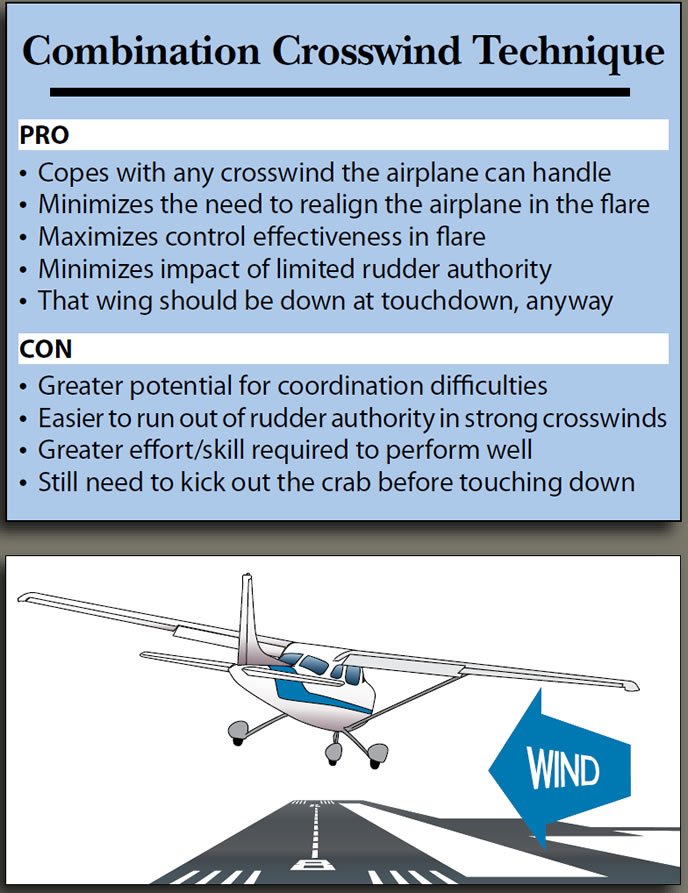
  • The article advocates for a combined approach, leveraging the strengths of both techniques to enhance control, manage stronger crosswinds, and improve confidence for a safe, stable, wing-low touchdown.
See a mistake? Contact us.

Don’t stop to think, just answer the question: When flying a crosswind approach to landing, which compensation technique do you use, a sideslip all the way to the runway, touching down first on the upwind main wheel? Or do you “crab” into the crosswind, kicking it out at the last second to align the airplane with the runway as it touches down?

The thing is you probably do both at one point or another on the approach. And when the wind really blows across a runway, using both techniques simultaneously can salvage an otherwise-improbable landing. Considered alone, each have their strong and weak points, and demand different skills, but they’re nothing more than two different ways to solve the same problem.


Ready to Sell Your Aircraft?

List your airplane on AircraftForSale.com and reach qualified buyers.

List Your Aircraft
AircraftForSale Logo | FLYING Logo
Pilot in aircraft
Sign-up for newsletters & special offers!

Get the latest stories & special offers delivered directly to your inbox.

SUBSCRIBE