











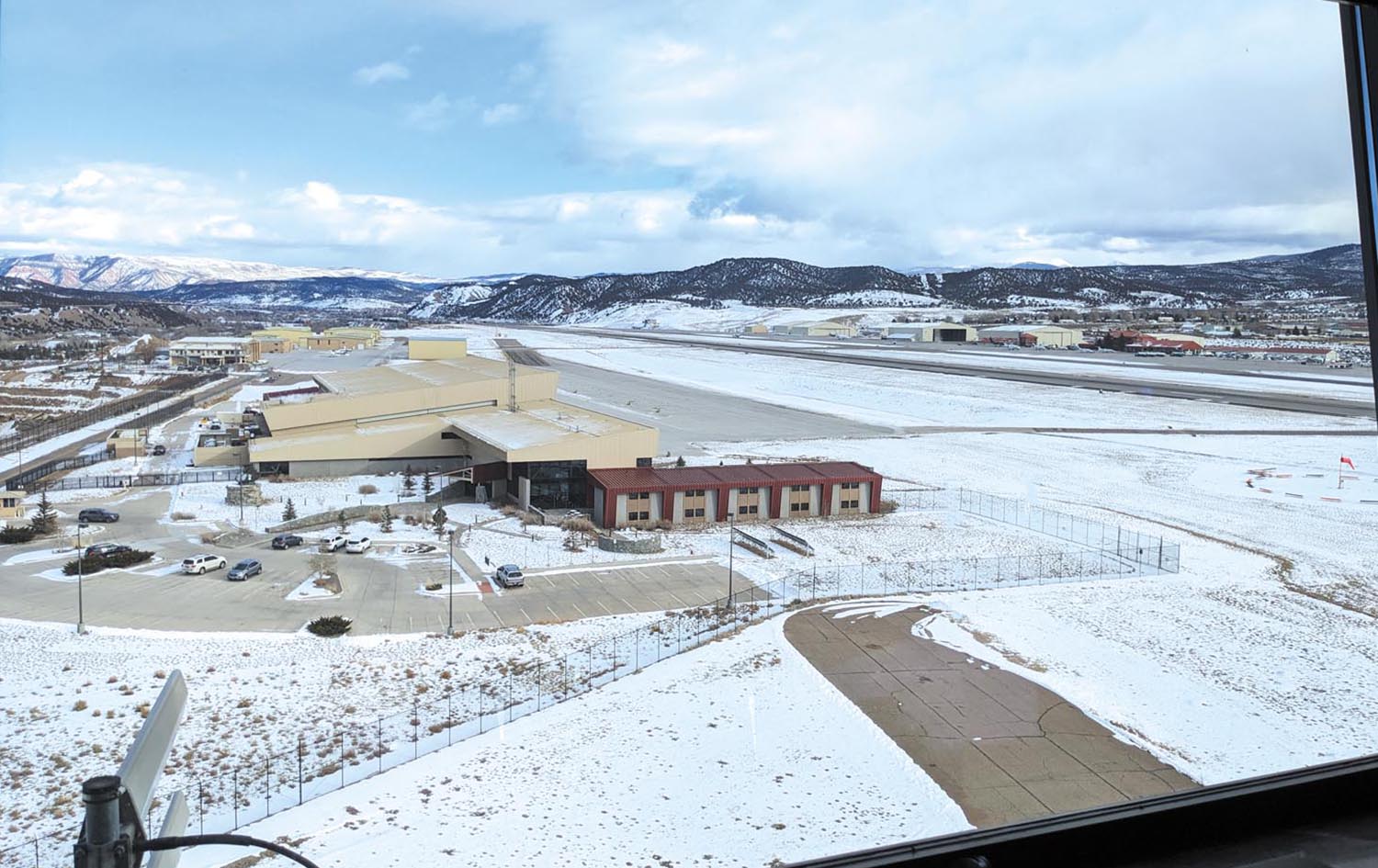


There are many ways that ATC can warn us of possible hazards. Sometimes it’s as simple as, “Traffic 2 o’clock, one mile, same altitude, converging.” Other times their admonitions can be quite cryptic. Let’s take a look at some winter weather warnings that might be coming from ATC and what we can do about them.
Snow or ice covered runways can present real problems when you’re landing. Braking may be severely compromised or at times even reduced to nil. If the snow is deep enough, it may even be enough to cause the plane to swerve and slide even if the pilot is doing all the right things. Both takeoff and landing can be difficult or impossible in the worst case. On the other hand, done properly, landing on snow or ice is not that difficult. If it were, then Alton Bay airport (B18) in New Hampshire wouldn’t open an ice runway on the lake, weather permitting. There are two primary ways that ATC can tell us about the condition of the runway.


FICON Reports
The first way that we find out about runway conditions is by a FICON report on the ATIS. FICON stands for FIeld CONditions. FICON reports are graded from level 0 (nil) to 6 (dry) and are known as a RwyCC or Runway Condition Code. When the ATIS is reporting FICON it will be reported as three numbers such as 3-5-5. The numbers represent the first, second and third portion of the landing runway. So in the case of a FICON of 3-5-5, the first third of the runway has a RwyCC of 3 and the middle and final third of the runway both have a condition code of 5. The meaning of each of the condition codes is found in the AIM in Figure 4-3-7.
A RwyCC of 0 generally requires closing the runway. Any Runway Condition Code of 4 or less should make you sit up straight in your seat and think hard about whether you will be able to stop in the available distance on the runway. You do know exactly how long the runway is, don’t you?
The folks in the tower do not go out and walk the runway to determine the Field Conditions. That would take a long time and they might need hazardous duty pay for the temperatures. They rely on the ground crews at the airport to let them know. Those folks will drive out on the runway as often as necessary to determine the status of the runway. Such close inspections will yield the nature and the extent of the contaminants.
The inspection results are relayed to Tower personnel who include them on the FICON. Typically inspections are as often as once an hour, but in rapidly changing conditions can occur more frequently such as after snow plowing and a Special ATIS might be issued.
FICON reports also include the contaminants on the runway such as ice or snow. These might be reported as, “first third of the runway, patchy compacted snow, one quarter of an inch deep.” Whatever contaminants are present should be noted in the FICON report. Whenever FICONs are in effect at a towered airport, a NOTAM for the FICON is typically issued as well.
Braking Action
When FICON reports are in effect, the folks in the tower will ask landing pilots for braking-action reports. These reports should state the section of the runway and the quality of braking action. Reports should use the terms “good,” “medium,” “poor,” or “nil.” However pilots should realize that the report from one plane may not indicate how their plane will react. Are your tires in good shape and inflated properly? Do you have anti-skid or thrust reversers? These factors and more determine how a plane reacts to runway contaminants. And unlike turbulence and in-flight airframe icing reports, where there are defined the levels of turbulence and icing, (see AIM 7-1-19 and 7-1-21) there are no defined levels of braking action. Be sure to give braking action reports a healthy dose of skepticism.
And if you are landing at a non-towered airport how do you know conditions? The easiest way is to call Unicom and ask. If you are lucky, the airport will have someone monitoring the frequency who can answer your questions about the conditions on the runway. Or perhaps another aircraft landed recently and can give you a report. Failing that you might do a low pass over the runway and see what you can see. But a low pass can be deceiving. At 100 knots, what looks to be a dry runway could be a runway that is covered in black ice. Or a thin patch of snow could be a lot deeper than it looks.
Applying Common Sense
Once you do know the conditions, you need to apply special techniques to deal with any runway condition that is less than dry. The most important thing to remember is that the landing distance will increase dramatically. A snow or ice covered runway can easily double the distance required to come to a stop safely. How do you prevent the aircraft from swerving out of control? The best way to do that is to avoid using the brakes at all.
Using the brakes greatly increases the chances of swerving. Until the plane slows to a groundspeed that is well below rotation speed, the rudder should be very effective in keeping the longitudinal axis of the plane aligned with the runway. After the plane has slowed down considerably you can gingerly start to apply the brakes and see how effective they might be. Best practice, though, is to avoid brake use so make sure you have a lot of runway available.
How should you prepare for preflight and takeoff? You’ll need a spot on the ramp that is clean and dry to do the runup. Otherwise the plane is likely to slip and slide even with the brakes being held. If you are unable to find a spot that is clean and dry, and if the runup area is large enough, it might be practical to allow the plane to slide slightly while performing the runup. Just be sure to check the area around the plane and make sure you won’t hit anything while sliding. Prepare yourself for any sliding and be primed to reduce the throttle if things get out of hand.
Be sure to check the area behind the plane so you don’t blow a large cloud of snow or slush on any planes that might be behind you. And don’t rush while doing the runup if the plane does start to slide. While taxiing to and from the runup area, try your best to avoid taxiing through any slush or wet areas. The slush can get in the brakes. Then after takeoff the slush can freeze in the brakes and you might be landing with frozen brakes.
If you fly a retractable gear aircraft, consider leaving the landing gear down a minute or two longer so the wind can blow away as much snow and slush as possible. Then, just as you retract the gear, be sure to tap the brakes to stop the wheel from spinning—a contaminated spinning wheel will throw that contamination all over the inside of the gear well, likely resulting in something freezing that you might not want to freeze (like up locks, switches, etc.).
Flying in winter conditions need not that be much more difficult than a clear, calm summer day. But it does require that you understand what ATC and other pilots are trying to tell you, particularly about the landing runway. Use this information wisely and cautiously. Just like driving an automobile in winter, if you proceed carefully you should be able to get to your destination safely.
Ken Maples lives and instructs in the mountains of Colorado where snow and ice covered runways are so common that he is surprised when he finds a clean and dry place to land.
