












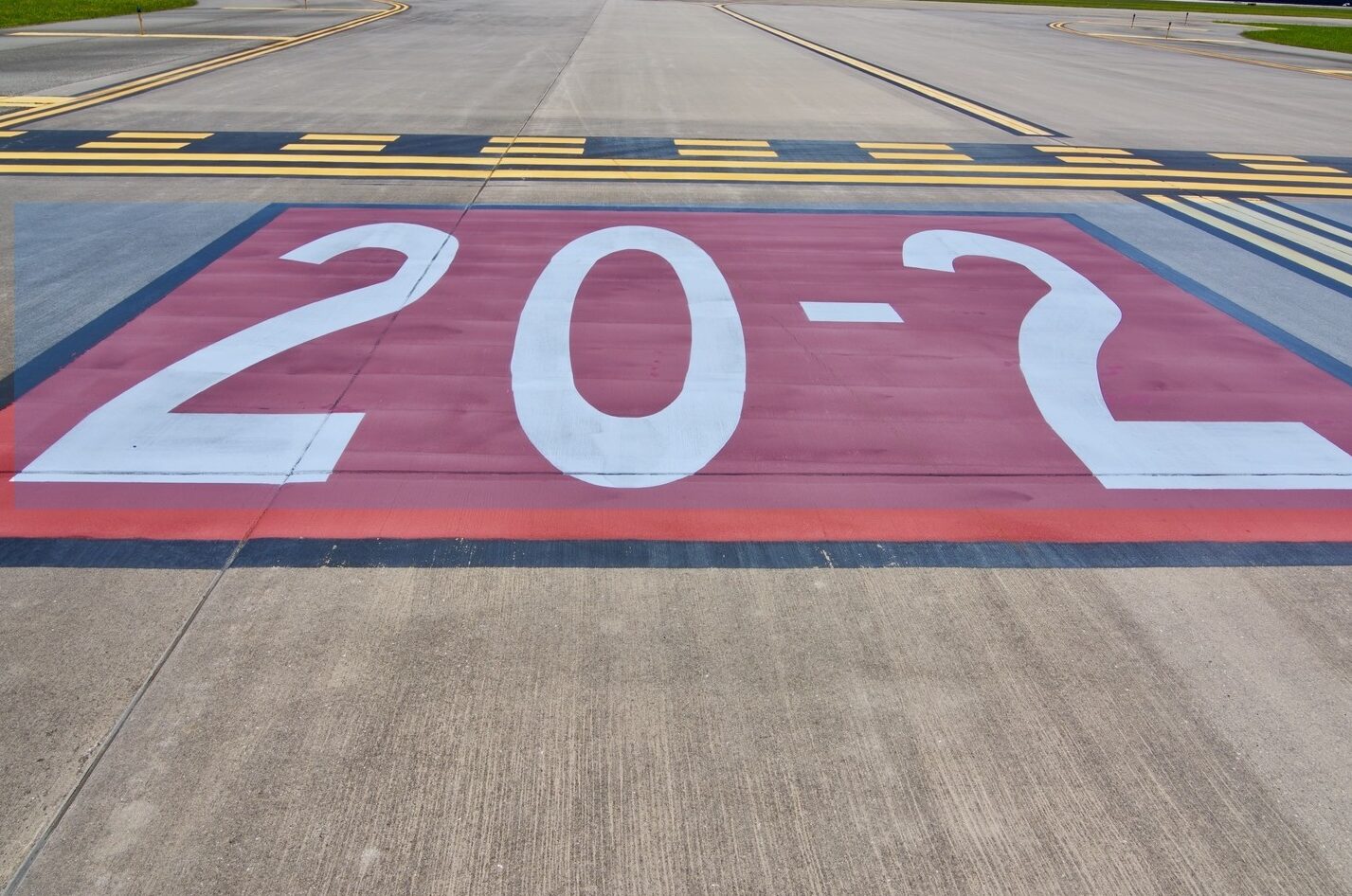


Visiting the historic triangle area of Virginia near Newport News, Williamsburg, or Yorktown offers the opportunity to fly into Newport News/Williamsburg International Airport (KPHF). With frequent rainy or cloudy conditions off of the ocean during some seasons, flying the LOC Runway 20 approach might be needed.
If you're not already a subscriber, what are you waiting for? Subscribe today to get the issue as soon as it is released in either Print or Digital formats.

Subscribe Now
A) Feeder Routes
A pilot may notice that from the IAF at the HCM VOR and the IAF at the CCV VOR there are heavy black arrow lines pointing to the PANLE intersection that is also an IAF and an IF (intermediate fix). They might choose to transition from either of these points using the “feeder route” to take them to PANLE from where they could turn directly inbound on the 202 track without needing to perform a “procedure turn” as noted by the “NoPT” indication above each of these lines. This can help a pilot transition into the approach with fewer turns, depending on which direction they are approaching from.
B) FAF DME Identified; DME Required
The final approach fix (FAF) noted by the Maltese cross at RACOT is identified as 6.3 DME. This DME would be from the I-FJQ localizer frequency on 109.3 or as identified with an IFR-capable GPS. The fact that this FAF is identified using DME, and the note in the upper left of the chart, indicate that a pilot will be required to have DME or a suitable GPS substitute to be able to fly this approach. This is also why there is no time component used to identify the missed approach point on this approach.
C) LOC Only, No DA
A localizer approach, this one doesn’t have a glide path like an ILS and is thus a nonprecision approach. A pilot flies it down to a minimum descent altitude (MDA), not a decision altitude (DA), and flies until they reach the missed approach point, which is at 1.3 DME from the localizer. Note that the mileage countdown to the MAP is not to zero here. Without a glideslope, this approach won’t get you quite as low as an ILS normally does, leaving a pilot with a minimum altitude that is 378 feet agl (420 msl).
D) Missed Back to HCM VOR
The missed approach takes a pilot straight ahead to 2,000 feet msl before making a right turn direct to the HCM VORTAC, where they will enter a hold with left turns on an inbound heading of 104 degrees. This will take a pilot 22 nm to the northwest of the airport, so you will have some time. And, if you happen to need to shoot it again, it sets you up at an IAF.
This column first appeared in the August Issue 961 of the FLYING print edition.

