












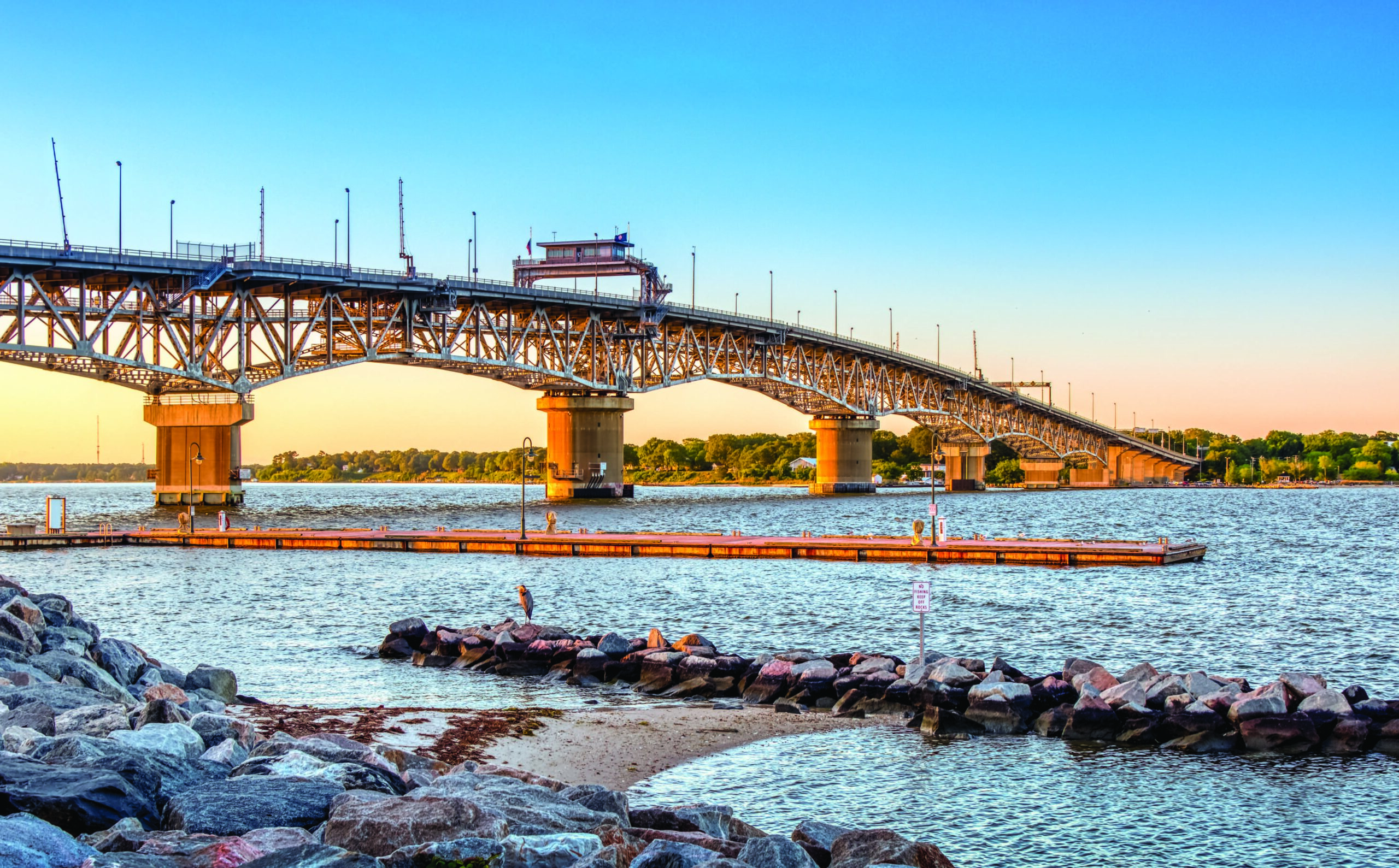


The Historic Triangle of Virginia consists of Jamestown, Williamsburg, and Yorktown. These three settlements are some of America’s most historically significant locations, and all date back to the nation’s infancy in the 1600s.
Often referenced together, Jamestown, Williamsburg, and Yorktown each balance colonial history with modern appeal and offer their own unique identity with memorable things to do. The area’s biggest allure for visitors is its multicentury history but is worthy of visiting for other reasons as well—including acclaimed restaurants, arts and culture events, aviation museums, and more.

If you're not already a subscriber, what are you waiting for? Subscribe today to get the issue as soon as it is released in either Print or Digital formats.
Subscribe NowJamestown dates to 1607 and was North America’s first permanent English settlement. One of the historic site’s most appealing attractions is the archaeological work being completed at James Fort, where the colony first stood. Visitors to Jamestowne, as it was initially known, can see active excavations and unearthed period relics on display.
Williamsburg was founded in 1632 and now serves as home to a little over 15,000 people, and boasts the bulk of the area’s shops, eating establishments, and other businesses. Revolutionary-era history is in abundance, but some of the town’s hallmark attractions are its theme and water parks.
Yorktown is an unincorporated village with several hundred residents. While its history also predates the Revolutionary War, one of its main draws is the Yorktown Battlefield, where the Continental army’s decisive victory cemented the course of history. Guests can tour the grounds as they were during the three-week-long conflict, as well as witness live reenactments and where the British army surrendered.
This part of the country is a can’t-miss visit for history buffs, as well as those who enjoy an uncommercialized weekend getaway. Most of the dining and shopping options are locally owned and operated, and there is an array of options to step off the beaten path and enjoy the tranquility of nature.
Flying In
Flying into the Historic Triangle is an adventure of its own, and pilots see an array of scenery out their aircraft’s windows—from fields and barns to rivers and beaches.
The roughly 30-square-mile area sits in the southeastern part of Virginia, roughly 45 minutes from Virginia Beach and Norfolk, and an hour away from the state capital of Richmond.
Jamestown, Williamsburg, and Yorktown are located within the Peninsula Region of Hampton Roads, an enclave of multiple communities that surround a harbor. The Hampton Roads Harbor is created at the confluence of three major rivers, and their waters ultimately flow into Chesapeake Bay. This estuary—the nation’s longest at 200 miles—meets the Atlantic Ocean south of the Historic Triangle, and there are many freshwater- and saltwater-facing spots to fish, swim, and relax. There are several nearby options, including College Creek Beach and Yorktown Beach.


The two beaches are on located on the James and York rivers, respectively, and the nearest oceanfront option is within an hour drive. Not only do you have your choice of waterfront relaxation spot when flying to the area, there are a handful of different airport options from which to choose. Which one you pick largely depends on which of the numerous attractions you are hoping to visit.
There are three airports that are roughly a half-hour drive to the area’s many tourist spots and lodging options. If you expand your search further, there are a handful of other good options.
Airports
For geography’s sake, the following airports are referenced based on their distance to Williamsburg, the most populous location of the historic trio.
Newport News/Williamsburg International Airport (KPHF) is roughly a 23-minute drive from the city center. The facility features two paved runways, the longest of which is 8,003-feet-long by 150-feet-wide. The airport’s land was formerly an Army base during World War II. Its ICAO identifier of KPHF (Patrick Henry Field) was created in homage to its history as a base and after the famed Virginian whose contributions were critical during the colonists’ fight for independence.


Aviation Museum at Virginia Beach Airport (middle), and a Fifes and Drums performance (right). [Adobe Stock/Courtesy of Military Aviation Museum/Courtesy of Colonial Williamsburg Foundation]
The airport’s strategic location within the Greater Hampton Roads area has enabled it to be fortunate with commercial air service throughout much of its history—and American Eagle (American Airlines) currently operates flights there. Not only do pilots share KPHF’s pattern with regional jets, but they also do so with a variety of other commercial, government, and military planes, as the airport serves as headquarters for several aerospace and defense companies. The website for one of these providers, Airborne Tactical Advantage Company, highlights the Mirage F1, L-39 Albatross, F-21 Kfir, and MK-58 Hawker Hunter as aircraft in its fleet.
Middle Peninsula Regional Airport (KFYJ), north of Williamsburg, is another option to consider. The facility sports a lone 5,000-feet long by 75-feet-wide paved runway, and there is both 100LL and jet-A fuel available. There is also an on-field parachuting drop zone, No Limits Skydiving, if you are looking for an adrenaline fix. Many transients make a quick stopover in West Point, Virginia, before heading south half an hour to Williamsburg. According to the airport’s website, two of the popular local places to visit are the King & Queen Courthouse Tavern Museum and the 1709-era Chelsea Plantation.
Waltrip Williamsburg Executive Airport (KJGG) is a privately-owned, public-use facility that will soon celebrate its 55th year in operation with an airshow on September 20-21. What started as one single-engine piston airplane flying from a humble grass strip has become a 3,204-foot-long by 60-foot-wide paved runway and nearly 90 based aircraft. The ownership group continues to invest in the airport and commissioned a runway repainting and hangar construction project in late 2023.
At an 11-minute trip, this facility is the closest option to the heart of Williamsburg and serves as a gateway to the Mid-Atlantic and Historic Triangle. While chosen by many as the starting point for a weekend getaway, KJGG is also a great place to fly in for lunch or dinner. There is an on-field, family-friendly restaurant within the terminal building called Charly’s known for its fresh-baked bread and Friday crabcake specials.
Aviation Events
The third weekend of September may be the best time to see a late-year airshow lineup. The Naval Air Station Oceana Air Show will be held September 20-21, representing the Navy’s largest public outreach event. NAS Oceana is in Virginia Beach, about an hour drive south of Williamsburg.
The F-22 Raptor Demonstration Team and the U.S. Navy Blue Angels will be headlining this event alongside the Navy Legacy Flight Foundation aircraft, F-35C II Demonstration Team, and more. Airplanes based at the “Navy’s East Coast Master Jet Base” include more than a dozen F/A-18 Super Hornet squadrons and a C-40A Clipper squadron.
There are a few ways to see static, permanent collections of aircraft in the region as well. The Virginia Air & Space Center at the NASA Langley Visitor Center in Hampton features a wide variety of space and aircraft artifacts, notably the Orion PA-1 Test Vehicle and the Apollo 12 Command Module. The facility is one of the 15 NASA Visitor Centers in the country.
The Military Aviation Museum is located at Virginia Beach Airport (42VA) and boasts a collection of more than 50 aircraft. These airplanes are vintage to both world wars, including a Sopwith Triplane, Goodyear FG-1D Corsair, and Consolidated PBY-5A Catalina. The website says the World War I collection boasts a “number of replicas built to original specifications, restored originals, and aircraft flying with original engines [that] provide a glimpse of the birth of air combat.” The museum also notes that its World War II-era aircraft have been restored to wartime configuration and flying condition.
While located on a privately-owned-and-operated airport, flying in is typically not possible due to insurance requirements. However, the museum is a short drive from Chesapeake Regional Airport (KCPK). In addition to perusing the collection at your own leisure, docent-led tours are also available. The buildings on the grounds are as impressive as the aircraft, and visitors are able to explore a collection of historic structures, including a German Luftwaffe hangar originally built in 1934, a distinctly orange-and-white, 68,000-gallon water tower, and an original control tower used by the United States Army Air Forces in England.

Things to Do
Moving between the attractions of Jamestown, Williamsburg, and Yorktown is possible via the Colonial Parkway.
The 23-mile-long, National Park Service-managed roadway connects the three points of the Historic Triangle and was completed in 1957. Throughout its history, the thoroughfare has been maintained with an emphasis toward protecting and highlighting the picturesque natural setting.
For those wanting to experience history firsthand, there is a package option (America’s Historic Triangle Ticket) that includes visits to the area’s top five points of interest: Colonial Williamsburg, Historic Jamestowne, Jamestown Settlement, the American Revolution Museum at Yorktown, and Yorktown Battlefield. The ticket is $123 for ages 16 and older, and $55 for those 5-15.
Jamestown
It’s where colonial history comes to life. Historic Jamestowne is located on the former site for James Fort, the settlement’s original geographical and protective boundary.
Archaeologists and scholars actively work here to locate and highlight relics from more than four centuries ago. The work of the Jamestown Rediscovery project began in 1994 and more than 4,000 artifacts gathered during this effort can be seen at the Nathalie P. & Alan M. Voorhees Archaearium.
Tourists can interact with period reenactors at Jamestown Settlement, a living-history museum that highlights the contributions and way of life for all the groups of people who have called the area home throughout history.
While there are fewer period artifacts than at Historic Jamestowne, many believe it to be a more lively option suitable for the whole family. One of the many highlights are the re-created versions of the Susan Constant, Godspeed, and Discovery ships, which brought settlers to the first American colony from England.
Colonial Williamsburg
This 301-acre model town features original and replica buildings from the early 1600s and beyond.
Two of the most notable structures are the Governor’s Palace, where both English-appointed and post-independence governors resided, and the Capitol Building. Actors in period clothing are a frequent sight and add to the experience of history being taught outside of a textbook.
Visitors can interact with these energetic and knowledgeable employees at the community’s taverns, inns, private residences, meeting houses, government buildings, and more.
A common favorite for visitors to Colonial Williamsburg is the arboretum and many gardens, which are a point of pride for the staff of experienced horticulturists. This site, as well as the other history-focused ones, hosts a number of educational and entertaining events throughout the year. One of the most highly anticipated dates on the calendar is Constitution Day Celebration on September 17.
Williamsburg caters to those visiting who want to experience the spoils of the modern world as well with Busch Gardens, an internationally-recognized amusement park. It also puts a focus on visual appeal and has been recognized as the “World’s Most Beautiful Theme Park” for 34 years in a row. There are a variety of roller coasters and other rides, as well as European-themed architecture, food, and live entertainment.
While there are several water rides at Busch Gardens, Water Country USA is a theme park that’s open full-time through the end of August (and during the first three weekends in September). There are wave pools, slides, splash pads, and morey. Once the weather starts to get colder, Great Wolf Lodge, an indoor waterpark, is also in town. This year-round facility also has games, bowling, and other entertainment options, as well as on-site sleeping accommodations.
Arts, culture, and education is important to the Williamsburg community. There are two art museums in town, the Art & Music Festival takes place each second Sunday of the month, and a farmers market is held each Saturday morning.
Founded in 1693, the College of William & Mary is the second-oldest college in the country. The school has been referred to as the “Alma Mater of the Nation’s Leaders,” in reference to its many dignitary alumni, and still serves as an important institution of higher learning in many disciplines.
Campus is a great place for a leisurely walk, and the dance, music, and theater programs, as well as NCAA Division I athletic teams, routinely have events.
Yorktown
This city is largely known for being the site for the last significant battle of the Revolutionary War. The siege of Yorktown lasted from September 28 through October 19, 1781, and resulted in a British surrender.
The National Park Service’s Yorktown Battlefield monument is an ideal place to learn about the colonists’ fight for independence and the milestone victory. There are five dates in August and September where there are artillery demonstrations and four planned marching performances of the Fifes and Drums of York Town. The American Revolution Museum at Yorktown is another living-history experience where visitors can learn more about colonial life.
A short walk away, the Yorktown Riverwalk Landing is a calm place to unwind after a long day in the area’s many cultural centers. There are shops, restaurants, performance areas, and outdoor bench seating, as well as statues of Revolutionary War heroes. There is a lineup of events throughout the year, including the Yorktown Market Days each Saturday, the Sounds of Summer music events (with two in August), the Rhythms on the Riverwalk Concert Series starting in September, and the 13th annual Yorktown Art Stroll on September 29.
This column first appeared in the August Issue 961 of the FLYING print edition.

