











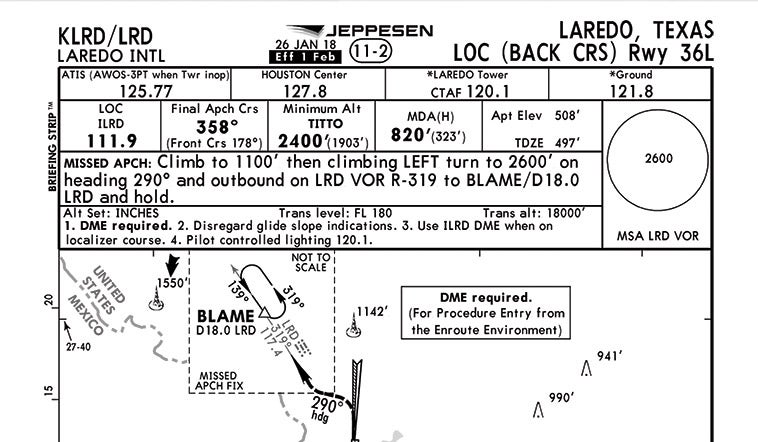



In an era of WAAS GPS navigation systems on board even the smallest aircraft, flying a localizer back-course approach could seem rather archaic. Indeed, for years many pilots viewed a LOC BC approach as more of an afterthought at airports, simply because the procedure was built off the back side of a full ILS system already in operation to the opposite end of the same runway.
But still, today, LOC BC approaches, despite being nonprecision, can serve as a valuable resource because they provide fairly precise ground-based guidance to pilots flying airplanes that might not use terribly sophisticated avionics. All that’s needed to fly a LOC BC to minimums is a VOR receiver with an omni bearing selector, an instrument-current pilot and a method of tracking time inbound from the final approach fix. Here are some important details of this approach.

