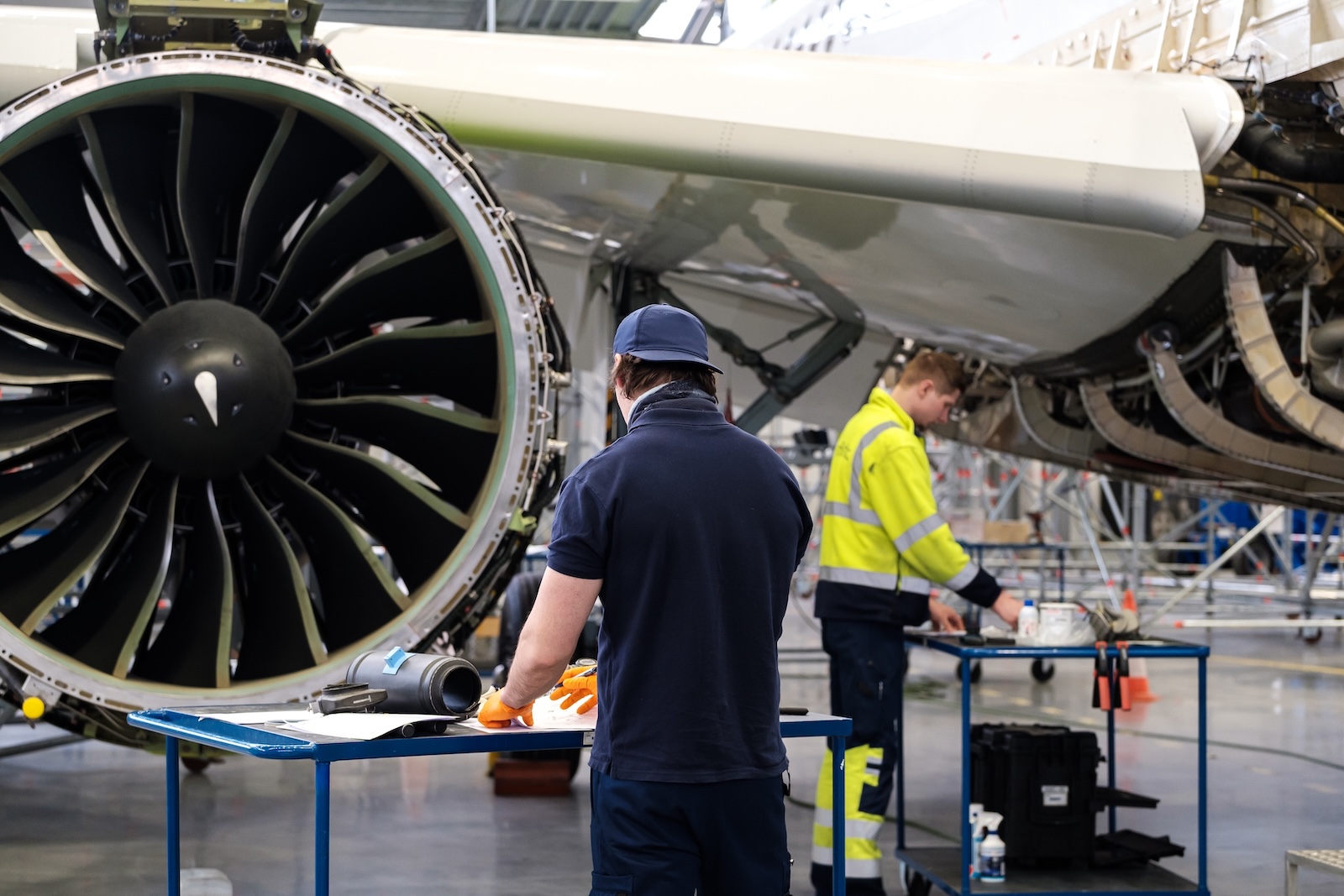
Technicians work on an aircraft engine. [Shutterstock/Karlis Dambrans]
Key Takeaways:
Boeing projects a global demand for nearly 2.4 million new commercial aviation professionals by 2044.
This includes 660,000 pilots, 710,000 maintenance technicians, and 1 million cabin crew, driven by expanding fleets and the replacement of existing personnel due to attrition.
Eurasia, China, and North America will account for over half of the new personnel demand, while South Asia and Southeast Asia are expected to be the fastest-growing regions for staffing needs.
Boeing is projecting a demand of nearly 2.4 million new commercial aviation jobs through 2044.
According to the company’s annual 2025 Pilot and Technician Outlook published on Tuesday, carriers will need to hire 660,000 pilots, 710,000 maintenance technicians, and 1 million cabin crew to meet a continued demand in personnel.
CREATE A FREE ACCOUNT
Sign up to keep reading
Create a free account to continue. Already a member? Sign in below.
Caleb Revill is a journalist, writer and lifelong learner working as a Junior Writer for Firecrown. When he isn't tackling breaking news, Caleb is on the lookout for fascinating feature stories.