

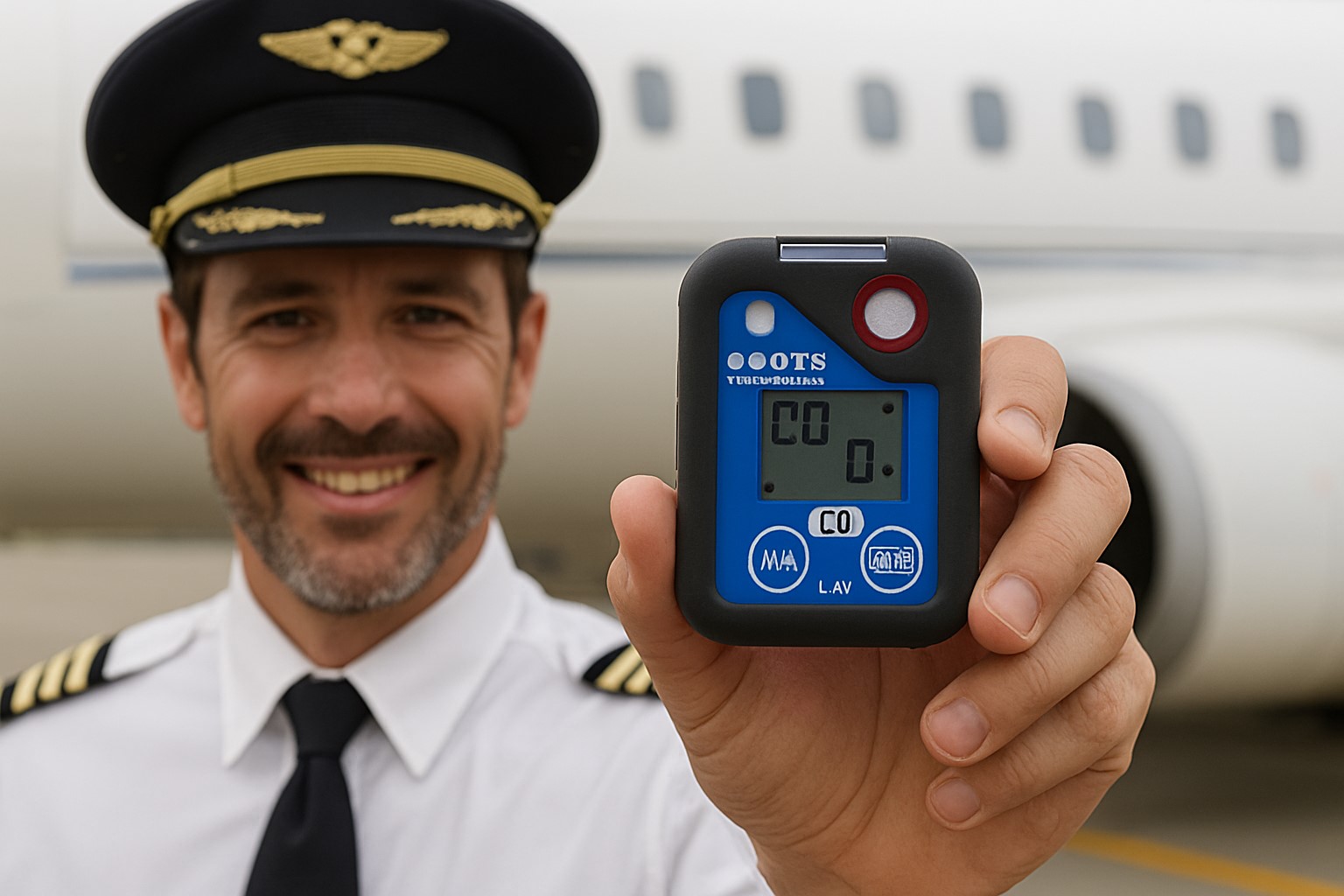


Carbon monoxide is a stealthy danger for pilots and passengers. The odorless, colorless, and tasteless gas can cause incapacitation or even death if inhaled for long periods of time. The gas is primarily caused by exhaust system failures. To be proactive, and to be notified if carbon monoxide is present in the cabin of your aircraft, a carbon monoxide detector is recommended in all aircraft cabins.
Best Carbon Monoxide Detectors for Aviation
There are many carbon monoxide detectors to choose from, and none are the wrong choice, but here are our picks for the best carbon monoxide detectors to keep in your cockpit. Carbon monoxide detectors can come in many variations from simple stick on one-time-use paper sensors to fully installed avionics systems. Carbon monoxide detectors can be an essential component of any flight bag and cockpit.
Forensics Carbon Monoxide Detector

The Forensics Carbon Monoxide Detector starts detecting at 9 PPM. It has a small aluminum portable body for use in and out of the aircraft. It’s also one of the lightest digital detectors on the market.
Specifications:
- Dimensions: 2.5 inches x 1.75 inches x 65 inches
- Weight: 2 ounces
- Ease of use: No configuration is required and turns on with the touch of a button.
- Sensor life: 3 Years
- Low-level alarm: Lowest level alarm at 9 PPM
- CO levels: Reads levels from 9 PPM to 1000 PPM
- Digital readings: Yes
- Customizable alarms: No
- Battery: The detector comes with two CR2032 batteries and the battery life is about 1 year.
Special features:
- Two alarms equipped to sounds at 70 dB, making sure to be heard in the cockpit
Benefits:
- Alarm will sound from 60-240 minutes based on battery life.
- Travel sized and can be kept in the aircraft at all times
Disadvantages:
- No values less than 9 PPM will be detected, shortening available response time for pilots.
- Alarm can only be turned off if the CO detector is turned off.
Sporty’s Pilot Shop Carbon Monoxide Detector

The Sporty’s Pilot Shop Carbon Monoxide Detector is a low-cost, non-digital carbon monoxide detector. This type of detector is often used by flight schools for reliability and being cost efficient. Perfect for a flight bag.
Specifications:
- Dimensions: 2 ⅛ inches x 2 ⅛ iinches
- Weight: 1 ounce
- Ease of use: Open the package and stick it to any surface in the aircraft cockpit.
- Sensor life: 90 days opened and 3 years unopened
- Low-level alarm: None
- CO levels: Turns black when CO levels indicate sufficient concentration to cause sickness, headaches, or death
- Digital readings: No
- Customizable alarms: No
- Battery: No Batteries
Benefits:
- Low price
- Recommended by the FAA
- Easy to use
Disadvantages:
- No low level detection
- No digital readings
- Must replace every 90 days.
Tocsin 4 CO Detector
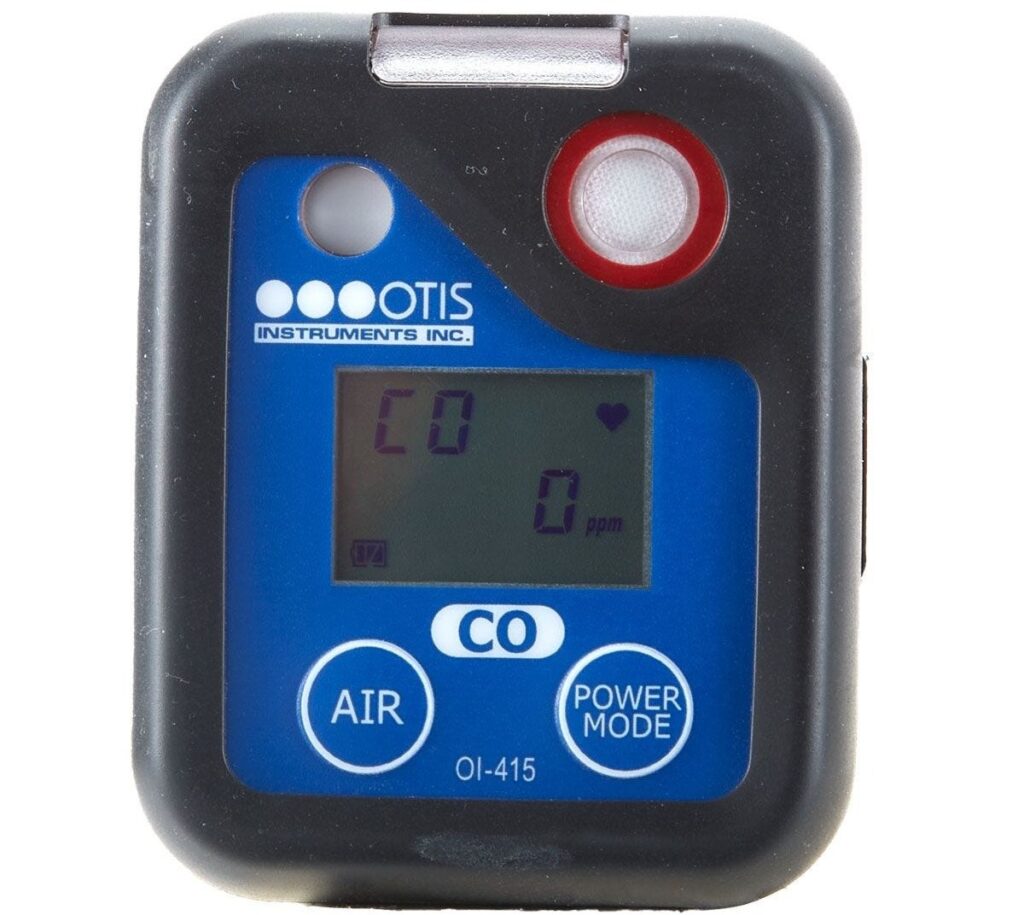
The Tocsin 4 CO Detector is an essential safety device specifically crafted for aviation environments, equipped to alert pilots to dangerous carbon monoxide levels. Its robust construction combined with advanced sensor technology makes it a reliable choice for cockpit safety.
Specifications:
- Alert modes: Red flashing lights, vibrating, and a loud audio alarm
- CO detection range: 0-2,000 ppm
- Alarm points: Preset at 25 and 50 ppm
- Power source: Two AAA alkaline batteries (included), lasting up to 9000 hours
- IP rating: Impact, dust, and water resistant (IP-67)
- Display: Large backlit LCD showing ambient air CO levels in ppm
- Accessories: Comes with a 3M Dual Lock attachment tape and a 360-degree rotating alligator clip
Pros:
- The Tocsin 4’s multiple alert modes ensure pilots are promptly notified of hazardously high CO levels.
- Its long battery life of up to 9000 hours minimizes maintenance concerns during extended use.
- The device is easy to mount using the included attachment tape and alligator clip, providing flexibility in placement within the cockpit.
Cons:
- The sensor requires replacement approximately every two years, which could be a logistical consideration for operators focusing on minimizing downtime.
Overall, with its reliable detection capabilities and user-friendly design, the Tocsin 4 CO Detector stands out as a vital asset for enhancing inflight safety protocols.
GasDoc DS-399 Carbon Monoxide Detector
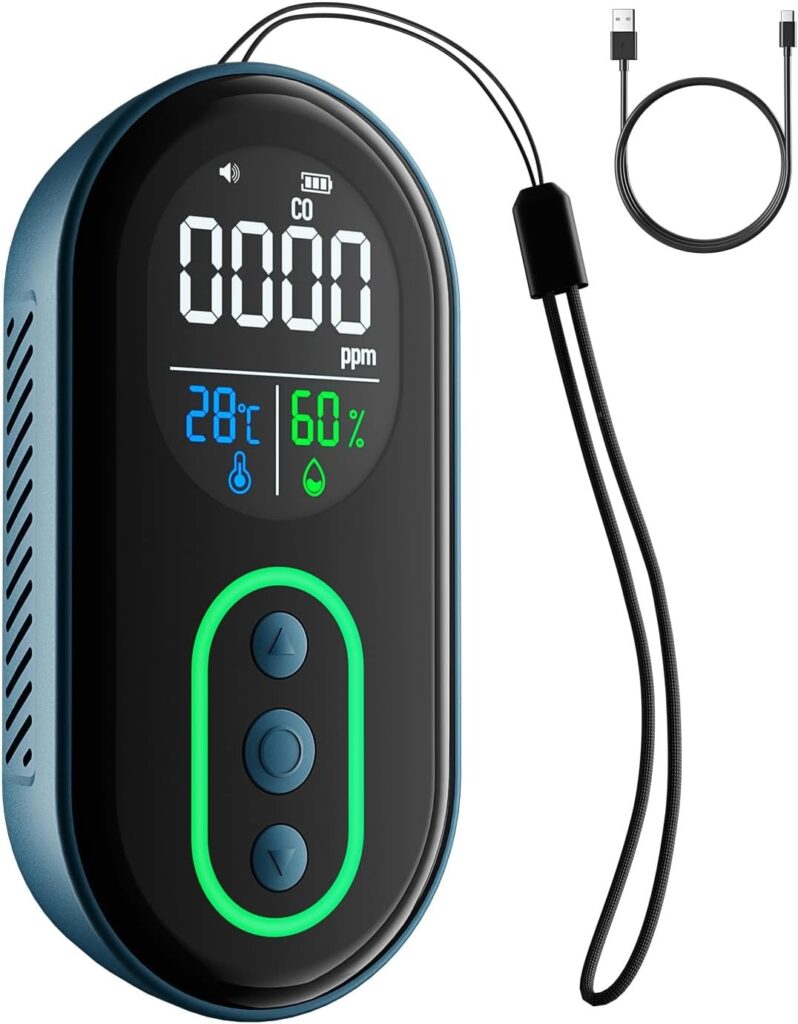
The GasDoc DS-399 Carbon Monoxide Detector is a versatile and portable safety device designed for use in various environments, including your home, car, and while camping. This device can detect CO levels ranging from 0 to 1000 PPM and allows for user-defined alarm thresholds, offering enhanced safety by providing alerts at custom levels. It monitors real-time temperature and humidity, offering valuable environmental data.
Specifications:
- Power Source: Rechargeable 1000mAh lithium battery
- Standby time: Up to 168 hours on a full charge
- Product dimensions: 4.13″D x 0.83″W x 2″H
- Alarm type: Audible and visual
- Weight: 76.8 grams
Pros:
- Long standby time makes it ideal for extended use on trips.
- Audio-visual alert system provides double protection with customizable alarms.
- Compact and lightweight, easy to carry with an included lanyard.
Cons:
- Requires regular charging if used continuously.
- Some users may find custom alarm setting slightly complex.
Lunarlipes 3-in-1 Carbon Monoxide Detector
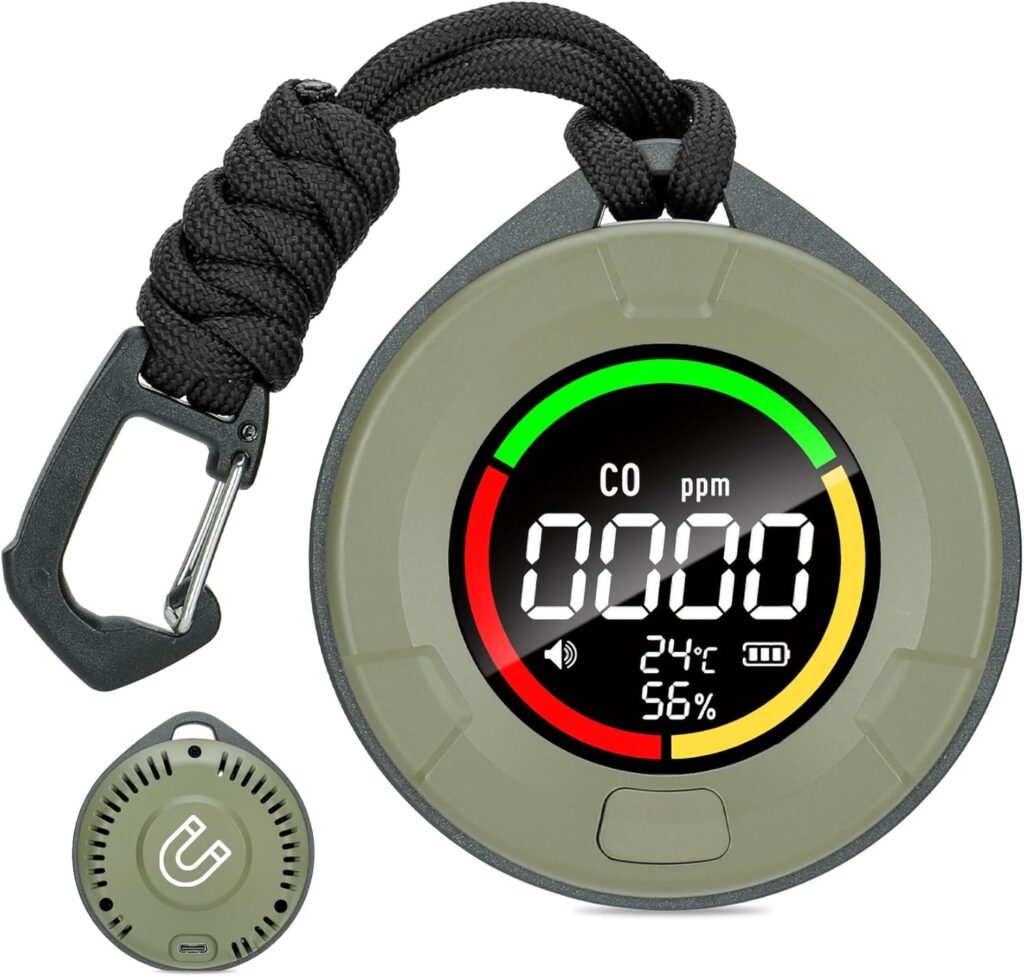
The Lunarlipes Portable CO Detector is a compact, multi-functional device that not only detects carbon monoxide but also measures ambient temperature and humidity. This model, with its magnetic suction capability and included lanyard, is perfect for travel, providing up to 120 hours of standby on a full charge.
Specifications:
- Power source: Rechargeable lithium battery
- Standby time: 120 hours on a full charge
- Product dimensions: 1.18″D x 2.75″W x 2.99″H
- Alarm type: Audible and visual with 3-stage light indication
- Weight: 0.23 pounds
Pros:
- Offers a comprehensive environmental monitoring system with CO, temperature, and humidity sensors.
- Fast charging capability, fully recharges in just one hour.
- The magnetic base provides versatile installation options.
Cons:
- A lower detection range (up to 500 PPM) compared to some other models.
- Users must manually adjust settings to their threshold preferences.
What Is a Carbon Monoxide Detector?
A carbon monoxide detector is a sensor that can detect the colorless, tasteless, and odorless gas known as carbon monoxide (CO). A CO detector is commonly used in industries where carbon monoxide can leak from equipment without notice.
How Do Carbon Monoxide Detectors Work?
Carbon monoxide detectors consist of a small metal oxide semiconductor sensor that uses circuits applied to a silica chip. When CO comes into contact with the circuitry, it lowers the electrical resistance. The CO can be measured based on the parts per million present in the air. If the PPM is high enough, an alarm will sound to notify the user.
What causes carbon monoxide in airplanes?
Carbon monoxide (CO) is a byproduct of the combustion of fuel and is emitted in the exhaust of gasoline, propane, or other fuel-powered equipment and engines. In aircraft, carbon monoxide can leak from a few places. The most common carbon monoxide sources in an aircraft are:
- Internal combustion engines (piston aircraft)
- Turbine engine exhaust (turbine aircraft)
- Auxiliary Power Unit (APU) exhaust
- In aircraft that rely on air warmed over the engine manifold in flight for cabin heat, carbon monoxide can be drawn into the cabin if there is a crack in the manifold or duct work.
What Makes a Reliable Aircraft Carbon Monoxide Detector?
A reliable carbon monoxide detector will be able to detect carbon monoxide at levels that will advise of a leak of CO before impairment is present. These levels are between 20-40 PPM. At 50 PPM impairment will start to take effect on a pilot. This impairment can lead to loss of control of the aircraft, incapacitation, and even death.
Size
The average size of a carbon monoxide detector is around 2.0”x2.0”x1.0”. This will vary based on the type of carbon monoxide detector used.
Battery
The type of batteries a carbon monoxide detector uses varies based on the type of sensor chosen, portable, app-enabled, stick on, or installed. Most carbon monoxide detectors are portable and require batteries that are changeable such as AA or CR2032. Some carbon monoxide detectors have batteries that can be charged and others do not have any batteries at all.
Digital Readings
Digital readouts on portable, app-enabled, and installed carbon monoxide detectors are shown on an LCD or phone screen by PPM. The PPM readout will vary depending on the range the sensor can detect.
Early Warning Protocol
Early warnings, especially between 20-40 PPM are essential to pilots to ensure adequate time to invoke emergency protocols to stop the CO emission, to reduce gas in the cockpit, or land safely before the gas saturation is high enough to impair the pilot.
Accuracy
The FAA certifies carbon monoxide detectors for accuracy to ensure the least amount of false alarms. Accuracy refers to the detection limits and how close the measured value is relative to the true CO level. The detectors will go through a certification test to compare the reading shown with the actual reading of the air benign presented. This is to ensure pilots are equipped with the information needed to plan and execute emergency procedures related to CO exposure and how urgent the response needs to be.
Sensor Life
Over time, the components in the interior of carbon monoxide detectors degrade. This degradation time varies depending on the carbon monoxide detector being used. Some sensors degrade in three months while other detectors can last as long as 10 years.
Atmospheric Pressure Influences
The partial pressure of a gas is affected by the atmospheric pressure, specifically density altitude. That is due to the dispersion of air particles expanding as the altitude increases. In unpressurized aircraft, the pressure difference will not have an effect, but in piston- non-pressurized aircraft, it will be affected. At high altitudes, air pressure decreases, but the concentration does not change. Therefore if the sensor reads 70 PPM, the decrease in altitude will not change the saturation of CO in the cabin.
End-of-Life Documentation
Carbon monoxide detectors do expire. The expiration date is important to keep track of because the calibration of the sensor, normally conducted by the manufacturer, does skew over time. In some instances, carbon monoxide detectors can be recalibrated, but in most cases, the carbon monoxide detector will need to be replaced once it expires to ensure the accuracy of the sensor.
Price
Prices for carbon monoxide detectors vary. The price of the sensor is not a measure of how effective the sensor is. Sensors range in price from $3 to more than $1,000 for avionic installed models.
Protect Yourself and Your Passengers
Carbon monoxide (CO) is a colorless, tasteless, and odorless gas that can be a danger to both pilots and passengers. Carbon monoxide detectors are an essential component to every cockpit. CO detectors come in many different platforms from app-enabled sensors to fully installed avionic equipment. There are hundreds of different carbon monoxide detectors on the market, this list is to equip a pilot with the necessary information needed to make an informed decision on which CO detector they should invest in.
FAQ
Do Airplanes Have Carbon Monoxide Detectors?
Most aircraft owners do opt to have a carbon monoxide detector in the cockpit, but it is not required.
Why Is Carbon Monoxide Poisoning a Concern in Aircraft?
Carbon monoxide exposure can cause impairments such as dizziness, fatigue, incapacitation, and even death.
How Do I Choose a Carbon Monoxide Detector?
Choose a detector based on your budget and aircraft use.
FLYING may earn revenue from the products available on this page and participate in affiliate programs.