Weather Tactics

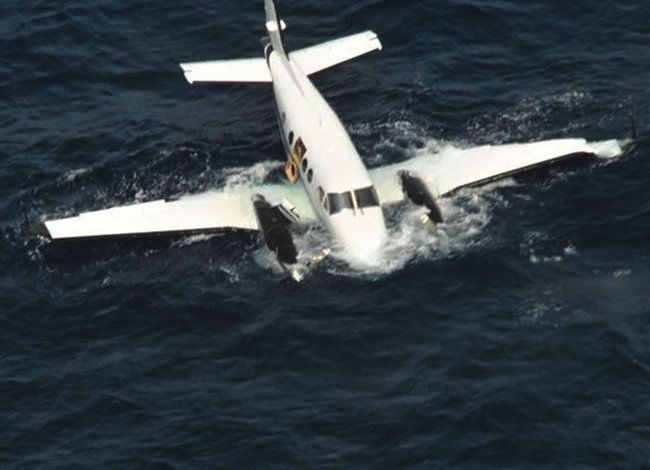
The Ditching Option

Let’s dispel some myths: Ditching done well is not all that dangerous. My recent ditching was devoid of actual trauma. Most people—about 90 percent—survive a ditching, and those who don’t are usually the ones who did not take basic steps to prepare. Some recent incidents and my own experience demonstrate ditching usually is very survivable and taking a few precautions can greatly enhance the possibility of a favorable outcome.

Read More »

Departing Non-Towered Airports

When departing IFR from a tower-controlled airport, planning your initial route is easy. You may have a challenging departure procedure, but you depart as cleared or as directed, immediately under positive control. It sounds complicated, but its actually easier than the alternative. The alternative, since you asked, is an IFR departure from a non-towered airport. In this case, youre entirely responsible for terrain clearance until you make it into controlled airspace and you must plan an obstacle clearance departure route on your own. Your options (and responsibilities) are different depending on whether its VMC, marginal VFR or IMC. What do you need to consider? How do you choose? If you want to know what youre expected to do under a given set of circumstances, the first place to look is the regs. FAR 91.175 specifies what pilots are required to do for takeoff and landing under IFR. Although 91.175 gives us a lot of good information about landing minima and decision heights, and what needs to be visible to proceed from the missed approach point to landing, it is basically mute on the subject of instrument departures.


Read More »

Cold Engine Starts

After watching me horse around with a Piper Cub one day years ago, an old timer gave me a stern look and the comment, “Son, that aint a car.” Even in my youth I realized it was a good point that applies to most aspects of aviation, but recently I recognized its wisdom concerning cold-weather starts. Everybody knows that preheating aircraft engines is recommended, but so is exercise and a good diet. You dont preheat your car to drive to the airport, so whats the big deal? One engine is much the same as another, isnt it? Not really. The main difference between automobile engines and airplane engines is the materials they are made of. And the oil they use. And the fuel they use. And the machines they power. And the way they are operated. Okay; just about everything involving airplane engines makes cold-weather preheating important.

Read More »

Flight Planning’s New Age

Anyone who’s picked up the phone to obtain a weather briefing from an FAA Flight Service Station (FSS) in recent weeks has discovered the ongoing consolidation by federal contractor Lockheed Martin (LockMart) isn’t going so well.

Read More »

AWOS/ASOS Lies

When you get right down to it-the ground, that is-precise knowledge of local weather is the single critical factor determining whether your three-hour instrument flight is going to have a happy ending. Youll either get an easy peek at your flight-storys last page or itll become a cliffhanger at decision height, followed by a missed approach. Naturally, weather has a significant effect on the critical few minutes of an instrument approach (even a VFR approach), as well as our decision-making process.

Read More »

The problem With Internet Weather

The ducks were going to be walking soon. It was sometime in the early 1980s-I had just flown my rented Skyhawk down to the ILS Runway 5R minimums at the Raleigh-Durham (N.C.) International Airport (RDU), breaking out at decision height. Earlier, I missed the 600-foot minimum descent altitude radar approach at the nearby Horace Williams Airport at Chapel Hill, N.C. This was Plan B.

Read More »

Unicom: 11/04

Grossing Out
I very much enjoyed the article on weight and balance (Positioning Pounds, July 2004). It is my understanding that the poor full-fuel payloads we see in virtually all of our Part 23 single-engine aircraft have to do with the manufacturers meeting the rather arbitrary 61 knot Vso requirement.

For instance, the new TBM 700C2 max gross weight was increased by 815 pounds because Socata took advantage of an exception to the 61 knot Vso requirement. It had to provide crashworthy seats able to tolerate 20-G decelerations. The Vso for the 700C2 is 65 knots. Same wing and same engine as other TBMs, yet it gets a tremendous increase in max weights. Also, the FAA grants…

Read More »
Pilot in aircraft
Sign-up for newsletters & special offers!

Get the latest stories & special offers delivered directly to your inbox.

SUBSCRIBE