Proficiency

What To Look For In Instrument Training

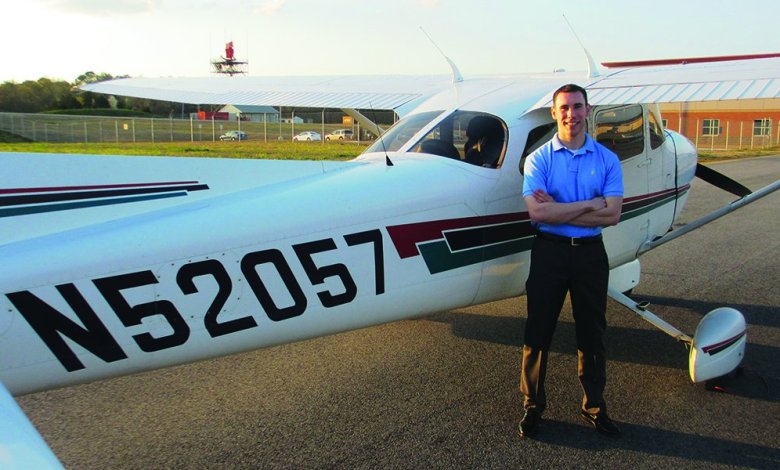
If you’re on a path to becoming a career pilot, you’re also probably enrolled in a program offering instrument training. You’ll do it their way if you want to graduate. The rest of us face many more variables, and how we respond to them can impact every aspect of how and whether we earn the […]

Read More »

Pilot Bill of Rights, Control Riding and Dealing with Drones

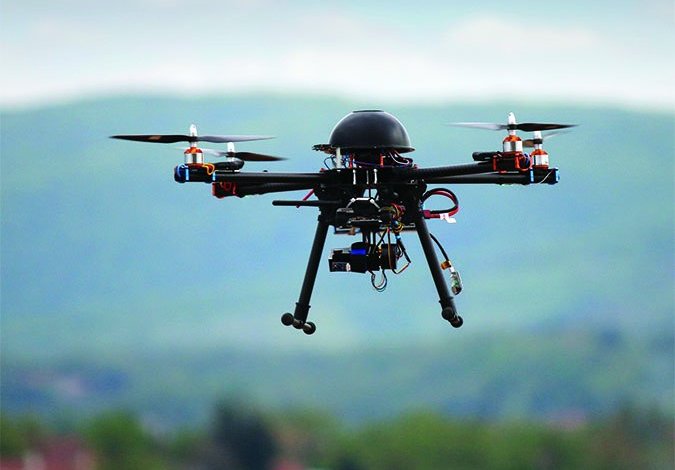
The Air Line Pilots Association (ALPA) on June 23, 2015, wrote U.S. Senators saying it is fundamentally opposed to the dangerous policy shift proposed by the Pilots Bill of Rights II (PBOR2). Reader Martin Brookes writes that every instructor he has flown with couldnt resist adding their control input on landing via subtle, unannounced control inputs to help the student. This is an unfortunately common practice, sometimes called control riding. While its easy to bash the FAA efforts to regulate drones, its important to note Congress in 2012 told the agency to come up with a regulatory scheme allowing UAS operations in the national airspace.

Read More »

The Aircraft Engine Cylinder Report

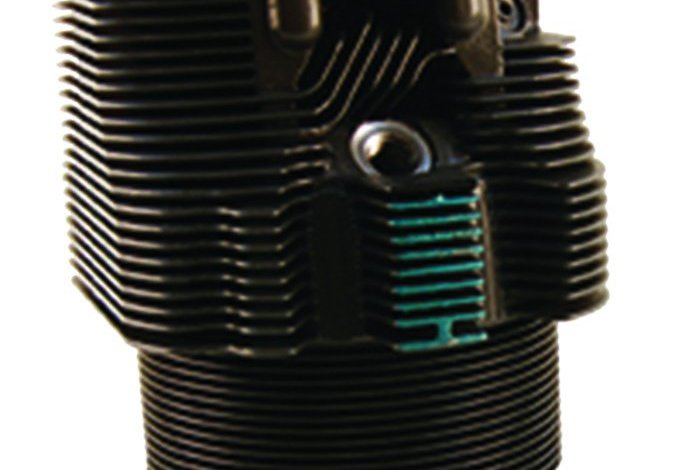
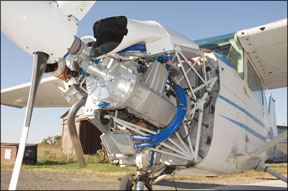
Cracks in your aircraft’s cylinders will lead to problems in-flight. Somewhat fortunately, your engine will alert you with roughness, and you will have time to land. But your cylinders are crucial – keep them clean and sturdy, or expect malfunction. Here are some recent FAA Service Difficulty Reports that highlight the issue.

Read More »

Tips From The NTSB

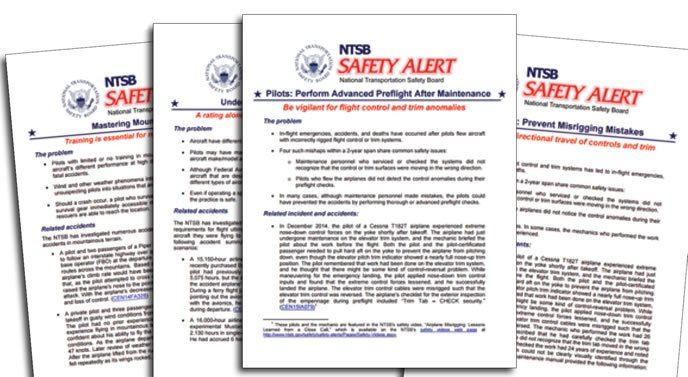
Theres no question pilots can make dumb mistakes-each month, the back pages of this magazine have the proof. In many instances, however, pilots make mistakes because they werent warned of the consequences of their (in)actions. In other words, sometimes they dont know what they dont know. Its the NTSBs role to investigate aviation accidents in the U.S., and to come up with recommendations on ways to prevent them.

Read More »

Hot Water

In response to your October editorial, Hot Water, what I took from these two tragic accidents was that the culture of fear surrounding declaring an emergency is killing people. The FAA needs to change its policy calling for an emergency declaration investigation to address this fear.

Read More »

Navigating The Sim Thicket

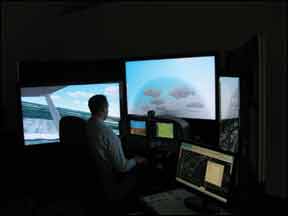
I’ve been teaching people how to fly airplanes for 28 years now, and at this point people tell me I’m pretty good at it. One of the things I learned early on is that the cockpit environment is a horrible classroom in which to teach the basics of flight. It’s noisy, full of distractions, occasionally unpredictable and constantly moving. It should not be a secret to even the newest flight instructor that all of this is a challenge to a typical primary student’s senses. Frankly, any sane human being is scared of it, at first, though few would admit to it.

Read More »

Maximizing Aircraft Efficiency

Are you getting the most performance from your airplane? The fact is a considerable amount of unused performance gets overlooked by the average owner/operator. Both performance and range can be improved through common operational techniques, performing regular maintenance procedures and careful planning. Most of this “hidden performance” can be gained back from wasted fuel and increases in the airplanes useful range. In turn, you can reduce the annual operating costs. And with average aviation fuel prices nudging $6 a gallon in the U.S., who wouldnt want to enhance their airplanes efficiency? Thankfully, its not as complicated as it may seem. You just need to make the machinery work the way it was designed to work. One method is to ensure the airplane is as mechanically sound as it can be. Then, well look at improving its basic aerodynamics, followed by some smarter flight planning. Finally, well look at ways to save fuel while airborne.

Read More »

Survival at the Edge

A lot of people who attend airshows think of the performers as death- defying daredevils. It may come as a surprise (although I hope not), that its just not so.

As they race along in brightly painted aircraft, it may seem like theyre mixing aerial ballet with kamikaze maneuvers, but performers know the risks – and know how to minimize them. Airshow flying might be our livelihoods, but its not worth our lives to take what may be inherently risky flying and make it idiotically dangerous.

First off, its important to note that regulations dont create safe pilots. For example, I dont think spin training should be required of all pilots, but I think anyone whos serious about being a s…

Read More »

How Low Can You Go?

With all too chilling regularity, pilots who fly close to the ground wind up on the losing side of the battle against wires, towers and other obstructions.

There are many reasons pilots fly too close to obstructions, and some of them are legitimate. Forced landings are what they are. Approaches to and takeoffs from small airports carry risks that may be unavoidable. Buzzing, enjoying the scenery down low and pressing on into lowering ceilings, however, open the aircraft to extraordinary risk from stationary objects.

Agricultural pilots, by the very nature of their jobs, operate in an airspace filled with obstacles of every description. Avoiding electric transmission cables, towers of v…


Read More »
Pilot in aircraft
Sign-up for newsletters & special offers!

Get the latest stories & special offers delivered directly to your inbox.

SUBSCRIBE