Aviation Safety

Mooney Issues

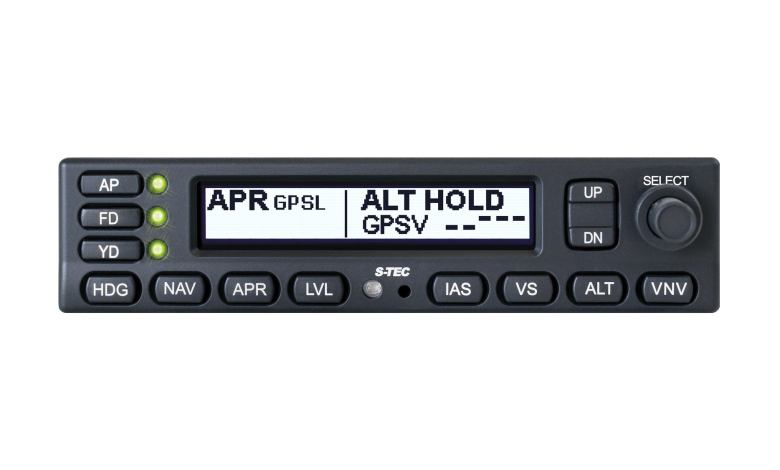
Pilot disconnected the (S-Tec 50) autopilot and hand-flew for several minutes. Shortly after initiating a descent to land, the ailerons began to seize. It took five to 10 seconds to lose aileron authority, followed by elevator authority. Pilot forced to make emergency landing with only a few degrees of operable aileron and elevator, but landed without damage or injury. Examination revealed the autopilot had re-engaged and the servo clutches had frozen.
Read More »

Farewell, DUATS

For many pilots, the transition likely wont be noticed. Popular electronic flight bag (EFB) apps like ForeFlight and Garmin Pilot long ago went beyond what is/was available on DUATS alone and pulled in data and imagery from a variety of sources. That will continue. And the many other aviation weather services available from Jeppesen, The Weather Company and other providers arent going anywhere. In fact, if it wasnt for the success of DUATS, those other services might not exist, or might not be as ubiquitous as they are.

Read More »

Water, Water Everywhere

While retrieving the airplanes paperwork and keys, I was told its airspeed indicator (ASI) was acting up. It was reading low, according to the FBO, and the airplane was due for some shop time later that day. The shop hadnt opened yet that morning, though, and I had plans later in the day, making a delay problematic. I asked if the airplane was grounded. No, was the response.

Read More »

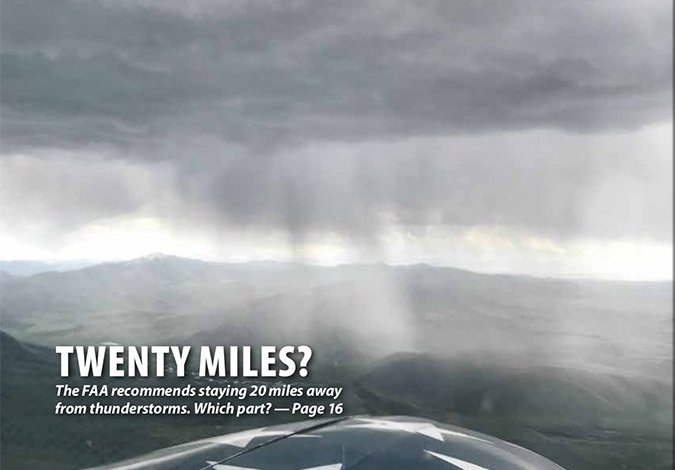
Twenty Miles?

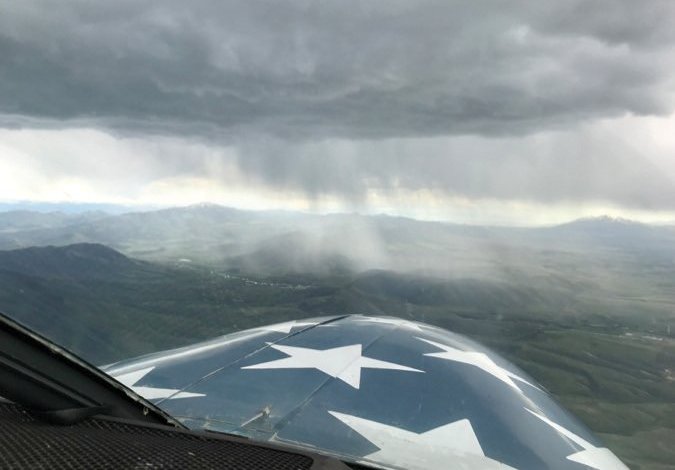
The 20-mile clearance policy is a safe number and probably easy to stipulate, but scale and definitions make it challenging. For every fully visible and developed severe thunderstorm, there are even more smaller cells or building storms that may or may not grow to thunderstorm level. Sometimes a curtain of rain is just a curtain of rain. Other times, it can be hiding something much bigger due to the lurking cumulonimbus that has built up above the overcast.

Read More »

Fly The Airplane

Fly personal airplanes long enough and youll eventually have to deal with an open door or window. Usually its a cabin entry door that someone forgot to fully latch. Usually. Sometimes its a baggage door, and there goes your luggage, sliding down the runway at 70 knots. The thing is, inadvertent door or window openings typically occur at or shortly after lifting off from a runway, because thats when the changes in air pressure in and outside the airplane tend to find any weak spots.

Read More »

Approach Gates

An instrument approach procedure is often described as a series of windows, or gates, extending from the final approach fix (FAF) to the missed approach point (MAP). Stay within the ever-narrowing vertical and lateral limits and youll arrive at the MAP on glide path and centered on the inbound course. Its far less common to extend this concept backward from the FAF through the terminal area to the en route environment, and forward from the MAP through the missed approach to the holding fix.

Read More »

Flight Review: Nuisance Or Opportunity?

Most pilots who fly single-engine piston airplanes in non-commercial operations do not undertake formal training at annual or other intervals. Instead, they are only required to complete a flight review from a certified flight instructor (CFI) every other year to fly as pilot-in-command. For most pilots, this is an exercise to be completed with as little effort as possible. Some pilots resent the requirement while a few even dread it. This doesnt have to be the case, however.

Read More »

Good To Go?

Regardless of what you fly, how its equipped, and how old or new it is, you eventually will encounter inoperative instruments and/or equipment during a preflight inspection. It can be something known to the operator and the maintenance department, or it can be something new. Once the inoperative component is discovered, you have to make a determination whether its legal to fly the airplane without repairs, and then decide if its safe to fly. The two are not the same.

Read More »

Risk And Benefit

I much appreciated Robert Wright’s May 2018 article, Risk Assessment Tools. We use a version of a flight risk assessment tool in our flying club, and while I agree that numerical values should not be the sole criteria for the go, no-go decision, the process does provide a checklist of sorts for decision-making. The most valuable risk assessment tool I use is not found on any web site or aviation app, but is the application of a simple philosophy: If I have to analyze a go, no-go decision for more than a few seconds, it is a sure sign that the risk requires serious mitigation or a willingness to stay safely on the ground.

Read More »
Pilot in aircraft
Sign-up for newsletters & special offers!

Get the latest stories & special offers delivered directly to your inbox.

SUBSCRIBE