Aviation Safety

Now What?

January 1, 2020, is fast approaching. Thats the date on which ADS-B Out surveillance gear will be required in certain U.S. airspace, basically where you need Mode C now. But you know that; this and other aviation publications have been beating that drum for most of a decade. As the industry nears a deadline weve all known about since 2010, its not unreasonable to look back at what additional technology ADS-B has spawned, then take a quick look at the crystal ball to try divining what might come next.

Read More »

Unwarranted

One special category of pilots are those for whom going fast is important. Why? Because speed is relative. At altitude on a severe clear day, there’s little sensation of speed. We have to get close to something before our speed becomes apparent. And the risk with getting close to something is we might hit it. While untrained pilots who engage in such risky behaviors aren’t the norm, there’s enough of them that the practice has its own term: unwarranted low flying. Its use apparently has fallen out of favor, but the phrase “unwarranted low flying” has populated numerous NTSB reports over the years.

Read More »

NTSB Reports

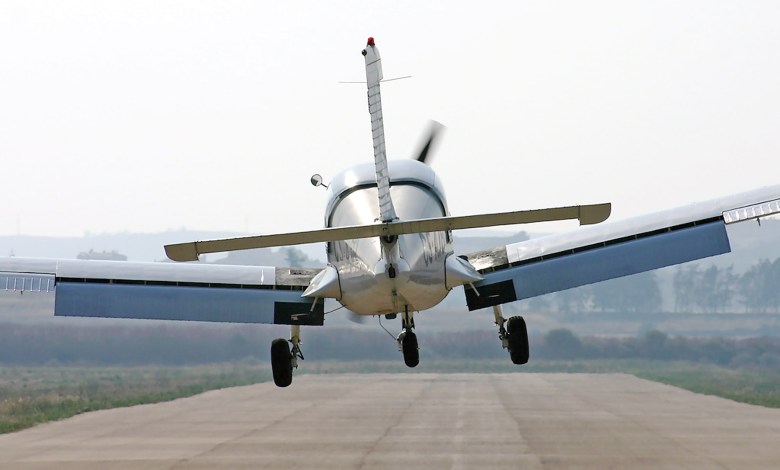
The pilot purchased the airplane the day prior to the accident. He departed the airport and performed maneuvers in the local area, then returned and completed four normal wheel landings. On the fifth landing, at about 30 mph, the tailwheel settled to the runway. When the tailwheel touched down, the pilot stated he felt a rumble “like a machine gun” and the airplane veered to the right. He applied left rudder, and the airplane subsequently veered left off the runway, the right main landing gear collapsed and the right wing spar sustained substantial damage when it impacted terrain. Examination revealed the tailwheel was cocked to the right, perpendicular to the fuselage.

Read More »

Download The Full October 2019 Issue PDF

I used to fly out of an airport on the coast just south of the San Francisco Class B. While controllers tried to permit transit, there was no guarantee. If they also have a 91.131(a)(2) problem, that Miami solution would seem attractive to San Francisco. The result for VFR traffic on a trip headed north might be to add up to 100 miles or more to bypass the Class B to the east, or a deviation far out over the Pacific Ocean, neither of which is an attractive alternative.

Read More »

Picking Up The Pieces

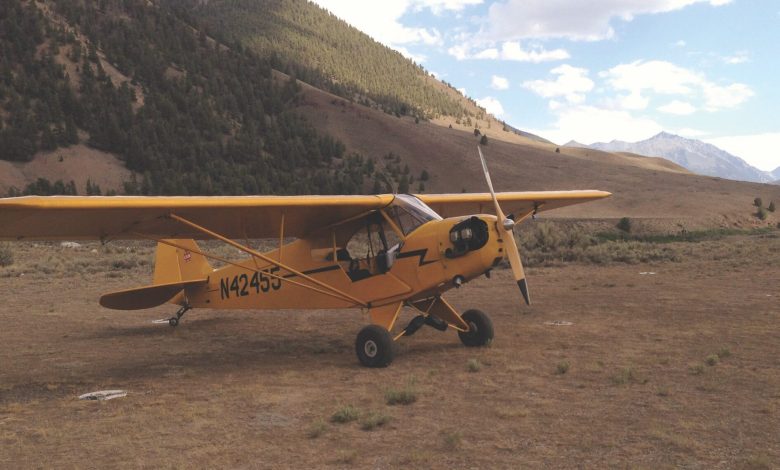
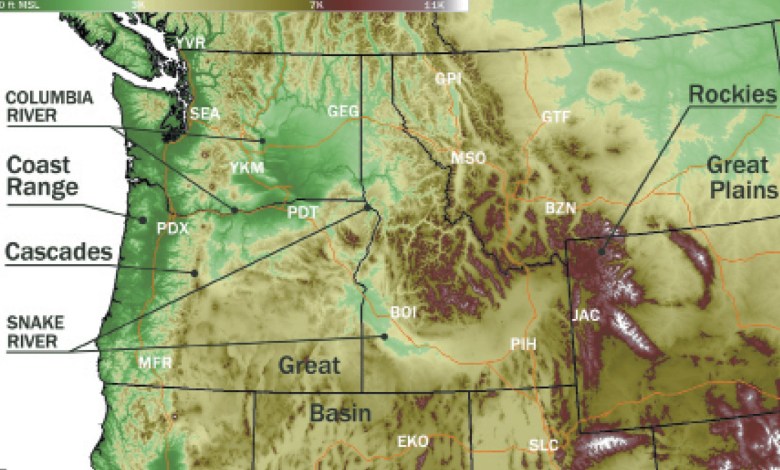
I spend a lot of my flying in the Idaho backcountry, where there are a lot of challenging but worthwhile airstrips. But it’s not a forgiving environment since go-arounds can be problematic and density altitude means pilots may not be accustomed to the reduced performance. After decades in the business, Patrick has a lot of lived experience seeing a wide variety of crashed planes, especially in the backcountry. As a window into answering the eternal question “Why do pilots crash?” I felt his insights would be valuable.

Read More »

All Or Nothing?

The question is as old as the powered aviation itself: Assuming a single-engine airplane, if power is lost immediately after takeoff, should you land straight ahead or try to get back to the airport? This magazine has often addressed the question, including a January 2006 article by spinmeister Rich Stowell. Rich detailed the results of a simulator-based study examining “the feasibility of successfully executing a 180-degree turnaround following an engine failure at 500 feet agl.” The study concluded that practicing the maneuver boosted its success rate, but landing straight ahead (or nearly so) had a higher success rate.

Read More »

Fuel Pump Problems

Fuel flow was erratic, with a slight fuel leak from pump drains. Inspection revealed debris in servo screens. Teardown report showed drive couplings pitted, blades and liners scored, rotors worn. Debris in servo filter appeared to be pieces of the liner. Replaced both pumps. (The same engine-driven fuel pumps (p/n 200F5002) were installed new at engine overhaul. They were replaced at 372 hours and 389.7 hours. The pumps removed had 776.3 and 794.0 hours.

Read More »

Top Five Owner Maintenance Tasks

The FAA’s FAR 43.3 says “the holder of a pilot certificate [other than a sport pilot certificate] issued under Part 61 may perform preventive maintenance on any aircraft owned or operated by that pilot which is not used under Part 121, 129, or 135….” Appendix A of FAR 43, meanwhile, details what tasks are considered “preventive maintenance.” Everything we’re suggesting in this article flows from Part 43’s definition of what constitutes preventive maintenance (PM). If you’re not afraid of getting some grease under your fingers, you can save a lot of time and money performing regular maintenance tasks yourself. Here are our top five projects you may consider performing.

Read More »

Riding Shotgun

If you’re like me, one of the first goals I assigned myself after earning my private pilot certificate was to add the instrument rating. For other pilots, VFR-only flying may be where adding certificates and ratings stops but the education continues. The daunting task of putting trust fully into your instruments and air traffic controllers is a bridge some pilots won’t cross. But in the natural progression of pilot certificates and ratings, adding the instrument rating is a common goal after getting through the private checkride.

Read More »

Airworthiness Concerns

Yet, as with all airplanes as time marches on, wear and tear take a toll on the way various mechanisms work, and better designs often are available to replace them. That’s especially true when it comes to the PA-28 fleet’s sidewall-mounted fuel selector, the current design of which now is in its third generation. The original design-generation 1, or Gen1-did not have much in the way of a detent protecting against inadvertent repositioning, nor does it prevent over-rotation leading to unintended movement to the OFF position. These characteristics aren’t the most desirable in a fuel selector assembly, especially since the component is mounted in the sidewall under the pilot’s left knee, where it can be difficult to view.

Read More »
Pilot in aircraft
Sign-up for newsletters & special offers!

Get the latest stories & special offers delivered directly to your inbox.

SUBSCRIBE