Aviation Safety

That’s How It Happens

The morning’s mission was to pop down to a non-towered airport on the Gulf of Mexico to meet some friends for lunch. Naturally, I got a late start, so I stayed high as I neared the destination until tucking the nose down and keeping the power up in an attempt to make up a minute […]

Read More »

NTSB Reports

December 2, 2020, Lufkin, Texas Cessna 551 Citation II/SP At 0843 Central time, the airplane was substantially damaged when it departed the runway while landing. The airline transport pilot sustained minor injuries; two passengers were not injured. Instrument conditions prevailed; the flight was arriving on an IFR flight plan. After an uneventful flight and approach, […]

Read More »

Scud Running At Night

From time to time, pilots are confronted with a set of circumstances posing a significant challenge to their ability to complete a mission. It might be a mechanical problem, but it most often involves uncooperative weather. The time-honored act of launching into poor weather to “take a look” sometimes works out, but the chances of […]

Read More »

NTSB: CFI’s Need More FAA Oversight

As a result of its ongoing investigation into the fatal June 21, 2019, crash of a Beech A90 King Air after takeoff from a Hawaiian parachute operation, the NTSB is issuing three recommendations to the FAA calling for increased oversight of flight instructors, especially those CFIs with “substandard student pass rates.” According to the NTSB, […]

Read More »

Practicing Approaches

One of the instrument rating’s dirty little secrets that no one tells you about until it’s too late is the amount of recurrent training you need to legally fly IFR after the checkride. The details—along with options and potential loopholes—are in FAR 61.57, Recent flight experience: Pilot in command, portions of which we all know […]

Read More »

Preventing Wrong-Surface Airport Operations

On August 27, 2006, just after 0600 Eastern time, Comair Flight 5191, a Bombardier CL-600 regional jet, began taxiing for its scheduled departure from Blue Grass Airport (KLEX) in Lexington, Kentucky, to Atlanta, Georgia. Night visual conditions prevailed. In the control tower, the lone controller busy with daily administrative duties cleared the flight to depart […]

Read More »

Two Simple Questions

Every certificated pilot has had the pleasure of flying with the FAA or an agency-designated pilot examiner. It can be a stressful experience. The plane, the pilot and the preparation are all under a higher level of scrutiny than on a normal flight. You want to do everything right, and generally portray yourself as a […]

Read More »

Pitch and Power Habits

According to the NTSB, “between 2001 and 2011, over 40 percent of fixed wing GA fatal accidents occurred because pilots lost control of their airplanes.” The National Business Aviation Association adds that NTSB’s more recent numbers show 46.4 percent of all fatal accidents in the U.S. from 2014 to 2018 were attributed to loss of […]

Read More »

More Self-Announcing

Regarding the discussion about whether or not to use the aircraft N-number when self-announcing at a non-towered airport (Unicom, February 2021), the most definitive answer would probably be the current issue of the Aeronautical Information Manual (AIM). Aviation Safety is correct in asserting that Advisory Circulars are advisory in nature. The AIM is as well […]

Read More »

Whither Unleaded Avgas

If you’ve been around the aviation industry long at all, you probably remember when, a few years ago, there was a highly visible push to eliminate the lead component of aviation gasoline, even if the amount of the toxic substance in 100LL aviation gasoline is reduced from its predecessor fuels. In 2014, the FAA and […]

Read More »
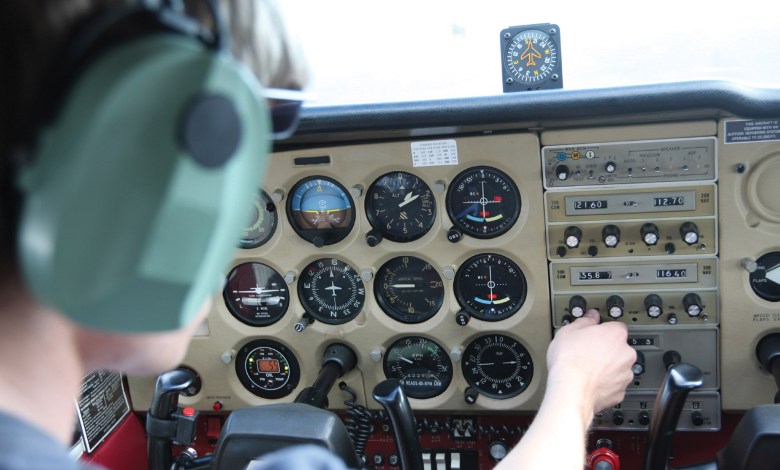
Pilot in aircraft
Sign-up for newsletters & special offers!

Get the latest stories & special offers delivered directly to your inbox.

SUBSCRIBE