Aviation Safety

August 14, 2004, Paradise Key, Fla. / Cessna U206B

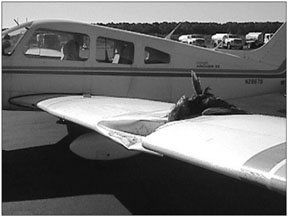
At about 1451 Eastern time, the airplane was ditched into the water in the Dry Tortugas National Park, Fla. Visual conditions prevailed. The Airline Transport pilot and three passengers received minor injuries; one passenger received fatal injuries. The flight was conducted to film islands in the Dry Tortugas. As the flight progressed and was in the area of Fort Jefferson, the engine sputtered and ceased operating. The pilot was able to get the engine operating again, but about three minutes later it stopped and did not restart. Everyone aboard was able to egress the airplane except for one passenger, who had asked that a rope be tied around him so that he would not fall out of the airplane…
Read More »

August 20, 2004, Clarkson, N.Y. / Piper PA-31P

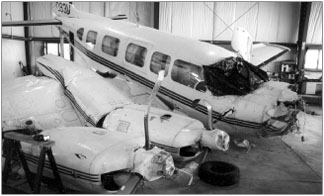
At 1334 Eastern time the airplane collided with terrain and was destroyed during a forced landing. The Airline Transport pilot was fatally injured at the conclusion of the positioning flight that originated in Batavia, New York (3G8), approximately 10 minutes earlier. The flights purpose was to return the airplane to its home base in Rochester, N.Y., after an annual inspection and reinstalling the right engine following repair. Shortly before the crash, at 1332:06, the pilot announced that he had lost an engine and requested vectors back to Batavia. At 1332:20, the pilot said he could not reach Batavia and opted to land at the Ledgedale Airport (7G0) in Brockport, N.Y. At 1334:01, the pil…

Read More »

August 13, 2004, Rose Lake, Idaho / Cessna U206G

The float-equipped airplane operating as a Part 135 on-demand charter was substantially damaged at about 1320 Pacific time after striking powerlines while on final approach to Killkarney Lake. Neither the Commercial pilot nor his two passengers were injured. Visual conditions prevailed. The pilot subsequently reported that he flew over the area at approximately 500 feet AGL before attempting to land. While on final approach, the airplane was at approximately 50 feet AGL when he saw the wires. The pilot reported that he immediately added full power to raise the nose when the top wire went over the top of the floats, catching the float struts. The pilot stated that the wire broke off the right…

Read More »

August 17, 2004, Tulsa, Okla. / Cessna T210L

The airplane was destroyed at about 1712 Central time when it spun to the ground and subsequently burned near Richard Lloyd Jones Jr. Airport (RVS). The Instrument-rated Private pilot and his two passengers were fatally injured. Visual conditions prevailed for the cross-country flight that was originating at the time. ATC tower recordings indicate that the pilot was cleared for takeoff at 1710. Approximately 100 seconds later the pilot reported the he had oil on his windscreen and would like to return to the airport. A witness later said that the accident airplane leveled off at approximately 300 feet, slowed, and made a right turn to return to the airport. He said that it rotated to the rig…

Read More »

Mid-Teens Physiology

Climbing to the flight levels puts your body through major changes that mere oxygen cant address. Heres whats going on and some tips on how to minimize the effects.

Read More »

Straight Ahead

Directional and lateral stability help make an airplane a good IFR platform. Heres why along with some tips on how to measure it.

Read More »

Ice Box

This time of year, almost any forecast includes a chance for airframe ice. Heres why to pay attention.

Read More »
Pilot in aircraft
Sign-up for newsletters & special offers!

Get the latest stories & special offers delivered directly to your inbox.

SUBSCRIBE