










Sparks Or Bumps?
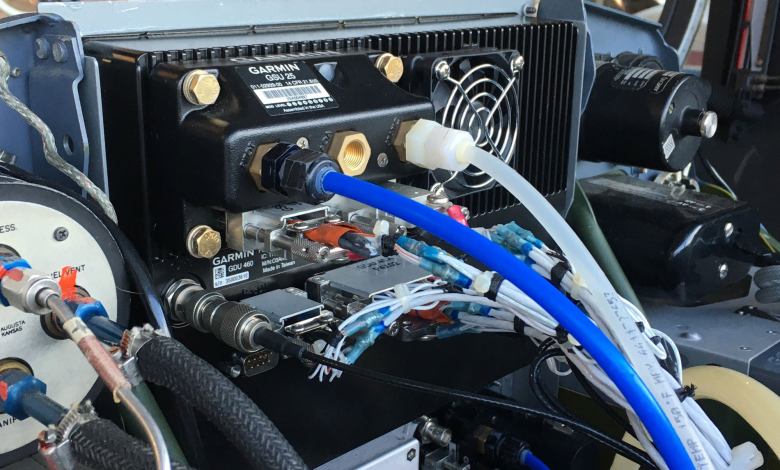
A lot of devices detect thunderstorms, but can any of them find clear air turbulence? The answer may surprise you.

A lot of devices detect thunderstorms, but can any of them find clear air turbulence? The answer may surprise you.
The NTSB has several (too many, actually…) categories it uses to classify aviation incidents and accidents. Among them is the catch-all phrase improper IFR, which the Board usually uses to describe a pilot executing procedures you wont find in the Aeronautical Information Manual.But there is no similar category for controllers who, for whatever reason, provide substandard and/or confusing service to pilots clearly suffering under a high workload. A good example of how the improper IFR label can be applied to controllers as well as pilots-simultaneously-occurred on January 23, 2003, when a Cirrus SR-20 collided with power lines near San Jose, Calif.The Private pilot/owner was kille…
Sage Experience
I didnt become a pilot until 1987; the man who gave me my check ride then was in the left seat 15 years earlier, in 1972, when the story Im about to tell occurred.
We were in his Cessna 210. His wife and two kids were aboard, and a college friend tagged along on the trip from Gunnison, Colo., to San Jose, Calif. They were off to a wedding, he was to meet a girlfriend and I was going to Eugene by airline.
Gunnison was IFR, so we circled to 16,000 feet to get clear. Off to the west, we hit more overcast and followed railroad tracks to Price, Utah, to wait out the weather.
Once off the ground again, I recall breaking through a partial overcast with a mou…
Pick Your Poison
Making the go-no/go decision is always a topic guaranteed to generate comments and war stories among pilots. Add family and friends to the equation, and the pressure to go becomes enormous: The war stories can sometimes lead into hearing someone say, Im glad I didnt go that time, but I really miss her(or him). Often, the choice is to go and risk life, limb and sheet metal or to stay, find an alternate transportation mode and suffer the wrath of those depending on you. Sometimes, you pick your poison.
All of this was brought home to me quite clearly last Thanksgiving. The day before, I needed to pick up my son at his college in Lynchburg, Va., and fly h…
The following information is derived from the FAAs Service Difficulty Reports and Aviation Maintenance Alerts.
———-
Airborne/Parker Hannifin
Vacuum Pumps
The FAA published a Special Airworthiness Information Bulletin (SAIB) reminding owners of single or multi-engine piston airplanes of the need to properly maintain pneumatic system components that power air-driven gyro instruments. Specifically, the SAIB recommends following the applicable maintenance, inspection and replacement instructions published by Parker Hannifin for their Airborne-brand vacuum pumps and components. The companys service letters are available on the Internet at
Read More »
Surveying Risk
I really enjoyed the risk assesment quiz (December 2004). It really generated a lot of thought and discussion on the Cessna Pilots Association bulletin board. I particularly liked the questions where you had to make a snap judgment. In my opinion, they are the more accurate measures of ones attitude towards risk, because you dont have time to try to add in details. (Okay, what kind of equipment am I flying? How much recent experience do I have?) You either like the situtation or you dont. Very effective.
My score was a 67, which I feel is very conservative for an ATP with 5000 hours. Keep up the good work.
Bob Thomason
Via e-mail
Bob…
October 2, 2004, Santa Fe, NM.
Sukhoi SU-29
At 1327 Mountain time, the airplane was destroyed and its solo ATP-rated pilot fatally injured upon impact with terrain 500 feet west of Runway 20 at the Santa Fe (N.M.) Municipal Airport. Visual conditions prevailed for the aerobatic flight, which was the second performance in the 2004 Santa Fe Air Show. An FAA inspector witnessing the airshow later reported that the airplane was high, at approximately 1500 feet AGL, when it entered an inverted spin. The inspector said, The pilot attempted to recover but didnt make it. The airplane struck flat in an upright, nose down attitude and was engulfed in a fireball. A witness, one of…
The airplane was substantially damaged at about 0035 Eastern time during a collision with trees during maneuvering flight. The non-Instrument-rated Private pilot and passenger were fatally injured; night visual conditions prevailed. The flight departed Long Island MacArthur Airport (ISP) in Islip, N.Y., with the Fulton County Airport in Johnstown, N.Y., as the planned destination.The pilot was in radio and radar contact with the Albany Terminal Radar Approach Control (TRACON) and receiving flight following services. About 0034, both radio and radar contact was lost; the TRACON did not receive a distress call from the pilot. At about 0030, three witnesses reported an airplane descended throug…
At about 1748 Eastern time the airplane was substantially damaged when it impacted a house while attempting to execute a forced landing. The Private pilot and passenger were fatally injured. Day visual conditions prevailed for the planned flight from Nantucket, Mass., to New Haven, Conn. According ATC tapes, the pilot made a Mayday call and reported he was at 4000 feet msl and descending without engine power. The accident pilot reported that there was oil on the windscreen. A controller provided radar vectors towards an airport approximately four miles southeast. When the airplane was approximately two miles from the airport at 1600 feet msl, the pilot reported seeing a field to his left….
The airplane was destroyed and the ATP-rated pilot fatally injured on impacting mountainous terrain at 0738 Mountain time while maneuvering. Instrument conditions prevailed at the time of the accident; no flight plan had been filed for the cross-country flight that originated at Englewood, Colo., about 20 minutes earlier and was en route to Aspen, Colo. According to the Clear Creek County Sheriff, weather at the time of the accident was cold with a low overcast, and occasional light snow. Reported weather recorded at a nearby station included visibility of less than statute mile, snow and an overcast sky at 200 feet agl….

Get the latest stories & special offers delivered directly to your inbox.
SUBSCRIBE