











Upset Recovery
Recovering from an upset requires quickly assessing the airplanes energy state and attitude, then applying the appropriate corrections.

Recovering from an upset requires quickly assessing the airplanes energy state and attitude, then applying the appropriate corrections.
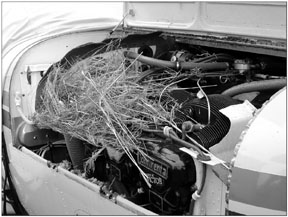
Forget bird nests and summer-weight oil. After a long layoff, both you and the airplane need a thorough going-over.
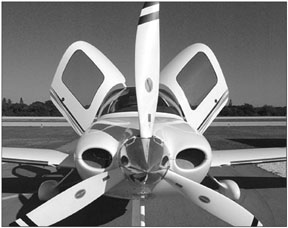
A series of accidents has tarred the reputation of what was supposed to be the safest GA airplane ever made. But is that an accurate picture? An honest look at the Cirrus accident record.

Autopilots are often the least well-understood pieces of equipment in the panel. But knowing your flight director/autopilot can make your flying safer.
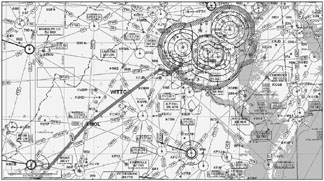
Many different applications are available to help plan your flights. But once airborne, not much has changed when it comes to monitoring progress.

A low-time pilot elects to fly into deteriorating weather at night and without an Instrument rating. The result was predictable.
Ice In The Desert
Heading to Mesa, Ariz., from Dallas, Texas, we landed my twin Travelair for fuel in El Paso. It was a cool February morning, at about 0200. Weather included scattered clouds with a 30-knot headwind. Talking to a cargo pilot who had just flown the same route in reverse, I learned the winds were strong but there was no ice or other problems.
Off we went. It was a very dark night, with a high cloud layer blocking any moonlight. About 45 minutes after takeoff, I noticed what appeared to be a storm cell ahead of us. I made a slight course change but minutes later showers started to hit the plane.
The headwinds increased to over 50 knots and it was raining hea…
By the time you read this, spring will have come to most of North America and all of us will be clogging the runways and taxiways at our local airports, trying to get airborne after a long, cold winter. And well make mistakes. Hopefully, those mistakes will be small, embarrassing ones, not the kind that bend sheet metal or fracture composites.
I dont know about you, but after even a couple of weeks between flights, Im not as sharp as I was the last time I pushed my airplane into its hangar. My cockpit flow isnt as good, Ill flub a few radio transmissions and I probably wont be as far ahead of the airplane as I should. I might forget to set the DG to the runway heading before lifto…
NTSB Summaries
Having just resubscribed after a several-year hiatus in flying, and having just received the February 2005 issue, I am disappointed in the sparse information included in the NTSB summaries of recent accidents. For example, the Canadair CL-601 accident at Montrose, Colo., makes no mention of the fact that the runway was in the process of being cleared, that only a 40-foot-wide section had been plowed, and that a four-inch-high berm of slush surrounded the cleared part of the the runway. The other runway at Montrose was also in the process of being plowed. There was no mention of the fact that the aircraft did get airborne but then struck a wing tip, which tore off…
December 1, 2004, Lees Summit, Mo.
Piper PA-28-181
At 1200 Central time, the rental airplane was substantially damaged during a forced landing near Lees Summit Municipal Airport (LXT). Visual conditions prevailed; there were no injuries. The local flight originated from LXT at 1030.The pilots preflight inspection included checking the fuel gauges and the fuel level in each tank, which was just under the tabs. After a touch-and-go landing at a nearby airport, he climbed and headed to the east. A few minutes later, the engine sputtered just a little. He applied carburetor heat, and the engine smoothed out. He returned to the nearby airport, landed and performed a ru…

Get the latest stories & special offers delivered directly to your inbox.
SUBSCRIBE