











Aviation Safety

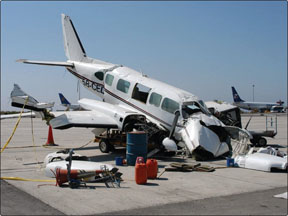
June 2, 2006, Laurel, Mon. / Piper PA-28-160

At approximately 1420 Mountain time, the airplane sustained substantial damage following a total loss of engine power and uncontrolled descent. The Private pilot, the airplanes sole occupant, sustained serious injuries. Visual conditions prevailed. An interview with the pilot revealed that the airplane had just undergone its most recent inspection and engine overhaul. The pilot reported that following the takeoff, and in a left turn to return to the airport he experienced a yoke control problem, followed by the aircraft impacting terrain north of the airport boundary. Examination of the wreckage revealed that the airplanes fuel selector was positioned in the vertical position, between the…

Read More »

June 4, 2006, Jacksonville, Fla. / Cessna 421B

At about 1130 Eastern time, the airplane sustained substantial damage during a gear-up landing in visual conditions. The pilot later reported that, during initial climb, he smelled smoke and felt heat in the cockpit, then turned back toward the airport. He said several aural warnings sounded. During the descent back to the airport his communications radio malfunctioned, and he was unable to contact the tower after declaring the initial emergency. The pilot said he thought the airplane was on fire, and landed gear-up in the dirt between the taxiway and the runway….

Read More »

NTSB Preliminary Reports

June 1, 2006, Port Townsend, Wash.
de Havilland DHC-3T

At approximately 0830 Pacific time, the float-equipped airplane was substantially damaged during a precautionary landing in Puget Sound. The Airline Transport pilot and his 10 passengers were not injured. The flight was being as a Part 135 air taxi; instrument conditions prevailed. The pilot later said that as he approached Port Townsend, the flight encountered lowering ceilings and visibility. Water conditions were glassy smooth with no visual definition. As he began to turn back, conditions worsened and he elected to perform a precautionary landing on the water. With no visual definition, he misjudged the landing and…

Read More »

Rethinking Risk Management

Experience isnt just what youve done or what happens to you; its what you think about what youve done or what has happened to you. A good pilot is also always thinking ahead–and back.

Read More »

Five Ways To Better NPAs

Non-precision approaches may lack vertical guidance, but theyre anything but imprecise. Here are five things you need to think about before accepting that clearance.

Read More »

The Yellow Brick Road

Each year, a surprising number of pilots forget that before one can fly, one has to taxi. Staying on the taxiway centerline is a great start, but theres more.

Read More »

Learning Experiences: 08/06

Running Out Of Rudder

When I was a Flight Instructor, one of the pieces of trivia we dispensed to students was that Maximum Demonstrated Crosswind isnt necessarily the absolute maximum crosswind you can land in. It merely represents the crosswind the test pilot landed in safely during certification of the aircraft. (Hence the word demonstrated.) Its not necessarily an upper limit. But theres an important detail I recently learned.

[IMGCAP(1)]In my baby pilot days, I was terrified of crosswind landings because no one had taught me how to use rudder properly. (Its impractical, but everyone should learn to land in taildraggers first.) But one day it clicked. Now as an old p…

Read More »

Editor’s Log: 08/06

Dear Uncle:

How have you been lately? It seems your name makes the news often, and not always in the best light. We admit that we havent written as often as we should; hope youll understand that were all pretty busy these days. We know you are, too. All of us here hope youll soon shrug off the distractions youve been facing and once again will be able to focus on helping out the rest of us.

When you get to that point, we hope youll stop for a moment and consider whats going on out in the field. Demand for general aviation has never been greater, but your colleagues seem determined to keep erecting roadblocks. Their clamoring for user fees is one part; policies leading to…

Read More »

Squawk Box: 08/06

The following information is derived from the FAAs Service Difficulty Reports and Aviation Maintenance Alerts.

———-

Beech Model 58 Baron
Deice System Contamination

During prolonged periods of operation in heavy precipitation considerable amounts of water enter into the pneumatic system, stated the mechanic. Inspection of the pneumatic system revealed large amounts of water being passed through the deice boot ejector. (Approximately five weeks later) the pneumatic system was (again) inspected and found to be contaminated with water. The flight crew reported (again) the aircraft (had been) operated for an extended period of time in heavy precipitation. The loca…

Read More »
Pilot in aircraft
Sign-up for newsletters & special offers!

Get the latest stories & special offers delivered directly to your inbox.

SUBSCRIBE
