










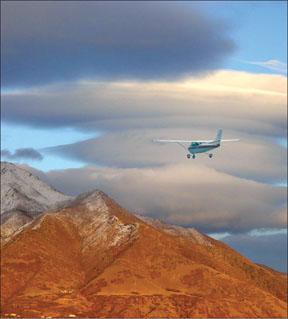
The Other Kind Of Rotor
Mountainous terrain offers great scenery but recent accidents illustrate it can be treacherous for the unwary. Heres what to look for and how to avoid it.

Mountainous terrain offers great scenery but recent accidents illustrate it can be treacherous for the unwary. Heres what to look for and how to avoid it.
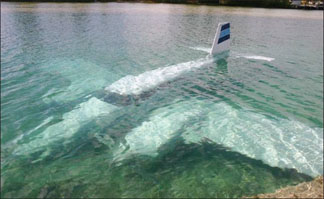
Even if you never venture out over a large body of water, ditching your airplane in a lake or river is a real possibility.
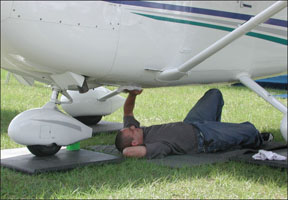
Just because it was fine when you landed doesnt mean your airplane is ready to fly again. Checking a few items now can mean an easy pre-flight next time.
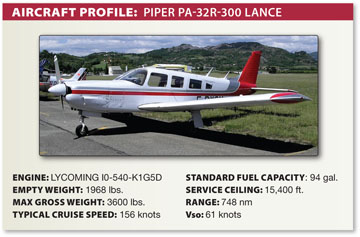
If you fly enough, your air-driven gyros eventually will fail. Then, sadly, youre on your own.
Selecting Fuel
When I earned my Private certificate, I thought I knew all I needed to know about flying. The following years taught me better. I learned something almost every flight and even from others experiences.
One Friday in July of 1950, I took possession of a three-year-old Cessna 120 I had just purchased. Eager to try it out, I planned a trip the next day from Buffalo Air Park to visit a friend at Cornell University.
The flight was uneventful and we had a nice visit. Sunday afternoon, after checking the airplane, I taxied up to the fuel pump to fill my tanks. I then proceeded down the taxiway toward the run-up area which, fortunately, was at the other end of the run…
The following information is derived from the FAAs Service Difficulty Reports and Aviation Maintenance Alerts.
———-
Beech (Raytheon) Model A36 Bonanza
Fuel Tank Bladder Contamination
A repair station technician states, A customer reported white particles coming from the (aircrafts) quick drains. Two fuel bladders were removed and inspected: evidence of the white powder was found in various places in both tanks. They were replaced with new units from the original manufacturer, who was made aware of the problem. (Part numbers provided are 2121-9-1 and 2121-10-2.)Part Total Time: 9.7 hours.
Beech (Raytheon) Model E55 Baron
Failed Nose Gear Retraction…
Airframe failures are rare, but they do happen. By paying attention to how and where you fly, as well as maintenance, theyre preventable. Heres how.
One Step Forward
Having just returned from my annual pilgrimage to Oshkosh for EAAs AirVenture extravaganza, Im struck by two seemingly contradictory observations: First, the planes and products seem to get better each year. Second, the pilots dont.
Regarding the first observation, who can argue that products like the mostly certified Eclipse 500, to-be-produced HondaJet, Cessna LSA and NGP (next-generation piston, a.k.a Cirrus-killer), Garmins GPSMAP 496 and the various G1000 offspring, among other new toys, arent about the coolest things on the planet since canned beer? Meanwhile, the maturing light sport aircraft category is beginning to realize its promise of getting…
Safer Trainers
I enjoyed your coverage of the new training airplanes safety features (Building A Safer Trainer, August 2006), but I am afraid the future for all three of these choices is very limited. It seems likely they will be replaced with the much less expensive S-LSA airplanes now coming onto the market.
It is not clear to me which of the S-LSA aircraft will prove to be best for primary training. Whichever ones come out best, the lower purchase price and operating costs for these planes are certain to make them the popular choice over any airplanes certified under Part 23.
Paul Mulwitz
Camas, Wash.
The market for light sport aircraft (LSAs) is jus…
The turbine-powered aircraft was destroyed and all three occupants fatally injured at approximately 2345 Mountain time on impact with Utah Lake during final approach to land. Night visual conditions prevailed. Preliminary review of data recorded by onboard systems revealed that at 23:43:54, the aircraft was aligned for landing and was approximately 1.5 miles from the threshold. Altitude was about 750 feet above the runway; an indicated airspeed of 210 knots and a descent rate of 1900 fpm were recorded. At 23:44:06, the aircraft began a right turn. Airspeed was 197 knots and the descent rate 1300 fpm. As the right turn continued, the airspeed decayed. The final data point was recorded at 23:4…

Get the latest stories & special offers delivered directly to your inbox.
SUBSCRIBE