Aviation Safety

Briefing The Approach

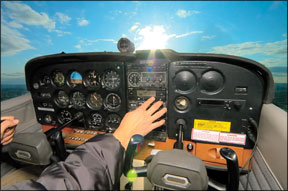
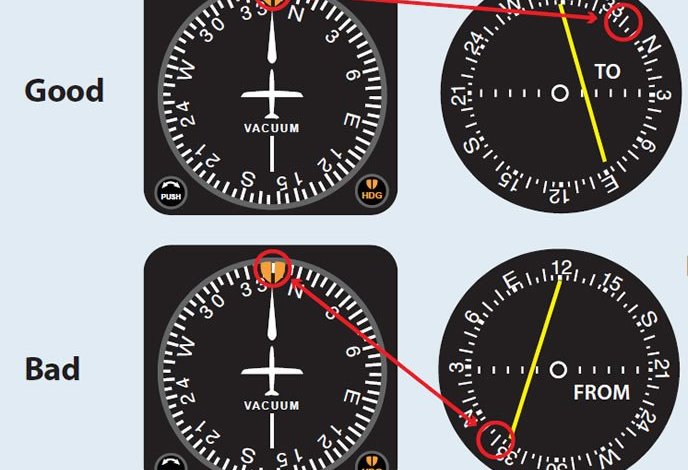
If your initial instrument training was anything like mine, you started flying approaches on the first or second lesson. Usually the CFII would set up the radios, say something about minimums and let me chase the needles. As I progressed toward the rating, I did more and more of the set-up myself, quickly becoming (what I thought was) expert at reading approach charts. Im not faulting my double-I-this was just the way it was done in that part of the country at that time.
Read More »

Unusual Recoveries

The mere mention of “unusual attitudes” not only raises eyebrows but-as pilots conjure up out-of-control airplanes plummeting from the sky-can measurably elevate stress levels. The phrase is often a catchall, including encounters with inadvertent stalls and spins, wake turbulence, and uncommanded spirals. Yet a stall by itself, though often a precursor to an unusual attitude event, is not an unusual attitude per se.

Read More »

Non-Pilot Copilots

Just let me know if theres anything I can do” is a common request of the non-rated passengers Ive carried aloft from time to time. Usually, we dont even get to that point; the idea of going up in a personal aircraft is sufficiently foreign to most non-pilots they cant even conceive of helping minimize the workload. They also dont understand theyre contributing to it. Passengers unfamiliar with the concept often are a necessary evil of flying personal aircraft. Having been both the PIC and the pax over the years, Ive seen the phenomenon from both sides. Most of the time, some patience, understanding and smooth flying on a good-weather day is all the pilot needs to assure a pleasant experience for the pax and a safe flight.

Read More »

IFR Not Recommended

There were two basic rules I learned early on in my aviation career. One of them was to avoid instrument conditions because I didnt have the training, even if the airplane was adequately equipped. The other was to never fly an airplane with known deficiencies that could affect the flights outcome. This included balky airspeed indicators, as one example, or inoperative radios as another. There have been many rules learned-and sometimes bent-since then, but these stand out. Ive tried mightily to comply with them. Call it self-preservation.

Read More »

Procedure Vs. Technique

To succeed in aviation, we develop the athletes ability to live in the present moment, at times exercising every last ounce of skill, discipline and judgment-wisdom, if you will. Well, were at least cognizant of whats around us, even while were reaching back in our minds for the knowledge we have acquired at an earlier time.Although there is very little athletics in the serenity of cruise flight, throw in one or more of any number of challenges and, sooner or later, we all meet The Wall. It might not be quite as exhausting as when your leg muscles go anaerobic during too long of a run, but its just as real a limitation.

Read More »

Bumming A Lift

As an aeronautical engineer, I knew the theoretical stuff about flying. But as a student pilot, I found that theory and practice need some correlation to have real meaning. For example, I knew about sailplanes using updrafts associated with cumulus clouds to gain altitude. But I hadnt correlated that knowledge to the real world.

Read More »

You Call This Progress?

For years, Flight Service Stations have been the “Rodney Dangerfields” of general aviation: they got no respect, no respect at all. Some of that began to change in 2005, when Lockheed Martin took over operation of 58 Automated Flight Service Stations from the FAA. Slowly, things began to get better: Wait times shortened, briefers tried harder, fewer flight plans got lost. In recent months, I noticed what I consider substantial improvement at the Leesburg (Va.) facility and others.

Read More »

Cracks, Jugs And Mags

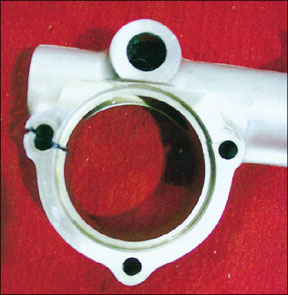
The l/h main landing gear failed to extend, but trailed. The pilot was able to rock it into the down and locked position and make a safe landing. Inspection revealed the (p/n 1281001-3) actuator body had cracked clear through the forward attach hole and half-way through the aft attach hole.

Read More »

Fuelish Flying

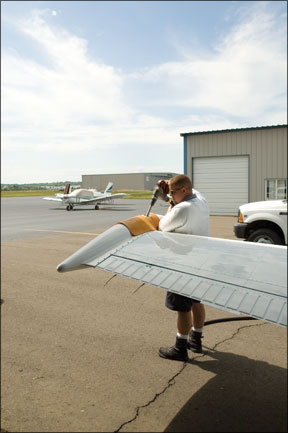
Its strange (or not so strange) that I usually hear or read about some sort of related accident happening after I read an article in your magazine. The apparent cause of those accidents are almost exactly “the gotchas” discussed in the article. With that in mind, “Fuel Gotchas” (April 2007) hit very close to home. Our local flying club just lost a Cessna 172, apparently because the pilot ran out of fuel. A 40-knot headwind resulted in a four-plus hour flight from El Monte, Calif., to Stockton, Calif. This route usually takes less then 2.5 hours. Of course, the Skyhawk only had 38 usable gallons. Do the math.

Read More »
Pilot in aircraft
Sign-up for newsletters & special offers!

Get the latest stories & special offers delivered directly to your inbox.

SUBSCRIBE